


Interview: Jesse Robb & Shana Carroll of WATER FOR ELEPHANTS at CAA Ed Mirvish Theatre
The Tony Award-nominated co-choreographers discuss bringing the celebrated musical to Canada.
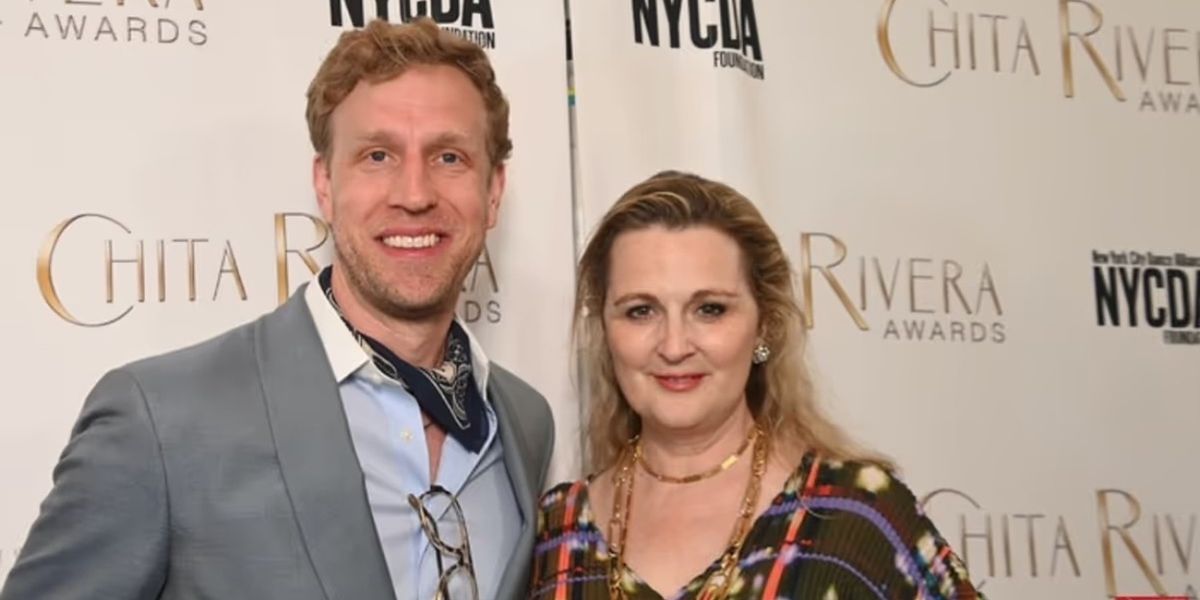
Canadian-born Jesse Robb and American-born Shana Carroll, who now resides in Montréal where she co-founded The 7 Fingers, serve as co-choreographers on the Tony Award-nominated musical Water for Elephants, presented at Toronto’s CAA Ed Mirvish Theatre from July 7-19.
BroadwayWorld spoke with Robb and Carroll (who is also the Circus Designer) about their creative “arranged marriage” as co-choreographers, the challenges that come with collaboration, finding a shared language, balancing spectacle with storytelling, and the significance of having their creation make its Canadian premiere.
Jesse, as you said, you were born in B.C. and raised in Ontario. Did you grow up seeing a lot of Mirvish productions?
Jesse Robb: You know, I have to really give this to my mother and throw flowers her way. I’m a visual learner and I wouldn’t read as a child. My mother and father are both academics, so they were very panicked that I wouldn't read as a child. So, my mother decided, because I wouldn't read, she would take me to shows at Oakville Place and at Hamilton Place, and, of course, Mirvish as well. By the time it was the mid-80s, I would see all the big Cameron Mackintosh musicals and whatnot, but I saw a ton of stuff both in Oakville and Hamilton. And I sort of understood how to craft and how to paragraph, [understood] reading and writing based upon seeing storytelling in shows, and that was sort of my upbringing. I saw a lot of theatre around Southern Ontario that really formed how I understood storytelling.
Shana, you’re from Berkeley, California originally. You were a trapeze artist for 20 years, a Cirque du Soleil soloist and graduated from Montréal’s National Circus School. What was your experience like coming to Canada?
Shana Carroll: It was great. I arrived in 1991 and it was so great to be in Québec, in particular, which was the only province that recognized circus as an art form. Going from being in the United States, in San Francisco where there was a wonderful circus where I started, the Pickle Family Circus, but it was always such a struggle to have legitimacy as a performing artist. Here in Montréal, we're kind of all one community with dance and theatre and everything, so to be in an environment where what I did was supported was really empowering. You can take all sorts of creative risks when you have that safety net and you’re not just kind of fighting to survive. The other thing about coming to the Montréal Circus School was that it was so well-equipped and it made you feel like you suddenly had the tools to train. It obviously changed my life, because I’ve never left. And then there’s my community of friends and colleagues that I still have to this day that I started with in Montréal in 1991. Samuel, who's one of my 7 Fingers co-founders, was in school with me that year. One of the reasons I chose to settle in Montréal after touring the world had so much to do with the fact that the support was here, the community was here.
Did you always know you wanted to work on Broadway, as a performer or as a choreographer?
Jesse Robb: I knew very early that choreography and direction was exactly what I wanted to do. In Canada, there are no tracks for that, there's no lineage that kind of gives you an understanding of how you become a choreographer or a director, or how you work with dancers or movers. And so very early on, I sort of said, “Well, I've got to perform because that's the only way you get connected with other choreographers and other directors.” I performed for a long time and didn't love it. My heart loved the process of rehearsals and it loved the idea of creation. And then we'd get to the performing part of it and I just wasn't in it. So yes, I think I knew very quickly that that side of the stage was always what I wanted to do. It's just, the route was a little bit more non-linear to get there.
Shana Carroll: I started in theatre growing up and did it extensively as a youth and teenager, as one does, and I went to Interlochen, a theatre camp in Michigan. So, when I found circus when I was 18, that was the detour. Everyone was shocked because I was such a theatre kid and I wasn't athletic or any of those things, and yet it just really hit me so deeply at the age of 18 – which is a whole other story. At the time, I really felt like I was doing a 180, going off in this other direction and being a trapeze artist, where you’re still performing, but it’s more like being an athlete. I found that once I started becoming a director, inevitably my work started to gravitate back to my theatre roots and so my old dreams of being on Broadway and all that stuff got rekindled because suddenly my forms were uniting. Water for Elephants really was this great kind of coming together of my original passion [theatre] and my ongoing passion of circus, and with the 7 Fingers work I do, I still try to find that fusion of forms.
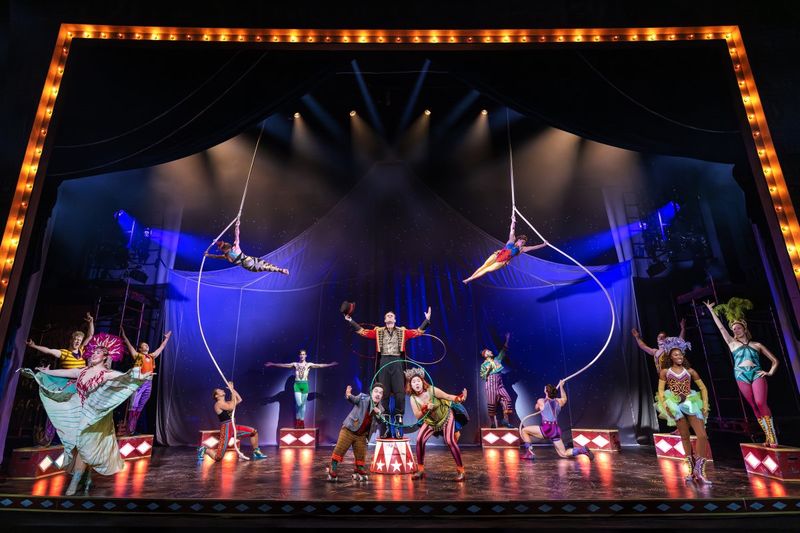
What drew you to the story of Water for Elephants, and the project as a whole?
Shana Carroll: Jess [Jessica Stone], the director, just casually emailed me – it wasn’t like agents or anything. And then it was a combination of talking to her and the way she described the project and the story. There are a lot of stories where I don't like how circus is represented or how it would be used, just sort of spectacle and gimmicky. I read the book and knew the story of Water for Elephants and I really felt like it spoke to the real community and danger and grit of circus. There was so much research and everything. I loved that it was representing circus in a way that I kind of vibed with. And then also, literally, the story of the protagonist, Jacob. He jumped a circus train when he was 21, we're guessing? Is that 21, 22, right out of college?
Jesse Robb: Yeah.
Shana Carroll: I felt like in some ways I did the equivalent when I was 18. I didn't jump a train, but I did the equivalent things. So, I really felt like there was something I related to in the story, with the characters and also with circus as a storytelling device, because it’s what I instinctively know.
Jesse Robb: I had read Sara Gruen's novel and knew Sara also was from B.C., and of course fell in love with the premise. I had worked for Cirque du Soleil when I was in my early 20s, so I had kind of run away with the circus right out of school and there was a lot of that represented in the book that I gravitated towards. It was such a visual read immediately. Then I heard about the project through a friend and heard that Jessica Stone was directing, at the time she was doing Kimberly Akimbo on Broadway, and I was just a huge fan. Jessica and I met, but at that time Shana was on board with the project and they had started with another choreographer. Unfortunately, that relationship didn't work out, and Jessica called me and said, "Would you and Shana meet as an arranged marriage?" So we did, and fumbled our way until we found each other's languages and then it just became this unbelievable sort of collaboration team. It was kind of a bit serendipitous because we realized that Shana and I had actually met 20 years beforehand when I was in Cirque du Soleil and she had hosted a party that we all went to.
How much of your choreography was inspired by [Canadian-American author] Sara Gruen’s novel?
Jesse Robb: A lot of what we read in the novel was inspiration and then the script when it was adapted by Rick Elice was really the impetus of how we started coming up with ideas. A lot of the imagery in the novel was very much inspiration but then as we got the music from PigPen [Theatre Co.] and the script was developed by Rick, that influence started guiding us. Then, the three of us, with Jessica Stone, started playing around with, "Have we told that way already? Is that redundant?" We played a bit of a game of that until we started finding ideas that were uniquely sort of married to this project, finding a language that we feel is very unique to this cast. We tried to find something in terms of physical language that felt a bit like a game of telephone. Like, the performing troupe on the road would travel across the west and the steps you’d see on stage, or whatever they’d do in the ring, would be built upon things they had taught each other and how that step had evolved, and they would then have language that was theirs as a unified group. It was a bit of a game finding that, a trying game, and I think that's where a lot of the information came from. It started from the impetus of the text and then it started to filter through bodies physically until we found what it was.
Shana Carroll: I feel like more [of the choreography came] from Rick's script, from his book, because he extracted key moments I could focus on.
I read the book [Sara Gruen’s novel] when it came out, but I didn’t remember it that well. So, when Jess contacted me, it was September 2019, we had a few meetings, and then I had to work in Hong Kong for a month and I reread it there. One of the first things that ever flashed to me in Hong Kong was that when we circus people are putting up circuses, we often feel like that’s a show in and of itself. I often tell a story about a guy in a traditional circus in France who, with a cigarette in his mouth, this old French technician free climbed, like with no legs, a rope all the way to the top of the tent to hook something. So, when I saw that Rick had written this moment of the circus arriving and putting up the tent, that was the first thing where I thought, “Oh my gosh, we can make this great show.” We could have made an hour-long circus act just around that, but with all the ropes and sledgehammers and poles. So I feel like that was the first thing. After that, it was really looking at the script and seeing what was needed for each moment.
Did you find you were natural collaborators? What challenges did you encounter working together as co-choreographers?
Jesse Robb: We always laugh because, you know, immediately on any arranged marriage, I think at the beginning it was sort of, "Okay, well, what's Shana doing? What am I doing?" Or Shana would be like, "What's Jesse doing on the project? What am I doing?" And we sort of went through that routine a little bit at the beginning. We started with, I want to say, our own camps, where this number was more Shana's brainchild and this one was more my brainchild. But then we started to see each other's impetus and strengths, and it was sort of, you know, carte blanche. We started feeding into each other's numbers and feeding into what became our numbers and I think that was sort of the sweet spot. Once that came, it was like the floodgates were open. I think our relationship is full of brainiac energy. Shana, of course, comes from a very heavy circus background and I come from a heavy Broadway background but also Shana has a theatrical background and I have a circus background. I think that that just kept feeding and fueling and that's where this tertiary language came from that we created together. I think that was the real excitement, that's where we started to feel like, “Okay, we're cooking with gas here.”
Shana Carroll: I think in the very beginning it was challenging, because it's really, like we said, an arranged marriage. I mean, I co-direct with my husband, I co-direct with my best friend/partner in our company, and these are the closest people to me in my life and it's a challenge. So, imagine it's someone you don't even know and you're trying to figure out your dynamic. There's a lot of psychology involved in any relationship. You need to know the person and know how they’re going to respond, and so it's really hard to just jump into a working relationship. At first, it was kind of like walking on eggshells, we didn’t know how it was going to go. I'd say it took us a few months to really figure out how to work together and develop that sense of, “This person has my back, I know what his strengths are and I'm gonna lean into him for that,” and also knowing where I can help and have my voice heard in a way that's helpful. That's the other thing, it's hard when there are so many voices. In my shows, I’m a team of one and I have a shorthand with myself and if I don’t have an opinion there’s no one who’s going to take the reins. So, I’m not used to – I mean, Jesse knows this about me – I have so many opinions and it’s so hard to go like, “Okay, now is not the time. There are a lot of people weighing in and this is maybe the moment I have to step back.”
Jesse Robb: And we went through all of this on display. We basically developed our relationship professionally and personally in front of the entire creative team. It wasn't like we were just in front of Jess, we were in front of the writers, composers and sometimes cast. So we were literally in front of a room of 50 to 100 people, and trying to find our own language.
What were some of the challenges you faced with integrating the circus element with storytelling and collaborating with the rest of the creative team?
[Spoiler below in response to this question, skip ahead if you haven't seen the show!]
Shana Carroll: I did have to exercise restraint sometimes when I knew we could do more and it was hard, and with my acrobats – it was mostly them pushing to do more – I'd be like, "Okay, we don't need to do a split and a flip or we're going to ruin the moment."
Two things were hard about it. One was that my circus language is so much more sophisticated than normal audiences' and the creative team's. So, sometimes my gauge wasn't right, and I would say, "No, this isn't too much," and they would say, "If you do this, it's going to be so distracting." Sometimes things that I felt were really received one way maybe weren't received that way. And then, when there's a difference of opinion, which is more what happened a lot, of whether the acrobatic or choreographic proposition did support the story or not. That's what's interesting, it's not like there's one answer.
We had a really interesting moment when we wanted our lead character to learn a salto, a flip on a banquine, which was so impressive and Jesse and I thought it was perfect for the character, the storytelling, the arc and in so many ways. Other members of the creative team thought it was completely contradictory and we couldn't understand because our goal was storytelling, but so was theirs, they just saw it differently. Ultimately, you know, Jess is the director, but those were moments you just want to keep fighting for because you have so much conviction, and in the end you have to come to an agreement. There were a bunch of other times when I would really push for something that I was so sure of and then Jess would push back, but then after a while, I'd go, "Ah, I think she was right, actually." That happens a lot, too, that's part of collaborating.
And the opposite, too. I mean – Jesse, I don't know how much you were involved in the whole Silver Star death drama – but we have a moment when they shoot the horse and it's the tissue drop as aerial silks, and every single person in the room except for Jess and myself – Jesse, maybe you were just being quiet – was like, "You have to cut that, you can't do that." Thankfully, that was the one thing Jess fought for so much and it's in the show. It's one of people's favourite moments and people gasp. The flip side of my gauge being different is that I also know what's going to have an effect that we don't feel when we're rehearsing. I'm like, "No, I'm telling you, in front of an audience this is going to have an impact and it's going to feel the way we want it to." It was like selling something that's invisible because until it's in front of an audience, circus doesn't really vibrate the same way.
You were both nominated for your first Tony Awards for your choreography on Water for Elephants. What was that experience like?
Jesse Robb: Honestly, it was wild. It was funny, my husband actually was on the telephone and he was ahead of me by an hour, so his feed was faster than mine. He was screaming in the background and I didn’t know what was happening at first, and then I realized, of course, as they came up on the screen with the nominations. And then, Shana and I called each other immediately. It was an unbelievable moment. I think, as many before me said, and many choreographers said to me before, it's the nomination that matters most. And I agree with them, I feel like just the recognition by the community means so much more than the win. You feel like the work has been seen in a way that people have appreciated it and felt like it's been a good contributing factor to the New York [theatre] scene. And that was really neat. Very special.
Shana Carroll: It was incredible. The whole experience was incredible. The nomination, you get the call, and they're so lovely, and you go to the brunch. I mean, all of it, you're like walking on clouds and it's a dream come true. I got to bring my kid as my date and he still talks about it to this day.
With Cirque du Soleil being a Canadian company, and with the history of circus here, do you feel any extra pressure with presenting Water for Elephants in Canada?
Shana Carroll: No, more like I'm excited because I do feel – sort of what I was saying in the beginning – like Canada in general just has an appreciation for circus arts. It’s [circus] something that American audiences still don’t understand very well, often, and I feel like Canadians are so much farther in the learning curve of everything circus can be. If it was 10-15 years ago maybe you would worry about the comparison to Cirque du Soleil but I think now there are so many other companies and Cirque has itself gone in many different directions, has so many types of shows. So, for the most part, I'm excited that we get to bring Water for Elephants because I think it's an important part of that evolution, actually. I think it's one of the more successful ways that circus and theatre have been merged, and I feel like it's fitting that Canadian audiences will be able to see it.
Does it feel special to have a show you’ve created make its Canadian debut?
Shana Carroll: Yes, it does. I can't believe I'm not going to be there – I did not plan my summer right. But, yes, I mean, it feels right. In fact, for years, I kept sort of pushing, like, “You have to come to Toronto or Montreal. This is the place to perform a musical with circus in it, with the history here and everything." And we've done our 7 Fingers shows with the Mirvishes, so there's also that feeling of connective tissue, which is really nice.
Jesse Robb: Oh, yes. I mean, that is always coming home. I just opened – I directed Come From Away out at Theatre Calgary last month, and I was just there the night before last and I said it felt like coming home again, even though I'm not an Albertan. I think seeing Canadians perform the work, and take it and own it is one very, very special thing. The other flip of that coin is seeing a Canadian audience see your work, which is what I think will be so amazing in Toronto and why I'm thrilled that I'm actually getting away from New York for a week to see the opening there. Having the show come to Toronto is unbelievably special for me, and I think I will be probably watching the audience more than I'll be watching the performers on stage, so that I just live in the moment of people experiencing the work.
And Shana, of course, is an American born in San Francisco and has lived now in Montréal for 30 years or something, and I'm the opposite [a Canadian living in the United States]. I feel like, in a time like this when the world is in this state between countries, this is such a special, unique moment to embrace what two people from both sides of North America are working together on.
I think the show coming to Canada is probably going to be one of my most special moments that I've had to date.
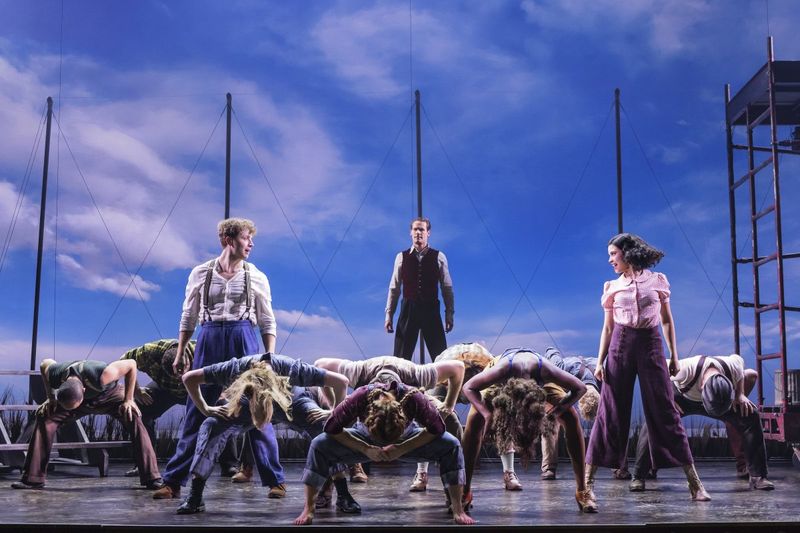
Water for Elephants, the Tony Award-nominated musical adaptation of Canadian-American author Sara Gruen’s beloved novel, made its world premiere at Atlanta’s Alliance Theatre in July 2023. The show later transferred to Broadway where it celebrated its opening night on March 21, 2024.
The Broadway production – directed by Jessica Stone, co-choreographed by Jesse Robb and Shana Carroll (who is also the Circus Designer), with a book by Rick Elice and original music & lyrics by PigPen Theatre Co. – was deemed a New York Times Critics’ Pick.
Ryan Emmons, Associate Director of the Broadway production, serves as Director of the North American tour, recreating the original direction by Jessica Stone.
Featured Photo Credit: Genevieve Rafter-Keddy
Photo Credit: Genevieve Rafter-Keddy

Sign up for all the news on the Fall season, discounts & more...
|
Powered by

|
|
MOZART REQUIEM Meridian Arts Centre (6/19-6/19) |

|
Jordan Young People's Theatre (10/16-10/23) |
|
Tuesdays With Morrie Marsh Street Centre (9/22-9/26) |

|
SHADOWS AND LIGHT Flato Markham Theatre (2/06-2/06) |
|
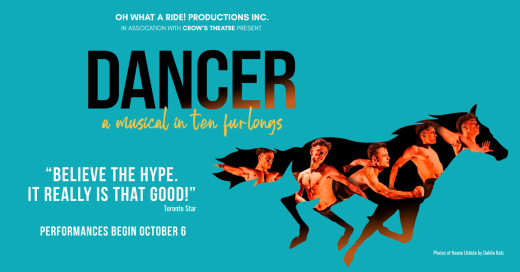
DANCER (A MUSICAL IN TEN FURLONGS) Terminal Theatre (10/06-11/01) VIDEOS |
|
Measure for Measure Crow's Theatre (9/15-10/04) |
|
Battles Young People's Theatre (4/26-5/06) |

|
Bee Gees Celebration - Soirée du jour de l''an Théâtre Capitole (12/31-12/31) |
|
Disney and Pixar's Finding Nemo Young People's Theatre (11/26-12/27) |

|
Spring Awakening Soulpepper Theatre (9/10-10/04) |
