'Our Children Don't Play Pretend — They Are Real Actors'
The founder and director of a professional children's theater on how the stage builds empathy, helps overcome anxiety, and becomes a foundation for life.
Written by: Molly Peck
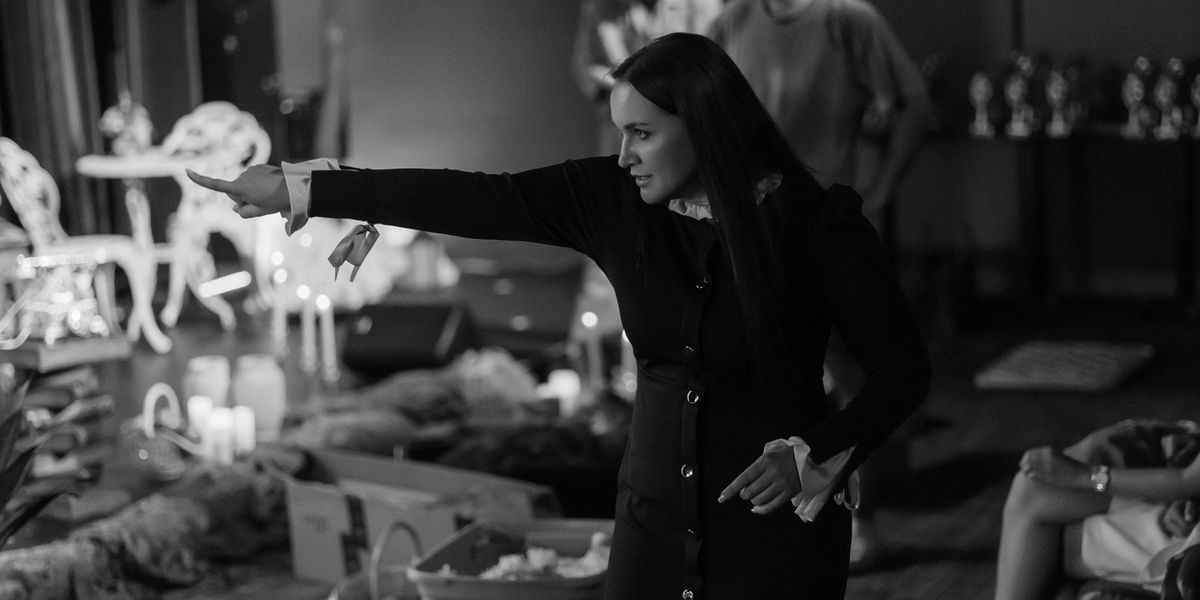
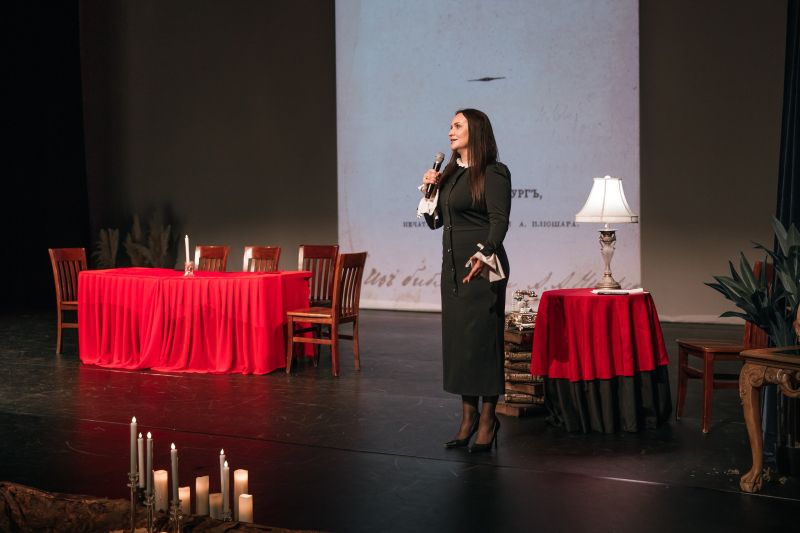
Regular engagement in arts and creative activities improves the mental health and wellbeing of adolescents. That is the conclusion of the first systematic review in 17 years, published last year in Social Science & Medicine — Population Health. The authors emphasize that children need not occasional but regular creative practice — it is precisely this consistency that generates a sense of fulfillment, raises self-esteem, and shapes a well-rounded personality. Director Irina Valiullova witnesses these effects firsthand, through the young actors of the children's theater she founded in Sunny Isles Beach, Miami. The theater operates in a format unlike any other: a company of 60 children between the ages of 8 and 14 who study acting, stage speech, dance, and vocal performance, mount full productions, and perform regularly before live audiences. According to parents and school teachers, the stage makes these young actors not only more confident, but better equipped to handle stress and more openly empathetic, Irina says. We sat down with the director to talk about how she creates an atmosphere of trust in her theater, why it matters for a child to feel like a professional, and why she pays her young actors a fee.
The idea that theater benefits children's mental health isn't new — and now science has confirmed it. The challenge is drawing children to the stage when it has to compete with digital content. What do you, as an expert, see as the most effective solution?
The crisis of attention isn't a crisis of theater — it's a crisis of an outdated format. The answer isn't to compete with digital content but to offer what digital content cannot: a live emotion, the feeling of being inside the story. What works today are interactive productions, immersive formats, quest-theater experiences, and hybrids of stage and media. When a child becomes a co-creator of a performance, their interest in the stage comes back naturally.
You've built a theater that seems to have no real equivalent anywhere in the world. Your students work as professional actors — staging full productions, performing for real audiences, earning fees. How did this bold idea come about?
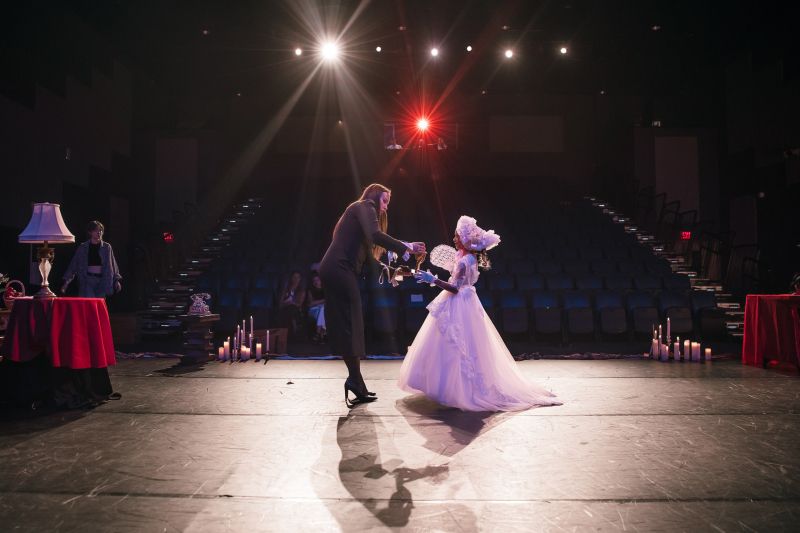
As a professional director, I spent many years working within a system where the stage demands genuine responsibility, discipline, and respect for the audience. So it was important to me that children not "play pretend" but actually are real actors — performing not only for their parents but for real audiences at civic venues, festivals, and competitions. That kind of model inevitably raises a child's internal standard of quality. As for the fees, the money itself is almost beside the point. What matters is the recognition of their work and the sense of professional standing it gives them.
Tell me about the directorial approach you use with children. As I understand it, it's rooted in role immersion — drawing children into the world of the production so deeply that they don't just inhabit their characters but learn to feel their own significance, develop communication skills, and cultivate empathy. Is that right?
Yes, role immersion is at the core of our work. But it's part of a broader system built around one central principle: the holistic development of the artist. We don't separate acting, psychology, movement, and voice. A child learns to inhabit a role through body, emotion, and thought simultaneously — and that builds not just performance technique, but inner organics.
The second element is emotional safety. Working with feelings requires sensitivity, so we create a space of trust where a child can explore fear, doubt, strength, and vulnerability — without pressure and without comparison.
The third is professional discipline. Our young actors work to adult standards: genuine partnership, accountability for their role, an understanding of how a production is structured, and respect for both the stage and the audience. This helps them become not just performers, but mature human beings.
The fourth is creative co-authorship. The children participate in building the material — proposing scenes, writing fragments, improvising, developing the physicality of their characters. They don't simply execute; they create.
And finally, there is what I call theatrical thinking. We teach children to see the production as a whole — to understand composition, rhythm, and dramatic structure. This develops the ability to think systemically.
Do parents and teachers share what they observe — how the theater changes children?
Yes, we hear from them regularly, and that feedback means no less to me than the applause after a show. Parents speak less about what happens onstage and more about the inner changes they see at home. Children become more confident, more capable of asserting themselves without aggression. Teachers notice improved concentration, stronger speech, and more mature behavior within a group.
Theater is a space where a child can safely live through emotions, learn to truly hear a scene partner, and understand where boundaries lie. Empathy develops organically, through inhabiting different roles and different lives.
One of the most striking stories involves a girl who came to us with pronounced social anxiety. She avoided eye contact, spoke barely above a whisper, and hardly interacted with the group at all. For the first few months she played small roles and mostly observed. A year later, she took the lead in a musical. But the most important moment came after the premiere, when her school teacher wrote to the family saying that she had begun actively participating in class, had become a leader in a group project, and for the first time had stood up and delivered a presentation on her own.
That, for me, is what real success looks like. The stage becomes a training ground for life. When a child learns to command their voice, their body, and their emotions, they learn to command themselves — and that stays with them far longer than any single production.
Children with cognitive and behavioral differences take part in your productions. How do you strike the balance between the artistic integrity of a show and the therapeutic goal of inclusion?
Yes, we have children with a range of cognitive and behavioral differences, and for me inclusion isn't a separate initiative — it's a natural part of a professional environment.
The balance between artistic quality and therapeutic purpose comes from having a clear structure. First, we don't lower the artistic bar. A child doesn't walk onstage out of pity — they walk out as an actor. That generates self-respect and earns the respect of their peers. Second, we adapt the process, not the outcome. Individual pacing, breaking tasks into smaller steps, working through movement, voice, and visual imagery — all of this helps a child engage without disrupting the integrity of the production. Third, we build a system of partnership. Children learn to support one another onstage, which creates a natural environment of empathy and reduces anxiety.
And most importantly, we draw a clear line between artistic and therapeutic goals. Theater doesn't replace the clinical work of specialists, but it does create a space where a child can strengthen their self-esteem, communication skills, and capacity for self-regulation. Inclusion, as we understand it, is not a compromise with quality — it's an expansion of the professional field. When a child feels that real results are expected of them, they grow faster than they would under a regime of "special conditions."
Supporting children who need adapted educational approaches is one of the priorities of U.S. social policy. You've been familiar with that kind of work for a long time — while still living in Kazakhstan, you spent years as a volunteer working with teenagers in difficult circumstances. Does that experience serve you now?
Without question — it became my foundation. That's when I understood that theater can be more than art; it can be a source of inner grounding. For many of those teenagers, the stage was the first space where they were truly heard, where their emotions were legitimate and their voices mattered.
That experience taught me the most important thing I know: every child carries a story behind them. And before you can ask for results, you have to earn trust.
Today, working with children in a different country and a different social context, I return to the same principle — respect for the child as a person. Even the most outwardly fortunate child can be navigating an internal crisis, anxiety, or loneliness. My role as a teacher is to see deeper than the role, deeper than the text, deeper than the technique. That's why our theater places so much emphasis not just on the quality of the production, but on emotional safety, on support, and on an atmosphere of trust.
I know you dream of building a whole network of professional children's theaters — and that the first step, the opening of a branch in California, is coming soon. There's interest in your methodology from Turkey and China as well. What else is in the works?
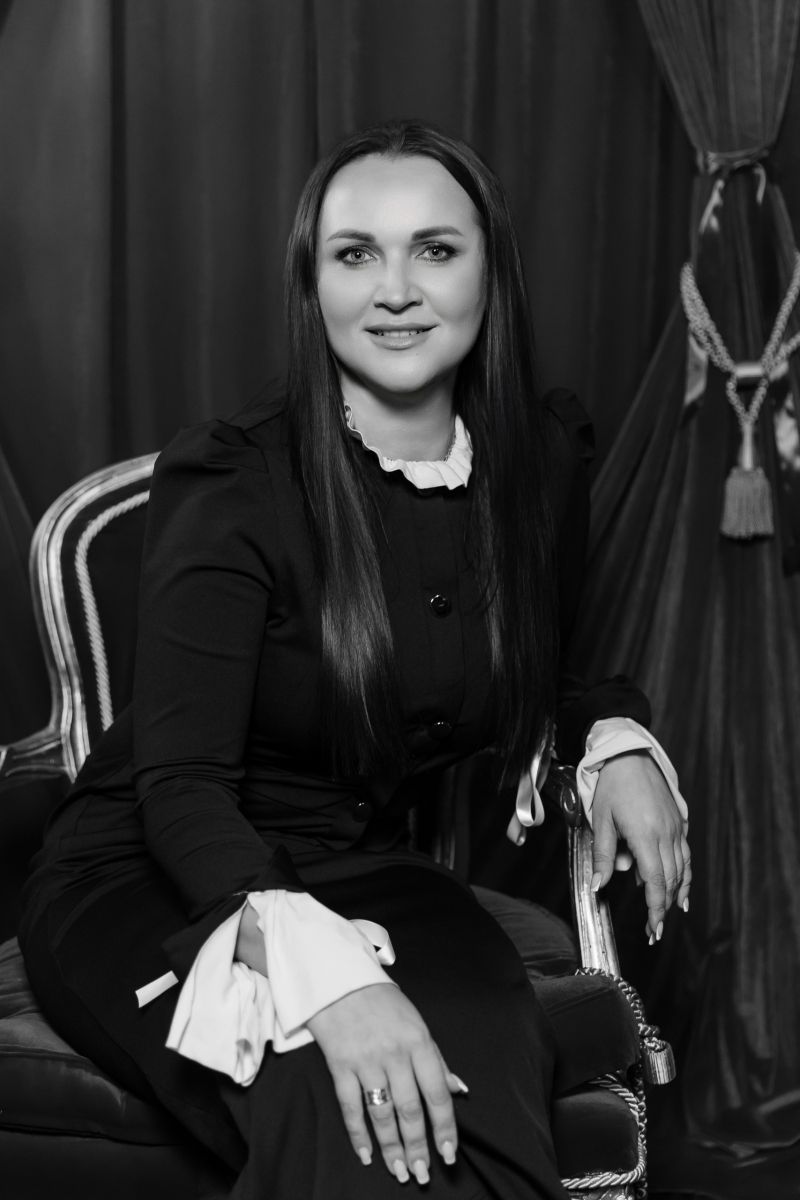
We're developing new productions that continue to advance our signature format — a synthesis of theater, movement, and cinematic thinking. It matters to us that each new show not simply repeats what came before, but raises the artistic standard and offers the children a new kind of professional experience. We're also planning festival appearances and guest performances at other venues, which for us represent not only an opportunity to reach wider audiences but an essential stage in professional growth.
The company will grow as well. We're eager to bring in new talented children and to expand our team of specialists — teachers of movement, speech, and voice, along with producers and organizational staff. Our goal isn't simply to put on shows. It's to build a contemporary model of what a professional children's theater can be.
Sign up for all the news on the Fall season, discounts & more...
.jpg?format=auto&width=300)