


Review: Lise Davidsen’s Strauss LAST SONGS is First in Anyone’s Book, with Ukrainian Freedom Orchestra
Conductor Keri-Lyn Wilson Cheers Her Musicians as ‘Heroes’ in their Geffen Hall Concert
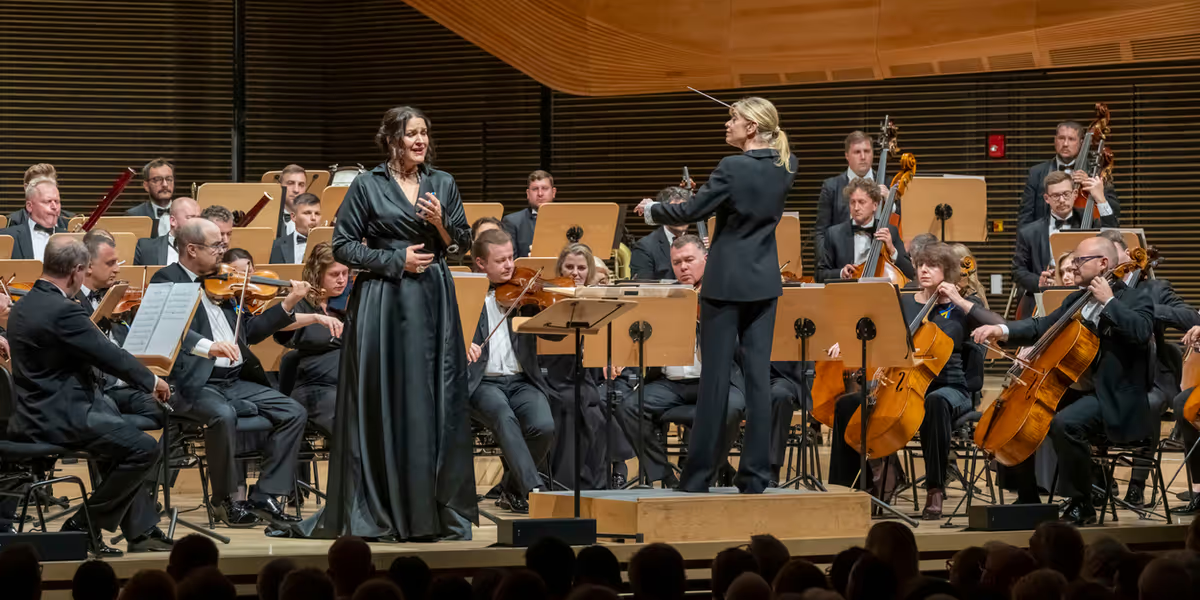
While it was only one part of the Ukrainian Freedom Orchestra’s concert, under Keri-Lyn Wilson, at Geffen Hall the other night, there’s no denying that the centerpiece for many in the audience was Richard Strauss’s FOUR LAST SONGS with the brilliant soprano Lise Davidsen—one of the Met’s star attractions these days.
I’m not generally a big fan of lieder—art songs sung in recitals, frequently in German—but I was bowled over from the first time I heard these gorgeous valedictory pieces by Strauss. As with many other listeners, I first heard a glimpse of them over 40 years ago, in the film “The Year of Living Dangerously,” in Kiri te Kanawa’s creamy-voiced recording, and I was hooked for life. Of course, there’ve been other versions of these “transparent and crystalline” (also sensuous) works, with different kinds of voices, notably Jessye Norman’s, though others prefer Elisabeth Schwarzkopf’s classic take on them, among dozens of other recordings.
I guess I was surprised to read in the program that Strauss composed them specifically for soprano Kirsten Flagstad, one of the 20th century’s most notable Wagnerians. Yet, that makes Davidsen’s affinity for them make even more sense, after her gorgeous performance last season as the Met’s Isolde. Her voice, luscious and flexible, manages to combine the power, drama and serenity that make the songs so unforgettable.
For many, the very first of the songs, “Fruhling” (“Spring”), one of three pieces that uses poetry by the great writer Hermann Hesse, is the early peak of the Strauss’s composing here. It ends with the words “your ravishing presence,” certainly an apt description for the piece. For me, though—particularly at this concert—the third of the songs, “Beim Schlafengehen” (“Going to Sleep”) brought out all the most exquisite aspects of the soprano’s vocalism. Thoughtful and heartfelt, it was absolutely superb, as was the violin solo, from concertmaster Marko Komonko, which echoed some of the most beautiful music of the piece.
The program notes mention that Strauss had originally envisioned a fifth song in the cycle, but died before it was completed. It’s hard to imagine what it would it might have added to series—but it’s worth dreaming about.
The songs were sandwiched between something new and something old. The concert began with the local premiere of a suite by Ukrainian composer Maxim Kolomiiets, which was more melodic than we often expect from contemporary music. The moving opener to the concert gave little shrift to the modernist styles so often heard today. It’s an adaptation from THE MOTHERS OF KHERSON, a new opera inspired by the heroism of mothers during the current war with Russia. It has been scheduled for a Met premiere in the 2027-28 season.
The last part of the evening was given over to Beethoven’s Seventh Symphony, not necessarily among his most popular full-length works, but given a vivid, lively rendition by maestro Wilson and her musicians. (Beethoven himself called it one of his “most excellent works.”) It is considered, according to the program notes, “the most primal, the most powerful demonstration of music, as a pure, elemental force,” of all the composer’s symphonies. While some might dispute that description, there’s no doubting the impact of the orchestra’s performance.
Wilson is both the founding music director and conductor of the orchestra. It was formed in 2022 “in direct response to Russia’s brutal full-scale invasion of Ukraine.” The leading musicians of the ensemble were assembled with the collaboration of the Metropolitan Opera, Warsaw’s Polish National Opera and the Ukrainian Ministry of Culture.
Caption: Soprano Lise Davidsen with conductor Keri-Lynn Wilson and the Ukrainian Freedom Orchestra at Geffen Hall
Photo credit: Richard Termine/Met Opera
Sign up for all the news on the Fall season, discounts & more...

Reader Reviews
To post a comment, you must register and login.