


MARINA, Umberto Giordano's Lost Opera, Makes World Stage Premiere in Foggia
Director Giandomenico Vaccari set the verismo drama in the World War I era, with Valeria Sepe in the title role.
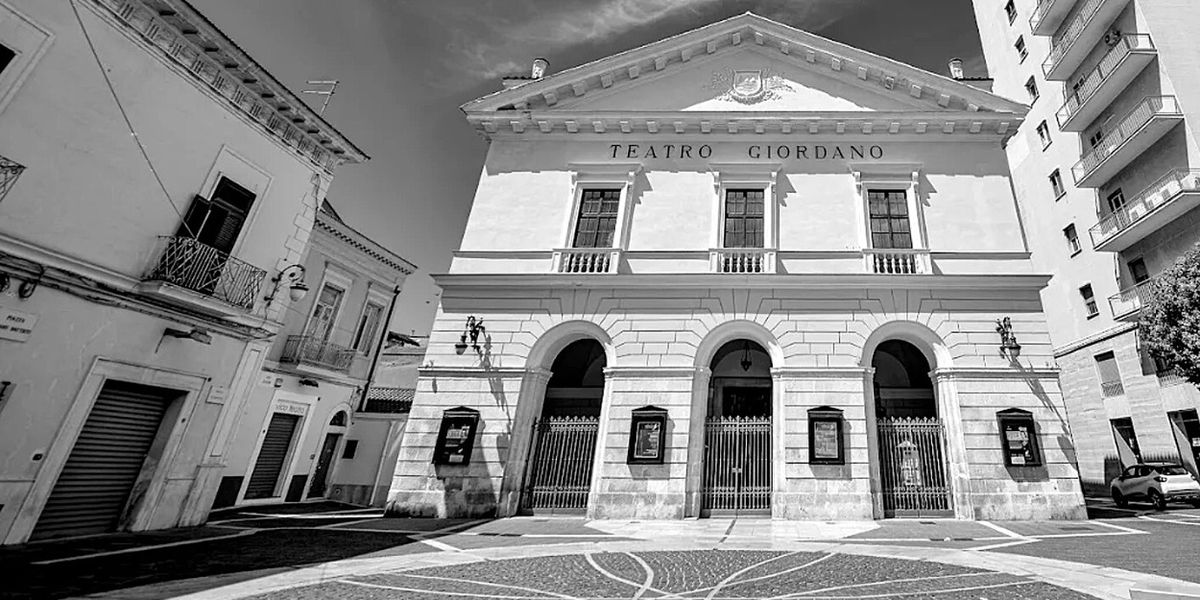
In a theater that bears his name, in the southern Italian city where he was born, the ghost of Umberto Giordano finally got to hear his first opera performed on a stage.
The occasion was Marina, a one-act melodrama that the composer wrote in 1888 at the age of just 21, while still a student at the Naples Conservatory. It passed directly from that act of youthful creation into more than a century of near-total silence — staged, to anyone's knowledge, essentially never. On the night of June 5, 2026, at the Teatro Umberto Giordano in Foggia, that silence finally broke. The world-premiere staging was the opening event of the inaugural GIO Festival, and by all accounts it was a triumph.
The numbers tell most of the story. One act. One curtain. One hundred and thirty-eight years between composition and fully staged premiere. The opera was entered into the second edition of the celebrated Sonzogno Competition in Milan in 1888 — the same contest that, two years later, would crown Pietro Mascagni's Cavalleria rusticana and ignite the verismo revolution. Marina did not win. It received an honorable mention. But it caught the attention of Amintore Galli, the publisher's music advisor, and Sonzogno signed the young Giordano on the strength of it — a chain of events that would eventually lead to Andrea Chénier and Fedora, and to Giordano's permanent place in the fin-de-siècle canon. The opera that started it all, meanwhile, drifted into the archive.
It waited there, essentially forgotten, until early 2026, when it received its first-ever concert performance at the Teatro Dal Verme in Milan — in a critical edition prepared by musicologist Andreas Gies and promptly recorded by Decca. That event was a beginning. Foggia, where Giordano was born and where his name still graces the local conservatory, would be the place where Marina finally got a production.
'The rediscovery of Marina marks a historic event,' the GIO Festival's artistic direction declared in presenting the production. 'An opera that has remained unperformed finally comes to life in fully staged form for the very first time.'
The opera itself, with a libretto by Enrico Golisciani, unfolds against the grim backdrop of Serbian-Montenegrin hostilities in the late nineteenth century. At its center is Marina, a young woman crushed within a fierce patriarchal family structure, whose world is upended when she falls for Giorgio Lascari, a wounded soldier from the enemy side. The love between them is sudden, visceral, and impossible, and the opera arrives at its end with the brutal efficiency typical of the verismo impulse: jealousy, violence, a femicide that feels both inevitable and horrifying. Director Giandomenico Vaccari — working with sets and costumes by Alfredo Troisi and lighting by Massimo Russo — transposed the action to the First World War era, surrounding Marina's domestic space with grey uniforms and peeling walls that amplified the work's themes of gendered subjugation and the senselessness of warfare without departing from the spirit of the text.
On the podium, conductor Matteo Dal Maso — recent winner of the Donatella Flick LSO Conducting Competition — led the Orchestra Sinfonica del Conservatorio Umberto Giordano of Foggia with a discipline that balanced the score's youthful impetuosity against its considerable lyric intelligence. Soprano Valeria Sepe, who has sung at the Maggio Musicale Fiorentino, the Regio di Parma, and the Arena di Verona, commanded the title role with a vocal warmth and dramatic presence that made Marina's interior life fully legible. Tenor Samuele Simoncini gave Giorgio Lascari a passionate, technically assured reading that reached its peak in the aria opening the second half. Baritones Elia Fabbian and Cüneyt Ünsal completed the cast as, respectively, the vengeful Lambro and the imperious Daniele. The Coro della Fondazione Teatro Petruzzelli, directed by Marco Medved, was, as ever, a cut above.
The score that emerged beneath the production's surface is a more sophisticated artifact than its author's age might suggest. Echoes of late Verdi and Bizet's Carmen are audible in the concertati and duets, but Giordano was already pushing past the rigidity of set-piece forms toward the fluid, word-driven continuity that would define his mature style. The Symphonic Intermezzo bridging the opera's two halves is, on its own terms, a small gem — a compressed psychological portrait told entirely through the orchestra.
That this particular gem was finally allowed to gleam owes much to Foggia itself. The GIO Festival — the Giordano International Opera Festival — was launched by the Camera di Commercio di Foggia in partnership with the City and Province of Foggia, backed by the Regione Puglia and Puglia Culture, under the artistic direction of Gianna Fratta and Dino De Palma. Its ambition is anything but narrowly archival. Spread across 22 events running through June 20, the festival stretches from Foggia to the Gargano promontory and the Monti Dauni, combining opera with jazz, film, dance, chamber music, and scientific programming — a portrait of an entire territory reaching, through Giordano's music, toward a wider international conversation.
The closing event offers the clearest measure of that ambition's scale. On June 20, Piazza Cavour in central Foggia will be transformed into an open-air theater for a production of Andrea Chénier — Giordano's masterpiece, originally staged at La Scala by film and opera director Mario Martone — that required thirteen semi-trucks to transport from Milan. Artistic director Gianna Fratta will herself take the podium to conduct the Coro and Orchestra del Teatro Petruzzelli. Spanish tenor Jorge de León will sing the title role, with soprano Maria Agresta as Maddalena. A significant portion of the seating will be free and open to the public.
In a region more often defined in national discourse by its structural challenges than its cultural exports, the GIO Festival is something else: a sustained argument, made through music, that Foggia has always had something to offer the world. It just took a 138-year-old opera, finally arriving on the stage where it belongs, to say so out loud.
Sign up for all the news on the Fall season, discounts & more...
