


Review: LUCREZIA BORGIA at Opera Royal De Wallonie Liège
What did our critic think of LUCREZIA BORGIA at Opera Royal De Wallonie Liège?
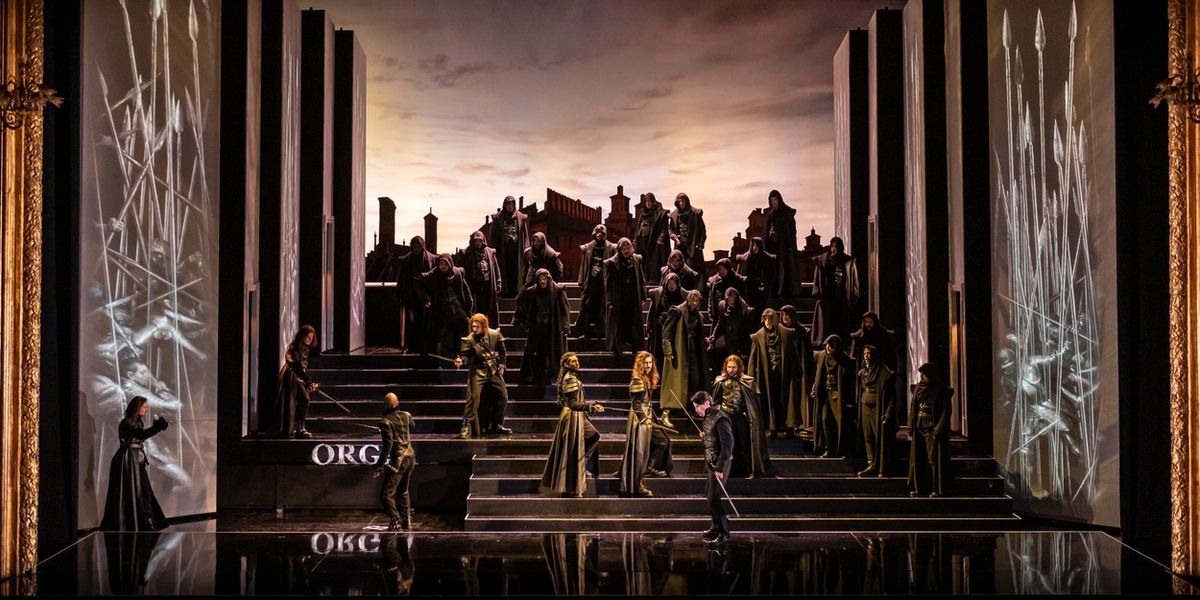
Lucrezia Borgia at Opéra Royal de Wallonie-Liège
Some evenings remind you why opera exists. LUCREZIA BORGIA at Opéra Royal de Wallonie-Liège did exactly that, in a space that feels fully aligned with what opera stands for, vocal mastery, ritual, and a visual world built to carry myth sized emotion.
This final performance of the run also came with an added sense of occasion. The house was full, and the evening was filmed for Mezzo for later broadcast. The audience was dressed with a level of elegance that felt almost nostalgic. It brought back the etiquette people once treated as normal for a night at the theatre.
Opera and musical theatre are different art forms, with different priorities. Opera was invented to spotlight the voice, its agility, its beauty, its raw capacity for color and intensity. Story often serves as the vessel. That legacy can still be felt in productions where performance and staging stay secondary to singing. This LUCREZIA BORGIA offered a different experience. The era felt respected. The acting level was unusually strong. The visual concept was rich and coherent. It proved that a classic can feel fresh without losing its identity.
Giampaolo Bisanti led the Opéra Royal de Wallonie-Liège Orchestra with a wonderful sense of line and breath. The Bel Canto pulse stayed alive, and the orchestral sound supported the singers with care and warmth, while still giving Donizetti’s writing its dramatic bite.
Jean-Louis Grinda’s staging worked hand in hand with Laurent Castaingt’s sets and lighting, with costumes by Françoise Raybaud. When the curtain rose, we were reminded what a proper opera set should look like. Stone steps climbed toward a horizon line so convincing it felt like Venice waited just beyond the stage. Six tall panels framed the space and shifted constantly through projections, moving from Renaissance imagery into skies, then into washed religious paintings. At one point, the walls seemed to open into giant painted faces, prying eyes watching from within. Arnaud Pottier’s video work played a central role in that visual architecture. The sky itself looked hyper realistic, stretching across the full upstage space and grounding the production in a tangible world.
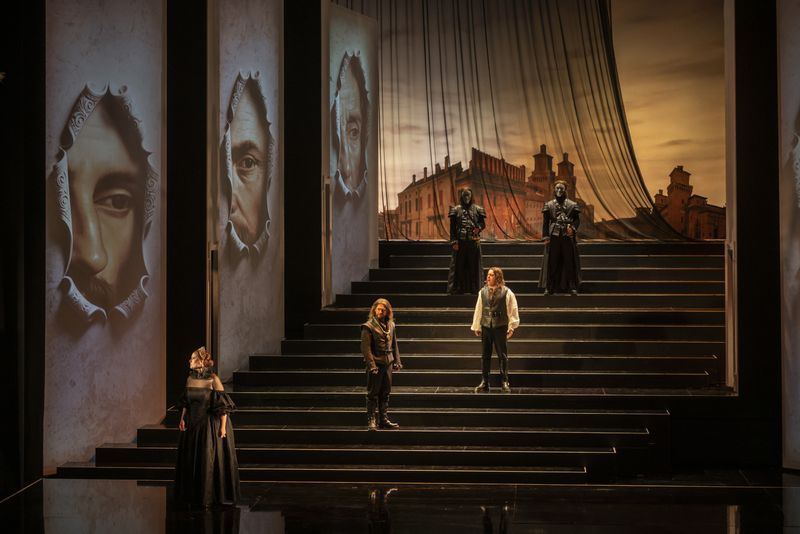
Castaingt’s lighting was sublime. The stage felt sculpted through shadow and glow, with moments that approached a Rembrandt-like chiaroscuro. Everything grows from one strong symbolic idea. The aim is never simply to make the singers’ faces visible with ordinary warm or cool light. Instead the lighting places them inside the exact dramatic atmosphere the story demands.
Françoise Raybaud’s costumes carried the same paradox that defines great period design. They read as classical, and they still felt fresh.
The ensemble work also deserves real praise. The opening chorus brought a refreshing energy, with dynamic movement and constant life in the crowd. People interacted, reacted, and kept the piazza feeling present, even during solo passages. That kind of living chorus pulls the audience deeper into the drama. Finally a staging that cares about the theatrical aspect of the ensemble !
.jpg?format=auto&width=800)
Julie Boulianne’s Maffio Orsini had a rough start, especially in the low register, where the voice initially disappeared into the combined weight of orchestra and chorus. Higher passages carried far more clearly.
Jessica Pratt’s Lucrezia Borgia was the absolute highlight of the evening. Her voice is imply amazing. She has a heavenly control over the upper register, especially in the piano and pianissimo passages. Her tone remains impeccable, flexible and seamless across the entire vocal range. She lets genuine emotion fuel the voice which makes her acting also stand out; we rarely see this level of quality from opera singers. She is, without question, the best Lucrezia I have seen live on stage.
.jpg?format=auto&width=800)
Marko Mimica’s Alfonso d’Este balances the drama as the perfect true villain in a story crowded with more villains than heroes. He brings a strong, powerful voice, excellent stage presence and subtly nuanced acting.
.jpg?format=auto&width=800)
Dmitry Korchak’s Gennaro possesses a very beautiful and powerful voice filled with emotion, subtlety and color and his acting and singing in the second act elevates the character to another level.
.jpg?format=auto&width=800)
Several moments stood out as highlights. The interaction between Lucrezia and Alfonso was particularly well blocked. The singers stayed connected to each other rather than facing the audience, which, again, is rare and the result was a mooment of continuously rising tension built through strong physicality between the two characters.
The trio that closes the first act delivered high intensity and very good acting alongside impeccable singing.
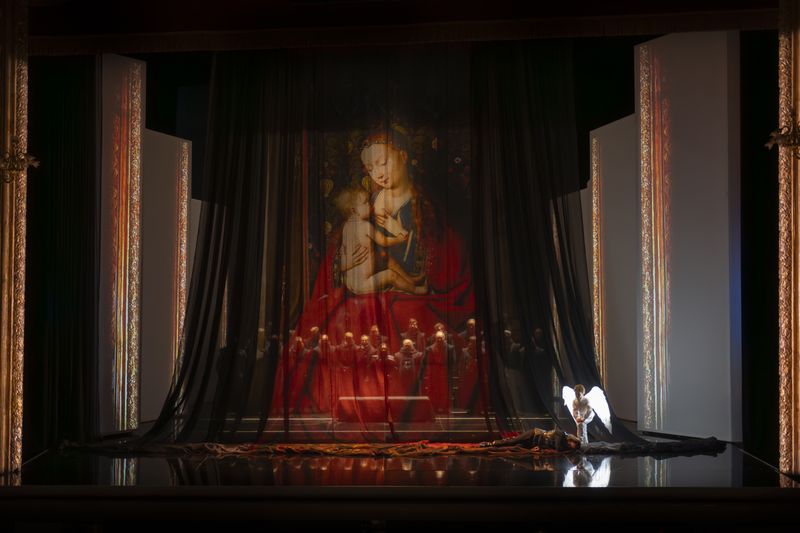
The second part opened with the curtain rising on a huge painting of the Madonna and Child printed on a semi-transparent cloth. The shift in texture from canvas to fabric, complete with folds, wrinkles and imperfections, created an absolutely unique image. It added further symbolism and depth to Gennaro’s aria as he held his mother’s letter. The aria itself was beautifully sung, its voice color traveling across a wide range of emotions. Then the cloth was lit from behind and the texture of the space changed. The contours of the chorus appeared behind it as if materialsing out of thin air. The use of texture, light and space felt truly masterful.
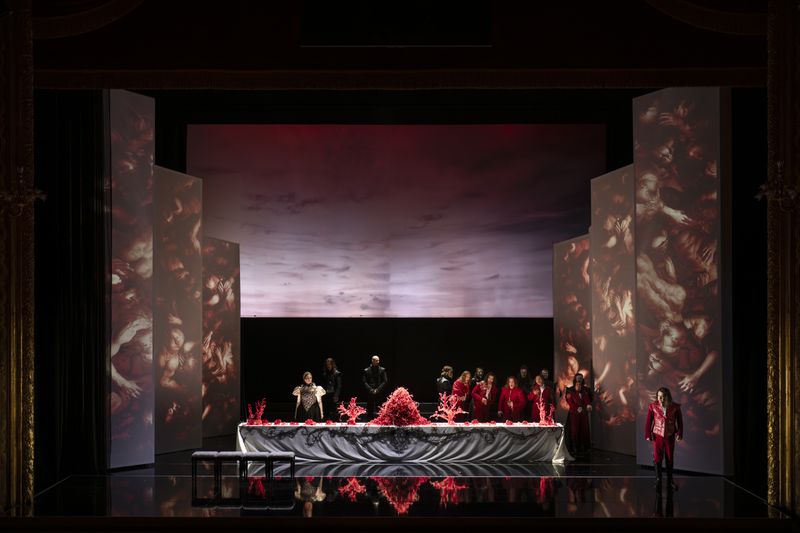
Then, the feast scene arrived. The cloth lifted to reveal a beautiful banquet table dressed in a white cloth with crimson-red flower arrangements and chandeliers. The panels lit up with paintings of intertwined bodies and burning fire that instantly gave the scene visual energy. The chorus sang beautifully and with perfect nuance, yet visually and in terms of acting, I wished there was more of the decadence, depravity and sensuality that belong to the banquets of the period. The ensemble seemed too nice and shy.
The set change during Lucrezia’s confession to Gennaro unfolded with much elegance and subtlety. A black cloth crossed the stage like a transparent shroud of death. The table rose slowly into the air as if gravity had vanished and we were left with a white sky, white walls and the semi-transparent black cloth hiding the chorus, now dressed in black and white like spectres.
Gennaro’s death looked a bit too beautiful and proper for a poisoning, yet both singers acted the moment extremely well.
The finale was also beautiful. A black cloth rose bearing the image of Michelangelo’s huge, majestic Pietà. That is when we fully realise that the show is, after all, about a mother’s journey of getting back to her son and the tragedy of losing him once she reveals herself to him.
This production of Lucrezia Borgia stands as a profound tribute to Italian art and to the sublime legacy that Italian opera has left throughout the centuries. In that final, transcendent image, the entire evening achieved something rare and unforgettable, a perfect fusion of music, theatre, and visual poetry that reminded us why this art form still matters so deeply in 2026.
Rating: 9/10 - A refreshingly beautiful reimagining of a classical opera. I would say you can't miss it, except it has unfortunately finished its run. Don't miss it on Mezzo, though.
Photo Credits: Official Opéra Royal de Wallonie-Liège
Sign up for all the news on the Fall season, discounts & more...

Reader Reviews
To post a comment, you must register and login.