


Review: GRICEL - A TANGO STORY at Espace Lumen
Virtuosity, Heart, and Real Theatrical Stakes
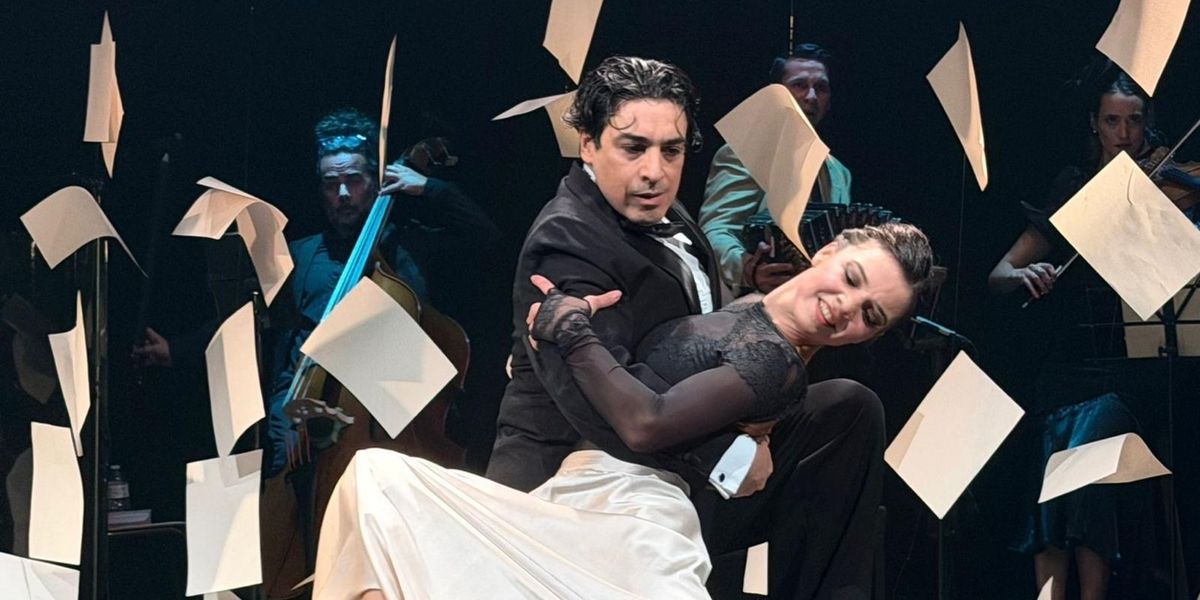
I will say one thing to begin with: this show doesn’t take long to pull you into its world. From the first moments, it sets a rich Argentinian tango atmosphere that remains constant all evening, not as background only, but as the shows’s emotional drive. This is a piece built on rhythm, longing, and physical storytelling, where tango’s sharp elegance meets contemporary movement and a clear desire to tell a love story through bodies, voices, and live music.
Before getting into what the artists deliver onstage, which was a treat, it’s worth separating the experience of the venue from the work itself, because they’re two very different conversations.
Espace Lumen’s front of house experience felt more disappointing than welcoming. The auditorium comes across as dusty and tired, the wooden seats are highly uncomfortable, the color palette of the space feels uninviting, and the entrance and circulation towards the auditorium aren’t smooth at all. The foyer is also very small for the amount of people the space needs to receive, which creates friction at precisely the moments you want the audience to settle. The night ended with something I’ve rarely experienced in a theatre setting, the post show bar and networking atmosphere was abruptly shut down with staff audibly pushing people out because the venue was closing. That kind of exit doesn’t serve anyone, not the audience, not the artists, and not the venue’s own reputation. The performance also began after a significant delay, close to 45 minutes. That kind of start can drain energy from a room, yet the audience stayed strong. The auditorium was around three quarters full, and the balcony was full as well, which says a lot about the interest this project is already generating.
None of that is the company’s responsibility, and it doesn’t reflect the quality of what happens on stage.
Once the show begins, the craft does the convincing, starting with a prologue that immediately raises the artistic temperature. Christine Dakin, former principal dancer and artistic director of the Martha Graham Dance Company, appears as Pascual Contursi’s spirit, and her presence is genuinely mesmerizing. She has an innate elegance, and the look in her eyes is hypnotizing. Even before the evening fully launches into its dance and music architecture, she establishes a sense of myth, memory, and inevitability, like the story is already haunted by what’s coming.
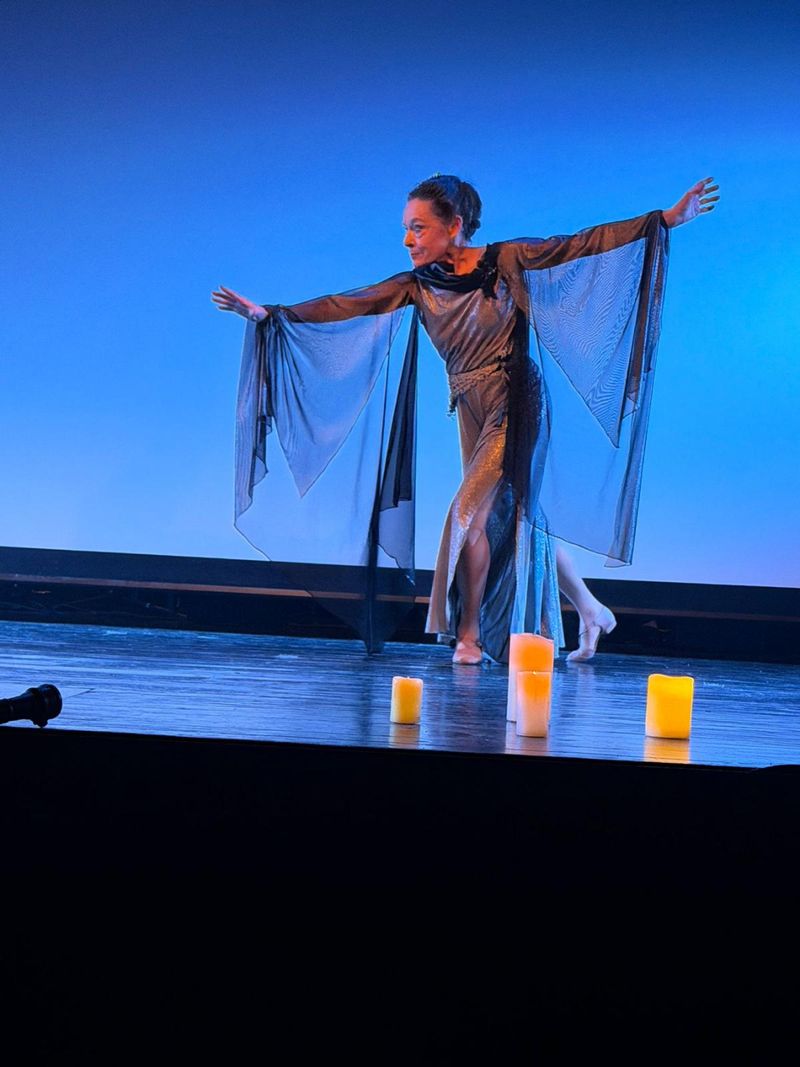
A striking early win is Gricel’s first appearance which is literally an entrance built on silence. She dances without music, and it’s unexpectedly effective. If music lives in the body, then movement can make you hear it even when the room is quiet. That choice instantly reframes how you watch the choreography. You’re no longer waiting for the music to tell you what to feel. You’re watching the body create the story.
.jpeg?format=auto&width=800)
Astria Apel, who signs the direction and choreography and also embodies Gricel, is absolutely amazing. She has a stage presence that’s light, intense, precise, and distinctly theatrical. You don’t just admire the technique, you attach to the character quickly, which isn’t a given in dance led storytelling. Apel’s strength is that she doesn’t perform steps. She performs intention. Even in stillness, there’s a sense of thought moving behind the eyes.
The production’s musical identity is another major asset. There’s a strong blend of sung material and orchestral textures, all rooted in the emotional world of tango. The singing doesn’t feel like a decorative concert layer. It feels integrated, like an extension of the dramatic spine and when the voices come in, the show’s scale lifts.
Great examples are the live songs, delivered by Martín Troncozo and Claudia Pannone. They’ve got the kind of tango timbre that carries history inside it, bright edge, grounded deep resonance, and an instinctive sense of phrasing. Their sound adds weight to the narrative, and it pushes the stage picture into something more cinematic.
If Act 1 is about setting the atmosphere and carving character tension, it’s also about building toward one major peak, the act ending trio. The music there is conflict driven, and the performance leans fully into anguish and theatrical spleen. It’s intense, it’s beautifully shaped, and it feels earned. The acting inside the movement is clear, and the choreography doesn’t soften the emotional conflict to stay pretty. It delivers. That act ending led by the amazing Astria Apel, the profound Mariano Galeano and the very talented Paula Rubin, was definitely the highlight of the first half, not only for dance prowess, but also for dramatic clarity.
The second half opens at high intensity again, and it contains one of the strongest choreographed depictions of pain and inner rupture I’ve seen on stage in quite some time. It’s not pain illustrated, it’s pain embodied. The shapes aren’t generic, and the pacing isn’t rushed. The choreography takes time to let discomfort bloom into something almost unbearable, then it releases it.
Mariano Galeano, as Katunga, brings strong acting to match the choreography’s emotional ambition. The character reads very clearly, and the arc feels very much intentional. The production’s best moments are the ones where acting and dance stop being two separate skills and become one language.
A recurring feature of the staging is the appearance of demonic figures, who return throughout the show in duets that burst with punch and theatrical tension. These sequences are technically overwhelming in the best sense. The complexity is high, but it never feels lifeless. The tension inside the partnership is what makes the virtuosity work. Tango can easily become athletic display. Here, it stays dramatic.
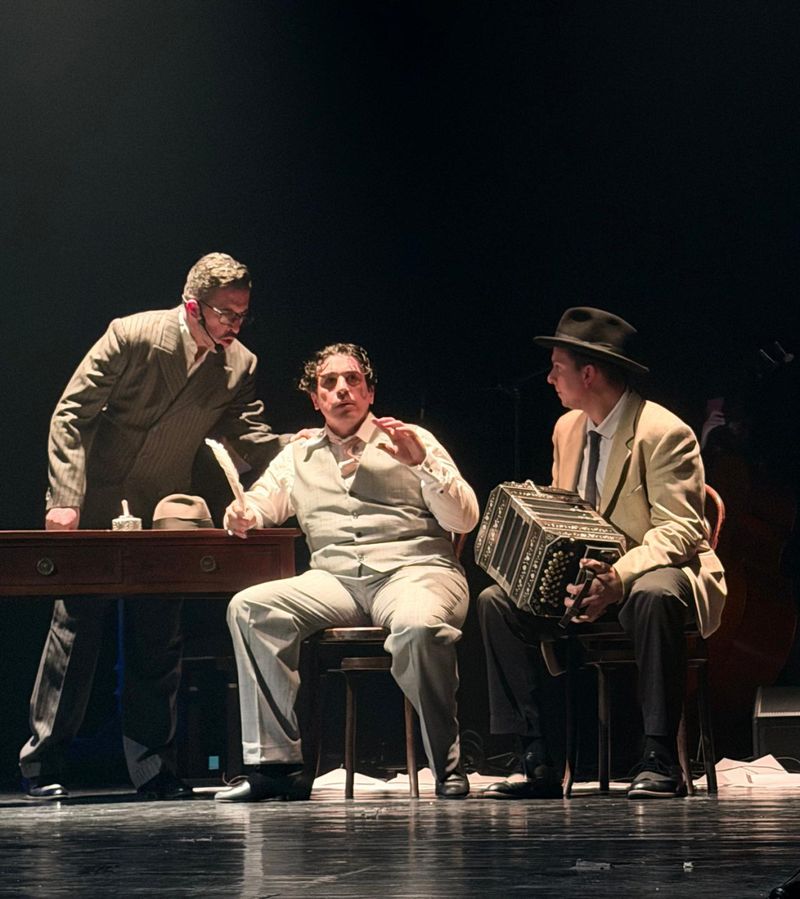
There’s also a comic relief sung number with two male performers that arrives exactly when the show needs it, in the first act. It doesn’t break the world, it just lets the audience breathe for a moment.
Visually, the costume work supports the show’s emotional palette beautifully. Gloria Bermudez’s designs have lustre and life, satin shine, lace texture, and a sense of quality that is visible from a distance.
One inventive theatrical moment features three spectral presences with stylized dark face design and a strong physical silhouette. It’s a simple idea, but it’s staged with enough clarity that it hits instantly and adds a fresh visual accent to the piece.
By the time the finale arrives, the show becomes a feast for the eyes and ears and we forget all about the venue, the uncomfortable chairs or the unwelcoming space we’re in. Not many shows make you forget discomfort. This one surely does.
Every time the choreography expands into group work, the ensemble brings a level of commitment that’s impossible to miss. In Valsesito Amigo, even if the choreography itself comes across as a little less passionate than the show’s most intense duets, the dancers stay perfectly in sync and fully invested. You can see the dedication in their precision, their stamina, and the way they keep the atmosphere alive as a collective ensemble. That discipline gives the show structural strength, and it keeps the energy up when the storytelling shifts into broader strokes. A special mention goes to ensemble member Heidi Chadjideris, whose theatrical presence and passionate gaze made her stand out. You could see she wasn’t just executing choreography, she was living the story in real time.
A special call out goes to the onstage musicians, especially Juan Gabriel Romano on the piano, Virgilio Monti on Double Bass, Melody Quinteros on violin and Nicolas Maceratesi on Bandoneon. The live musical presence doesn’t just accompany the dancers, it actively drives the atmosphere and raises the production’s overall level.
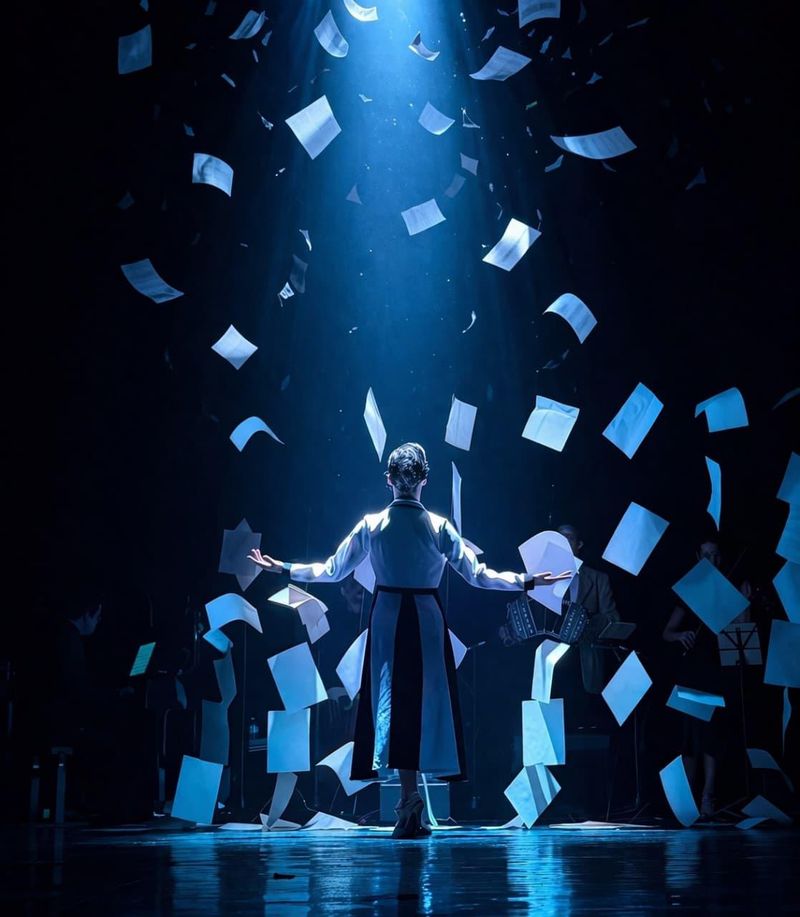
GRICEL - A TANGO STORY is already a high quality, professional work that definitely deserves more visibility and a better venue. It brings a new show with tango centered music, and it treats tango as theatre, not as ornament. If the production continues to develop, the one element that could push it from excellent to truly amazing is a slightly clearer narrative arc from a story point of view. The building blocks are already there, and when they connect, they connect beautifully.
For audiences who love tango, who love strong performers, and who respond to a passionate love story told through movement, this is absolutely worth supporting and seeking out.
Rating: 8/10 (overall rating) +1 point for innovation and creativity. Final rating: 9/10 (Strongly recommended for tango lovers craving innovation).
Photo Credits: Mariano Galeano & Astria Apel
Love Theater in Belgium? Join The Community!
Whether you've got past experience writing about theater or just starting, the BroadwayWorld Community offers a unique opportunity to become a champion for your local arts community, helping raise awareness of local offerings and adding another local voice to the conversation at a time arts coverage is shrinking in the press across the continent. Join us and become a pivotal part of the movement that celebrates and promotes the arts in the digital age.
Learn MoreSign up for all the news on the Fall season, discounts & more...
|
Bohemian Rhapsody Stadsschouwburg Antwerpen (3/24-3/24) |

|
La Cuisine de Monsieur Rossini Theatre Du Parc (2/07-2/07) |

|
Vrienden voor het Leven Capitole Gent (6/20-6/20) |

|
Jeanne d''Arc by the Glen Lambrecht Ballet Capitole Gent (12/01-12/01) |
|
The Lord of the Rings: The Fellowship of the Ring in Concert - #1 Vorst Nationaal/Forest National (12/19-12/20) |
|
The Wallflowers Capitole Gent (11/18-11/18) |
|
Tango Passion Théâtre Royal (4/10-4/10) |

|
Michael Jackson Celebration Capitole Gent (2/06-2/06) |

|
My Hero Academia Stadsschouwburg Antwerpen (9/25-9/25) |
|
|
Mathieu Stepson Cirque Royal (1/20-1/20) |

Reader Reviews
To post a comment, you must register and login.