

Interview: Ilana Khanin of YOU MUST CHANGE YOUR LIFE at Alumnae Theatre
New show explores the experimental legacy of Richard Foreman
When it comes to experimental theatre in North America, few have a legacy as long, dedicated, and influential as Richard Foreman. When Foreman died in 2025, he left an archive of over 50 years of work from his Ontological-Hysteric Theatre company, founded in 1968. Foreman’s theatrical explorations prioritized immediacy and the present over a fixed sense of narrative, focusing on the process of the play’s creation and the audience’s interpretation.
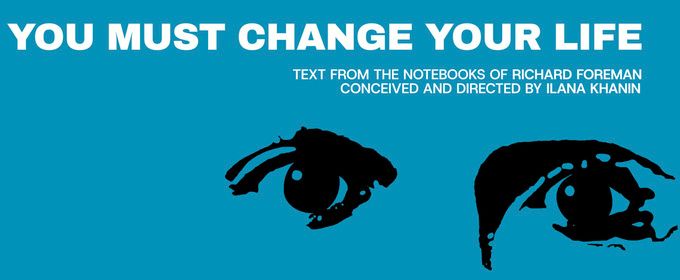
Ilana Khanin has been interested in Foreman's work for years. This week, she premieres a show based on Foreman's diaries and texts, You Must Change Your Life, at the Alumnae Theatre.
BWW spoke to Khanin about Foreman's legacy, transferring his ideas to the Toronto stage, and grappling with the experiment of making theatre.
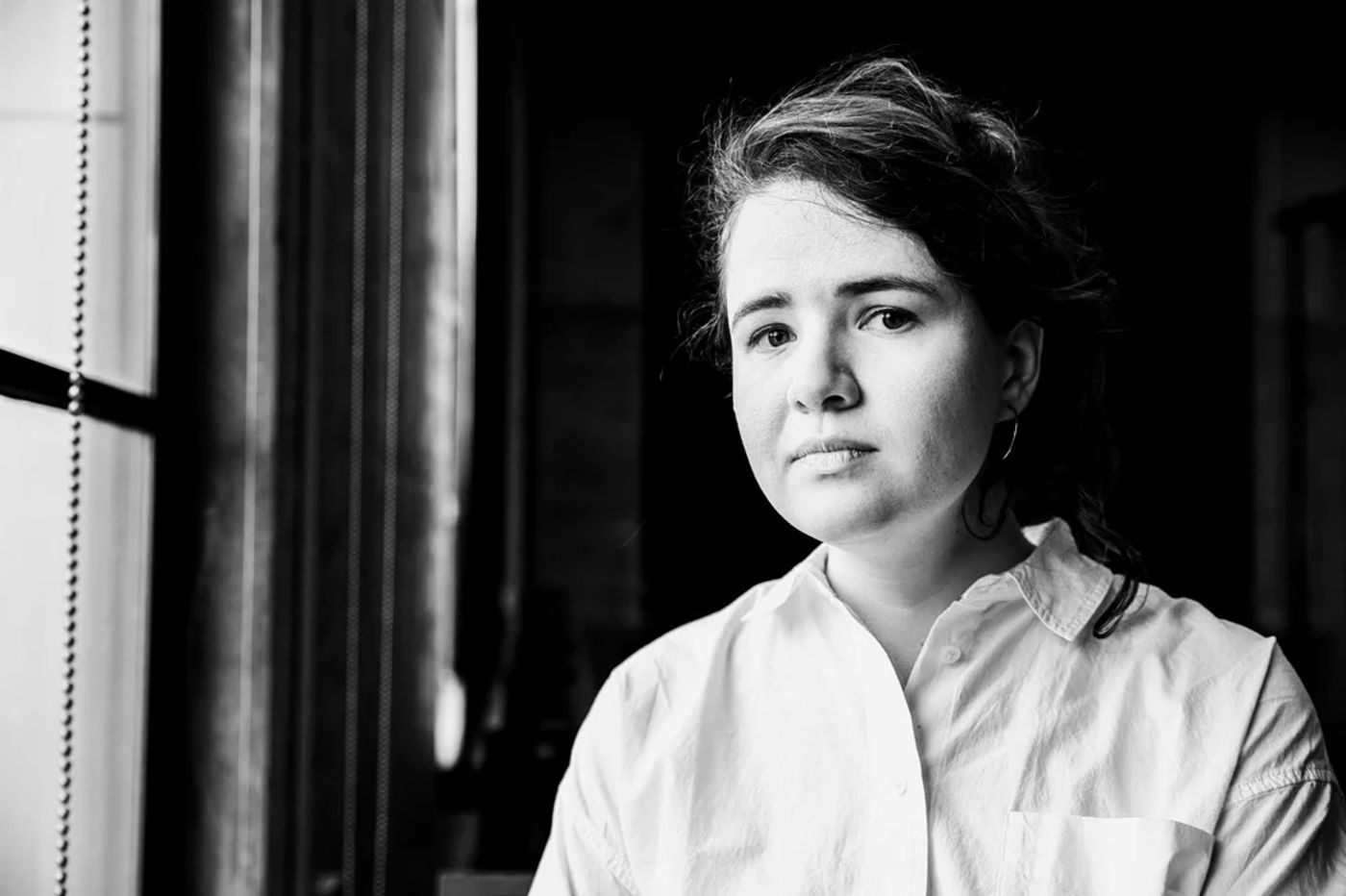
BWW: This project sounds fascinating. When I lived in New York, I only saw one of Richard Foreman's works, 2008's Deep Trance Behavior in Potatoland, but it was quite the experience. A lot of our readers won't have that much familiarity with Foreman. Could you tell us about your inspiration for this piece, and what attracts you to Richard Foreman's diary and his work?
KHANIN: I'll start from the beginning. When I was in undergrad, I went to NYU, I was really craving more experience in the world outside of my small program. And so I wrote to this theatre; I'd seen a couple shows there, but really the most convenient part was that it was really close to NYU. It was called Incubator Arts Project. Then I became an intern there, and learned that this was Richard Foreman's theatre, and a lot of the people who ran Incubator were the people who had worked with him and had taken over to try to make it into a place for new work. It was kind of amazing, because the space itself was so saturated with the history of his plays; his posters were everywhere, and all these props from his shows, and layers of paint from all the things that had happened. At that time, he also had a show at The Public Theatre. This was the only one of his plays that I had seen live. It was Old-Fashioned Prostitutes, which I believe was his last piece.
It was a very transformative experience. I couldn't tell what was going on. He had this incredibly complicated set that you could spend hours looking at and not understand all the details. I remember being totally transfixed and very confused in the best way, and it made a huge impression on me. And my favourite moment from that production is that in the middle of it--because he used voiceover, his own voice, in so many of his shows--his voice in the middle of the play goes, "End of Play." And the woman behind me was like, "Thank God," because she was probably a Public Theatre audience member who didn't know what she was getting into. And then the show went on for just as long. This memory is so vivid to me, but I think it describes his work so well, in that it is really disorienting. It does loop back on itself. It has this very strange relationship to narrative, where you're never quite sure where you are, what's going on, so many things are happening all at once.
I loved that production, and then I remember learning about his notebooks at that time, I think this was 2013, and I was really obsessed with the way he writes. His archive of notebooks is huge. It's an enormous amount of material. And he put them online and wrote, "I make this freely available for anyone who wants to do anything with it." A lot of the notebooks are just little fragments, sometimes there's one sentence, sometimes you can tell he's starting to work out a play. Many things reoccur in his writings. He's definitely very interested in theatre, he's really interested in creativity or not being able to be creative. He's really interested in people trying to leave the room and not being able to. It feels like a very intimate relationship to get to know someone through this very unfiltered text. It's very wonderfully unembellished to share in this online form. So I knew about them. They were always on my mind, and I didn't quite know what to do with them, but they were just always floating around.
He passed away, all these years later, in January 2025. So there's a resurgence of interest in his work in New York. People were talking about him so much more. I've been thinking about him so much more, especially as I've had conversations with people in Toronto about what it means to make experimental work, and I feel like he is really this figure in my mind of what is truly work that is an experiment. I feel like I'm drawn to this material again. It feels like there's something that I want to grapple with him.
I don't think he would ever want anyone to try to stage work in his theatrical language. But it really feels like a conversation with this person who's no longer here. That's how I ended up doing this. I never got to meet him, but he was so in the air of people around me for so long. Incubator Arts Project closed in 2014, which was a very sad moment, but I remember someone giving me a chandelier from one of his old productions. I'm so sad it got lost somewhere in storage, or in a move, but I just I think about that object sometimes, like where it is, and how it lives.
BWW: So you would say you're not trying to stage something like a Foreman production. This is more of a conversation with his work, rather than an attempt to recreate one of his productions.
KHANIN: Yes, yes, absolutely. It's interesting to work with the notebooks, because the ideas are so vivid, and the writing is so specific, that it feels like, as I've been working on it, the thing is emerging itself. It doesn't feel like I am imposing on it. By no means am I interested in doing something that I think he would do, because I think he was so singular, right? He would work on these productions that he made for an entire year, and would layer things in. He would build a prop, and then bring it to rehearsal, and then change it, and then rewrite the script. So I think a lot of his work came out of that kind of process, and this layering of complexity very specifically out of his own mind, and I think that's why they feel alive. So any attempt to recreate that wouldn't ever work.
In January, there was a restaging of Foreman's opera, What to Wear, at BAM (Brooklyn Academy of Music), it was part of Prototype. The directors of that show had been in conversation with Richard Foreman for a while about doing it. And he said to them, you can do whatever you want with it. And they were like, why would we change anything? It's just so perfect as it is.
The archive of his work is online. It's free to watch for anyone, and I think that's an incredible gift. There are so few theater artists that have their work so widely available, so people should definitely watch his work. This project is not trying to be that, it's trying to be something in conversation with his writing, and seeing what comes out of that.
BWW: When I think of Foreman, I think of his luxurious process, the fact that he was able to spend so much time and so much care to develop and redevelop. I was re-reading one of his obituaries, which said that when you think of the end of an era with Richard Foreman, you also think of the end of the era with affordable rents in New York, and the ability to spend so much time producing something that's so experimental. So, in a way, it's lovely that he's given back and made his work so freely available to a generation that doesn't quite have the same luxuries as the generation that was coming up in the 1960s, to have that conversation and to play with it.
KHANIN: Yeah, exactly.
BWW: When you say you're in conversation with his work, what is that conversation like? How do you find that manifesting? I don't want to say, what's it about? But to give this amorphous concept a little bit more shape, where is the conversation going?
KHANIN: I think I can share a little bit about the process of it, because it is so rooted in that. When I started working on this, I read through all of the notebooks, a huge archive of work. I basically just pulled out anything that really resonated with me. It was loose, I didn't think about it too hard. There wasn't really a thematic interest that I was searching for. I wasn't trying to shape it into a story or anything like that. It was really just, like, does this feel alive to me when I read it? That process yielded a document of 40,000 words, which is about 4 plays' worth of text. Then I was rereading that, and I think where it really felt like a conversation, or I feel like it was reflecting on me, was to start to see the threads that I didn't realize I was pulling on, but that emerged when I read it all together as one document.
I was amazed by how much he alludes to things that are about the creative process, and about the process of making theater. Which I guess is not a surprise in retrospect. He talks a lot about the things he's not interested in, he talks a lot about feeling stuck. That has become really central. It's forced me to reflect on where I am in my life. There's a lot of text about the anxiety of writing, and I just finished my PhD last year, and so I think the time that I am in my life and recovering from that experience had some bearing on that. I think that's why that text resonated.
A lot of the text grapples with what it means to try to make something, what it means to try to experience something, and to feel it's maybe inadequate, and how to try to get beyond that. What I also love is that, taken in this way, in these little sections out of context, it also feels utterly unstageable as writing, which, of course is an incredible challenge. That's really fun, too.
That has affected how I've been shaping things together, because it really is this process of collage in some way, because a pretty large limitation is that I can only work with text that he has written. So if I sometimes feel myself pulled in a certain direction, but the text for that doesn't exist, then I have to figure out where it can go from there.
BWW: Is that a limitation posed by Foreman with his work, or is that a self-imposed limitation?
KHANIN: It's a self-imposed limitation. People say this all the time, that creativity comes from limitation. I really love setting really stringent limitations on what is allowed. Sometimes the $5 budget is the thing that leads to the exciting place. So that has been very challenging, but very invigorating, and I think it's a good way to not let yourself off the hook, right? You can't begin to turn it into something that doesn't exist. That process has been interesting to reflect on, and I think, as I said, it feels like it's emerging versus me imposing it. The people in the room who were there for this process are also having a bearing on what it is. Our rehearsal process, unlike the full year process of Foreman, is only three weeks together in the room. They're very full days, but only three weeks. In some ways, that's also a very helpful limitation, though I'm generally an advocate for longer rehearsal processes.
BWW: Speaking of the other people in the room, I know that you're collaborating with Sam Kaseta, who did the music for I Was Unbecoming Then. What is the role of music in this piece?
KHANIN: The music of Sam's that I'm using is music Sam has already written. So I'm incorporating it myself, and we are trying things in the room, too. It's a very different collaboration from how we worked on I Was Unbecoming Then. Sam is in New York, and this was something I pitched after listening to this album that they have. I'm working with six performers, two of them who also have a connection to that show, one of whom was a swing for the Toronto production, and another one is a dear friend of mine from New York who was in the original versions of Unbecoming, too. So, that was not on purpose, but it is how it's played out.
BWW: You're providing the text that you're all working with, but what is the collaborative process like in terms of shaping the show?
KHANIN: I've been bringing in text, and then we've been experimenting with it, so we'll read it, we'll try it in different configurations to see what resonates, right? Which is a very loose term. Does it feel alive when it's paired in this way? Which doesn't mean we're tracing the story, but is there some sort of resonance between these things? We've been developing movements that will then pair with text to see how that begins to work. And then coming in with new text and trying a different draft, seeing what sticks. Sometimes I'm like, oh, this thing that we did two weeks ago that I thought was no longer right for this piece, actually, that's the very thing that brings it all together. That's the way the ideas of rehearsal begin to percolate, and the formless thing begins to come into this shape, just based on the ways that we've been playing together. Doing that on our feet, in space, trying to find a way that this text can move, has been really helpful in understanding that. And of course, the interpretations that the performers bring into the text are often surprising, and have brought me to different directions. I've even gone back into the full notebooks to try to see if there are other things that now resonate with me after being in the room together. And I have found things that I wasn't thinking about before as well.
BWW: Is there one example of something that you found has recurred that particularly struck you when you were creating the work?
KHANIN: I've become very interested in all the things he says are not interesting. In my first attempt at a script, this was not at all a central point. But as we've continued working, it has become very interesting to me, and I think to us in the room, as he begins to define that. Falling asleep is really interesting; dreaming is not interesting. I think that question has really guided the shape of the piece. And that has really surprised me. But again, in retrospect, I think it shouldn't have been surprising, because that was the process of reading it. Is it interesting? Is it not interesting?
BWW: In that example, he's turning what we normally think is the interesting part on its head and saying it's not what we are immediately captivated by, the idea of dreaming, that is interesting. It's the unexamined, mundane part of it, falling asleep, that's more interesting.
KHANIN: Yes, absolutely. I think that that totally reoccurs throughout his writing, and that is also a focus on what he talks about in his essays about theatre, like, what does it mean for life to feel a little bit tilted? What does it mean for it to occur on a slightly different plane? He also talks so much about second realities or artificial realities, which has become very connected to this as well.
BWW: So, you're talking about this idea of theatre being on a different plane or tilted. I know that in Foreman's shows, there's all sorts of disorienting aspects in the design, in the script itself, and also in the performances. In the design, there are the blinding lights, there's the time dilation, there's these hallucinatory black-and-white stripes that create optical illusions. Are you incorporating any of these techniques or any techniques of your own to create that feeling of a slightly different plane?
KHANIN: My own impulses around disorientation, which I, too, am really interested in in theatre, are very different from the techniques that he uses. That has been a part of the conversation, how to navigate this aspect. I really relate to that feeling. I just think the way that I tend to go about it is quite different. I'm really also interested in practicals on stage, so this has been an ongoing question for me in how to do this. One of the limitations I have set for the show, and for myself, is for all of the lighting and sound to be practically executed by the performers, too. Which is very different from the scale that it feels like Foreman is at when the lights shift, right? When things seem like they are happening. This is a very different effect, but I think it is interested in getting to that same experience.
BWW: I was trying to remind myself of the experience that I'd had back in 2008 with Deep Trance Behavior in Potatoland, so I was reading Ben Brantley's review of it in the New York Times. There was one line that really struck me at the beginning when Brantley said, "There is nothing quaint or retro-decadent" about this piece. Even though he is using the same techniques he's been using since the 1960s, and it's 2008, that it doesn't feel like quaint experimental theater from the 1960s, "this is retro-decadent," we're patting ourselves on the back. What would you say makes this piece, which could just be an homage to Richard Foreman, could be quaint, could be retro-decadent--what makes this piece alive and resonant, hopefully, with Toronto audiences right now?
KHANIN: I always come back to this question of, "What is experimental theatre?" And I feel like when people hear that term, right, they get a certain feeling and a certain image of what that is. I remember a professor in undergrad saying, don't use the term experimental, I don't like it. Because it comes with so much baggage.
BWW: There goes half your audience.
KHANIN: Yeah, exactly. But I think the thing that Foreman is amazing at is that his work really is an experiment in the purest sense, in that he is really trying something where there is a sense of "What will happen when it happens? How will it work? How will it fit? Will it fit?" Like, you're really on the brink of that line of any kind of...success feels like the wrong word to use, because that's just outside of the way this theater operates, right? But it really feels like you're on this very shaky ground. And that is what I found at his performance, and I think even seeing the videos that I've seen online. That is the experience. You're trying to grab on, right? You can't quite tell. I think that is what makes his work feel really alive, and I think I feel really aligned on that project of the experimental. Which is not knowing and not deciding in advance what it will be. Letting it emerge.
I think in a more traditional setup, you've kind of come in with certain assumptions of what theatre can do about the relationship to the audience, about the way that plot is supposed to move about, the way that design functions on stage, and I feel like the challenge every time, for me, is that I start from this premise of whether this is "good" or not, but is that really a healthy way to look at it?
Instead, I want to ask in any project, what is a play? That fundamental question feels enormous. And then what does it mean to build up the rules of this space and specific world through the process? And then what does it mean to really watch what is happening in rehearsal, and then really respond to what's going on, even if it has little relationship to the thing that I think I'm coming in with at the beginning? It feels like we're testing something through the process, but then also through the performance, so that it truly is an experiment. It begins to feel very alive in the room for the audience. That's the project that I'm really interested in. That makes this text in particular appropriate for that conversation.
I feel like I've just had so many conversations from artists and from audiences about a hunger for work that is doing this kind of real experimentation. I hope I can add something to this ecosystem. It feels really important to me to be doing this in Toronto in particular. I'm excited to be part of that larger conversation.
BWW: You said that you think it's really important to be doing the show in Toronto specifically. When I think of Foreman, I can't extricate him from New York and that theatre. What is it about bringing Foreman to Toronto right now that feels important?
KHANIN: Well, I think what you're saying is absolutely right. I think you hear Foreman in New York, and that comes with so many associations of who he is. That's in the atmosphere. I think that, in Toronto, fewer people know about him. It's a different artistic legacy, and a different relationship to that work.
BWW: Because Foreman is so "New York," maybe it's freeing to present him here instead. Presenting Foreman in New York lends itself more to that "retro-decadence" that Brantley's talking about, whereas here, it's uncoupled from place.
KHANIN: Yes, I think that's absolutely true. I think it really lets us have this very direct relationship to his text, without feeling like I am in conversation, necessarily, with his productions. The archive of text is the root. Knowing people aren't coming in with the image of his painted set, with the plexiglass, I think it'll be a very different experience, and I hope it brings in a different way of engaging with theatre than what we usually get here.
BWW: Do you think Toronto audiences are as willing to engage with that sort of experimentalism?
KHANIN: I think audiences are very willing to go where artists ask them to go. I really do. When we were doing Unbecoming, I had a few people say to me, I don't think Toronto audiences are going to be on board for that, just because it follows a different structure than a normal musical. It doesn't have the things that we expect. And that was not at all my experience of audiences in the room; it felt really alive to me. I felt people were so willing to go on that journey. I think audiences here are very open to new things, and are very willing to go to unusual places. So I feel very hopeful, I think the audiences were amazing in Toronto. I think it's very different from other cities. I feel like there's a real capacity to be generous to a different experience.
I am also very curious. I think that's also part of the experiment of this project: What will that conversation be? What will that feel like? This show, that is also in thinking about the theatrical experience, too, because a lot of the text is grappling with that, critiquing it, subverting it. So I think that conversation is also kind of baked in to the work itself.
You Must Change Your Life runs until June 21 at Alumnae Theatre.
Photo of Ilana Khanin by Maria Baranova

|
John Cameron Mitchell: Hedwig 25th Anniversary Movie Tour The Danforth Music Hall (6/28-6/28) |
|
|
Golden Girls: The Laughs Continue Living Arts Centre Auditorium (8/02-8/02) |

|
Swan Lake by International Ballet Stars in St. Catharines, ON First Ontario Performing Arts Center (3/18-3/18) |

|
110% Wizard with Keith Brown Aki Studio (6/30-7/12) |

|
THE NUTCRACKER by The United European Ballet Chatham Capitol Theatre (11/19-11/19) |

|
The Play Maidsby Roman Viktyuk Living Arts Centre Auditorium (10/04-10/04) |
|
CINDERELLA by The United European Ballet Company McIntyre Performing Arts Centre (12/02-12/02) |
|
CINDERELLA by The United European Ballet Company First Ontario Performing Arts Center (11/24-11/24) |

|
Jane Austen's Northanger Abbey Guild Festival Theatre (8/06-8/23) |

|
Pinocchio County Stage (7/25-8/09) |