


Interview: Alec Wild on Directing Macbeth for STC's Academy Rep
The Director of Shakespeare Theatre Company's Academy pairs a dark tragedy with Twelfth Night as the Class of 2026 performs both in repertory
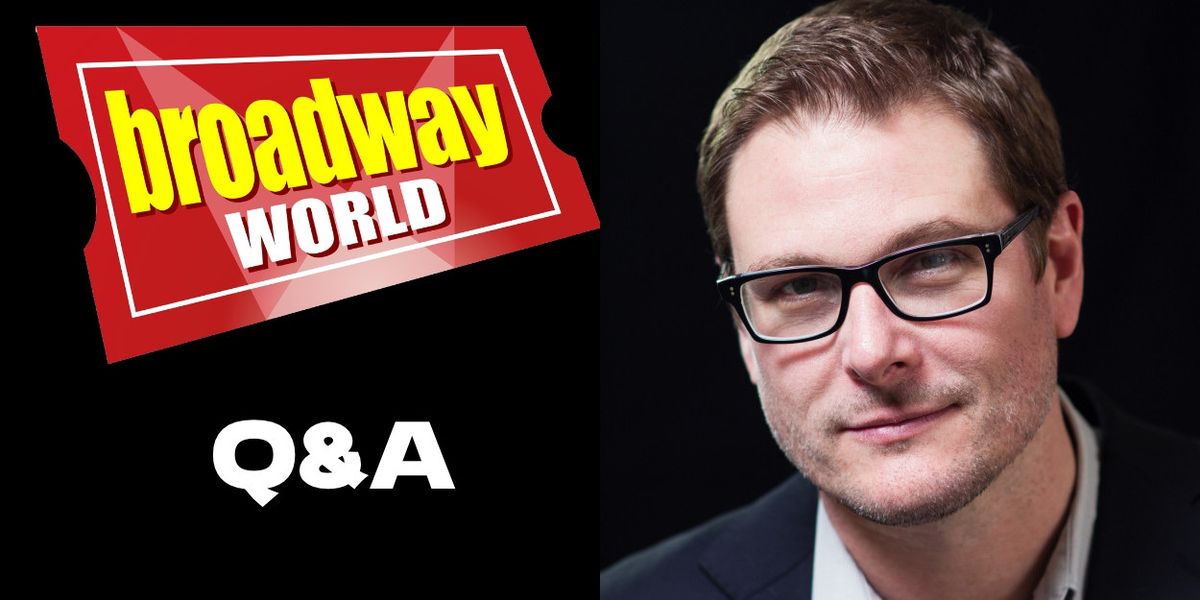
Alec Wild wears two hats at Shakespeare Theatre Company: he directs Macbeth for this year's Academy Rep and leads the STC Academy itself, the one-year MFA intensive that trains actors in classical language and physical, imaginative storytelling. This July, the Class of 2026 performs Macbeth and Twelfth Night in repertory in the Klein Theatre, the same fifteen actors appearing in both on alternating days. We spoke with Wild about talking oneself into tyranny, puppet weird sisters, and the power of asking an audience to lend their imaginations for a couple of hours.
What drew you to directing Macbeth specifically for this year's Academy Rep, and what makes it the right pairing with Twelfth Night?
I've loved Macbeth for a long time, and I've had this dream of using puppets for the weird sisters. I kept coming back to Banquo's description of them — they "look not like the inhabitants of the earth, and yet are on it" — and wondering how to make them truly otherworldly. Then I met Ksenya Litvak, our puppet designer, and we started talking about what the weird sisters could actually be. But the deeper reason we both wanted to do the play is the moment we're in. Macbeth is about how a person talks himself into tyranny, and how a country wakes up one morning to find the world has swung into authoritarianism. We're living through our own version of that shift right now, and we all wanted to be working on a play that investigates it seriously. As for the pairing, Twelfth Night and Macbeth are perfect opposites. One asks how we survive grief and find our way back to joy; the other asks how quickly a soul, a marriage, a country can come apart. Put them in the same week on the same stage with the same actors, and you see the whole range of what these young artists can do.
As both the director of Macbeth and the Director of the Academy program, how do you balance those two roles during rehearsal and production?
The two jobs pull in opposite directions, for sure. As a director I want the best possible production; as the head of the program I want the best possible experience for fifteen actors. Those imperatives are usually compatible, but I'm always trying to find the balance. In rehearsal, my job is the play, full stop — the actors deserve a director who's making a production, not running a curriculum or trying to teach an acting lesson. The programmatic thinking comes before we get in the room: we ask who gets stretched by which roles, where a particular actor can succeed at something they've been working on or struggling with. Once we're in the room, I try to leave the administrator at the door.
How does the philosophy of the STC Academy's training inform the way you approach directing these students in Macbeth?
The whole program is built on the idea that twenty-first-century Shakespeare should be physical, imaginative, and daring. So we start with the text, but the text is to the production what a blueprint is to a building — the play isn't a play until it's embodied by actors and lived on stage in front of an audience. Probably the most important muscle we exercise all year, across our voice, text, movement, mask, and acting classes, is the actor's imagination. Macbeth, like all good plays, demands that we use that imaginative capacity to the fullest, and I like a room where everyone is contributing to the world we're making. So there's lots of trying things, devising the world, letting things go, asking questions, and digging deeper into character and story and relationships.
The Rep is designed to be "energetic and lean" with minimal design. How does that constraint actually serve a play as atmospherically demanding as Macbeth?
It goes back to imagination. We do the plays on a tiny budget and a bare stage, but "minimal" doesn't mean we have no design. Our lighting designer, Minjoo Kim, does magic with a small Rep plot, and our Costume Designer, Cidney Forkpah, gives the world a beautiful, cohesive look with clothes she finds on racks and in thrift stores. Matt Nielson, our sound designer, has composed original music for both plays that really gives us atmosphere and place. Our movement director Emma Jaster and fight director Robb Hunter have built gorgeous sequences, and our puppet artists Ksenya and Andrey Struurman are bringing amazing creatures to the stage. Honestly, the minimal aesthetic is my aesthetic. I like to say to an audience, "Lend us your imaginations for a couple of hours and create this story with us." It's like what the Chorus says in Henry V: "Think, when we talk of horses, that you see them printing their proud hooves in the receiving earth." There's no way we could show you horses. This actor is wearing a crown, so you imagine he's the king. We carry umbrellas and say it's raining, and you imagine the storm. When an audience imagines a space or an event they can't see, they invest in the play — and when an actor can make them imagine it, that's what I call great acting.
What do you hope audiences take away from seeing these two plays together — one a dark tragedy, one a romantic comedy — in the same day or across the run?
One of the plays warns us and the other heals us. I hope an audience leaves having felt both, and maybe understands a little better why we keep coming back to this playwright. I hope time flies while they're in the theatre because they've been caught up in an awesome story. And I hope they walk out thinking, "Man, I should go see plays more often."
What do these productions reveal about where the Class of 2026 is in their development as classical actors?
The coolest thing about these projects is that if you come to both plays, you get to see the same actors in massively different roles — a lover in one, a general in the other; a goofball one night, a murderer the next. It shows you the kind of artists these actors are. They're transformative. They investigate what it is to be human in all of humanity's wonderful strangeness. I've gotten to watch them grow enormously over the course of the year, so I'm tremendously proud of every one of them.
The Academy Summer Reps run in Shakespeare Theatre Company's Klein Theatre July 15–25. Twelfth Night plays July 15, 17, 19, 21, and 23 at 7:30pm and July 25, directed by Jess Chayes. Macbeth plays July 16, 18, 22, and 24 at 7:30pm and July 19 at 2pm, directed by Alec Wild. Tickets are $25 for the general public and $20 for subscribers, or see both shows for $40.
See more BroadwayWorld in Google
Our stories show up more often in Top Stories and Google’s AI answers.
Breaking Broadway alerts by text
Get the biggest stories sent straight to your phone.

Sign up for all the news on the Fall season, discounts & more...

|
Frida...A Self Portrait Shakespeare Theatre Company Klein Theatre (10/08-11/08) |

|
Mr. Burns: A Post-Electric Play Clarice Smith Performing Arts Center (10/09-10/18) |

|
The Score Shakespeare Theatre Company (9/11-10/25) |

|
The Second-Best School Shooting NextStop Theatre (9/17-10/11) |

|
Coming to America: An Immigrant Cabaret ExPats Theatre (9/30-10/18) |

|
Monsters of the Villa Diodati Creative Cauldron (10/08-11/01) |

|
Some Like It Hot Bernard Family Theatre, Olney Theatre Center (9/18-11/08) |

|
Stonewall's Bust The Writers Center (10/09-10/25) |

|
Purpose Arena Stage (3/12-5/02) |
|
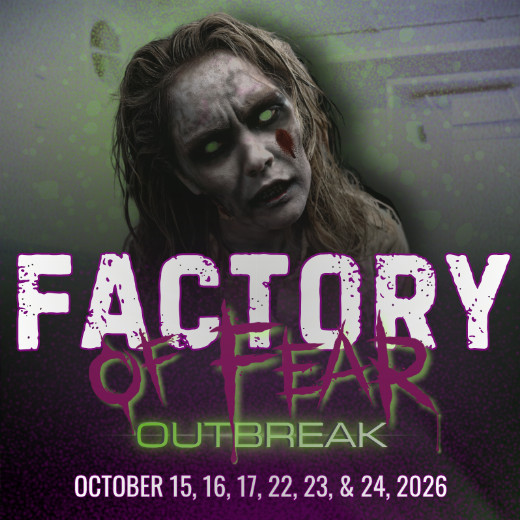
Factory of Fear - Outbreak ARTfactory (10/15-10/24) |
