


Review: THE BODYGUARD - Frankfurt, Germany and on tour
Musical precision meets cinematic spectacle - and a star turn to match!
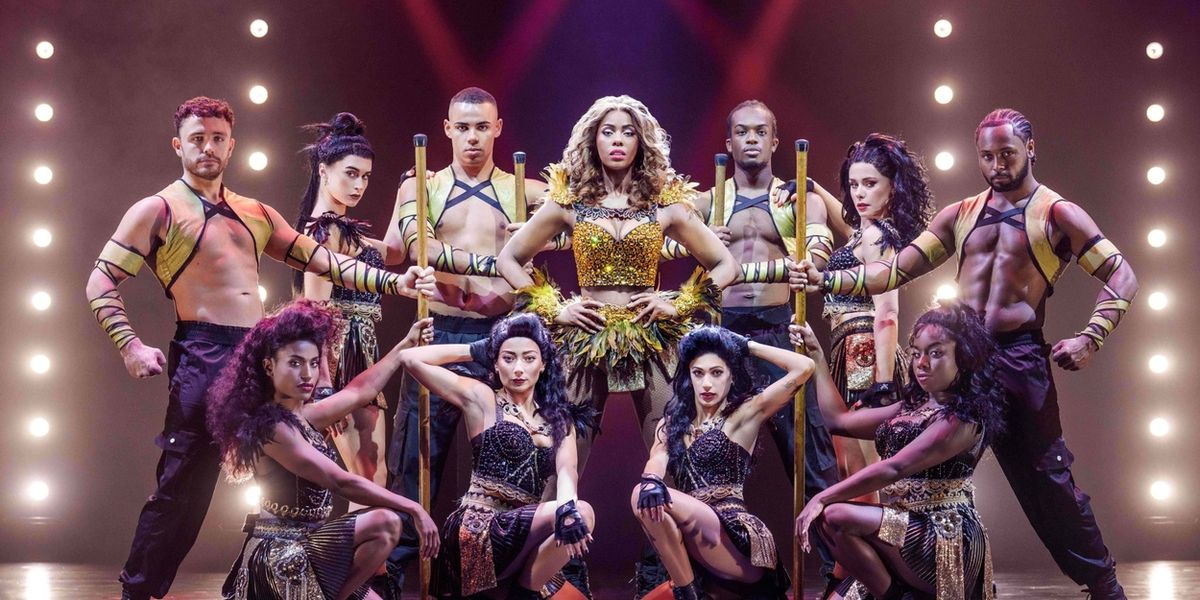
The touring production of The Bodyguard arrives at a pivotal moment in its continental journey. After stops in Zurich, Munich and Berlin, interspersed with various UK engagements including London, the show now plays its final German date at the Alte Oper Frankfurt. From here, it will return to British venues through mid-year. There is, accordingly, a sense of culmination in the air: a production taking its last bow on German soil before retreating to its home circuit. And what a send-off it proves to be.
Already staged in fifteen countries, The Bodyguard—based on the 1992 film hit by Lawrence Kasdan, starring Whitney Houston and Kevin Costner—demonstrates the enduring popularity of its source material. Blending romance with thriller elements and inextricably tied to the songs immortalised by Houston, the piece continues to resonate with audiences worldwide: Superstar Rachel Marron and her family find themselves under threat from a dangerous stalker and must be protected by bodyguard Frank Farmer – yet love and jealousy also enter the fray. The touring production of The Bodyguard delivers musical theatre excellence across the board. A powerful sound, dynamic storytelling, a coherent set design, striking choreography and an ensemble performing at a world-class level all come together seamlessly. In the leading role, Sidonie Smith is nothing short of a revelation.
The book by Alexander Dinelaris is concise and tightly structured, and under the direction of Thea Sharrock and Mark Hedges, it never comes close to losing any momentum. Few two-act musicals unfold their narrative with such speed and drive, yet thanks to fluid staging, brisk transitions and a vividly expressive cast, the production never feels rushed or superficial. While this touring version largely forgoes the opulent West End set, Tim Hatley’s design does not feel diminished, but rather purposeful, coherent and refined. Scenes are constructed through the interplay of minimal props—be it a bed, a sofa or a bar—and suspended backdrops. In an instant, a variety of locations emerges: Rachel’s mansion, Fletcher’s bedroom, a jazz club, a disco, the stalker’s lair, a karaoke bar, a recording studio or even the stage of the Dolby Theatre during the Academy Awards.
The illuminated framing of the stage portal further enhances the impression of watching a live film – the whole show conveys the feeling of a cinematic experience. Mark Henderson’s theatrical lighting design amplifies this perspective considerably: sweeping, stadium-like lighting lends emotional weight to the show ballads, while the banks of lights lining the stage frame create striking moments during Rachel Marron’s triumphant concert sequences. At the same time, Henderson proves equally adept at shaping the quieter, more intimate scenes. Hatley’s costume design, in synergy with Campbell Young’s hair and make-up work, vividly reanimates the iconic imagery of the original material. Rachel’s show costumes in particular—most notably the stunning gown at the Oscar ceremony—are glamorous eye-catchers. Duncan McLean’s video design, employing large-scale projections to visualise key dramatic moments, completes the visual picture, impressing especially in the opening with striking close-ups of Rachel ahead of “Queen of the Night”.
The same can be said of Karen Bruce’s energetic, highly demanding and thoroughly modern choreography, which does not shy away from acrobatic elements. The ensemble consists of outstanding dancers performing at the top of their game, executing the thrilling choreography with precision. Bruce’s work is remarkable: rarely does a choreographic language feel so cohesive without ever becoming redundant, and at the same time so expressive and vibrant.
Beyond their exceptional dancing, the eleven-strong ensemble also demonstrates dramatic precision and a finely tuned sense of cohesion. Whether as karaoke girls belting out “Where Do Broken Hearts Go”, as Rachel’s creative team, security staff or exuberant fans of the diva, transitions are executed so seamlessly alongside the filmic scene changes that the term “cinema on stage” feels entirely apt. While Ryan Bennett brings charisma and urgency to Rachel’s PR manager Sy Spector, attempting to steer her career toward the Academy Awards despite looming danger, John Macaulay offers a warm, paternal counterbalance as manager Bill Devaney.
James-Lee Harris embodies the disturbingly compelling stalker with chilling effect: his slow movements, measured focus and a blend of arrogance and melancholy create a deeply unsettling antagonist whose presence is felt even when he is not physically on stage. The role of the spirited young Fletcher is shared by four boys on tour. Rio Chigwedere proves to be an accomplished young performer, convincingly navigating the shift from carefree youthful ease to genuine fear, while also singing and especially dancing with impressive skill and visible enjoyment. His authentic performance makes Fletcher’s role as the fulcrum for Rachel, Nicki and Frank entirely believable.
Alongside these three central characters, one might almost identify a fourth protagonist in this production: the sound design by Richard Brooker and his team. The powerful sound of the virtuoso six-piece band under the direction of Charlie Ingles surges through the auditorium, with bass lines that seem to reverberate through the seats themselves. Breathtaking sound effects, worthy of a Hollywood film, draw the audience right in. Music, vocals and effects interact in a masterful balance between deliberate restraint in moments of oppressive silence, ominous tension or romantic delicacy, and the full force of exuberant concert energy or high dramatic escalation.
Matt Milburn (taking over the role from Broadway-star Adam Garcia for select performances) portrays Frank Farmer as a classic “hard shell, soft centre” figure with considerable appeal. Reserved, yet empathetic, he conveys the character’s inner conflict between professionalism and emotion with clarity. It takes a skilled vocalist to convincingly play a bad singer: in a karaoke scene to “I Will Always Love You”, Milburn delivers a delightfully awkward rendition that becomes one of the evening’s comic highlights – alongside his clumsy approaches, standoffs and squabbles with Rachel Marron upon meeting each other for the first time. His nuanced performance makes the tension between duty and affection in his relationship with Rachel and her family entirely convincing – each dynamic, be it between him and Rachel’s son or her sister, feels authentic.
With a powerful voice and deeply felt performance, Sasha Monique impresses as Nicki Marron, whose role as the perpetually overlooked sister unfolds with considerable tragic weight. Her solo numbers, “Saving All My Love for You” in the first act and the heartbreaking “All at Once” in the second, impress through vocal clarity and emotional depth. Her duet with Sidonie Smith, “Run to You”, is particularly harmonious, the two voices seeming to elevate one another. She portrays the ambivalent, complex relationship with her famous sister, as well as her affectionate bond with her nephew Fletcher and her romantic feelings for Frank, with great sensitivity.
Sidonie Smith ultimately triumphs in the role of Rachel Marron. Her public show persona defines each concert scene, radiating a commanding presence that feels truly larger than life. Yet Rachel is not a conventional protagonist; she is defined by a striking ambivalence and remains an intriguingly conflicted figure. Faced with a constant sense of threat, she continues to yearn for fame and recognition, and even her love for her sister is at times overshadowed by her ambition, with Fletcher as her emotional anchor. At her core, however, she is deeply human: a self-determined, strong woman driven by a desire for freedom, claiming what she wants—until the threat surrounding her and her son forces her to confront fear and vulnerability. To render this complexity in a way that remains tangible and relatable is a significant acting achievement, one that Smith accomplishes through countless subtle nuances. At no point do Rachel’s thoughts or motivations feel obscure; Smith expresses emotion outwardly with passion and control, never tipping into artificiality. Her characterisation stands comfortably alongside that of Broadway star Heather Headley, who originated the role on stage. Vocally, Smith crafts her own interpretation, distinct both from Headley and from the ever-present spectre of Houston. With a voice rich in emotion and remarkable range, she turns her songs, most notably four Whitney ballads—“Greatest Love of All”, “I Have Nothing”, “One Moment in Time” and, of course, “I Will Always Love You”—into overwhelming showstoppers.
After a cinematic and intense finale, Smith proves an electrifying entertainer alongside the ensemble, sending the audience out on a euphoric high as “I Wanna Dance With Somebody” turns both stage and auditorium into a celebration. This meticulously performed show is not to be missed!
Sign up for all the news on the Fall season, discounts & more...
|
GETTING REKT (The Evening Star) The Union Theatre (9/21-9/24) |
|
Dracula's Guest Upstairs at the Gatehouse (10/13-10/13) |
|
A Message for the Future Half Moon Theatre (9/26-9/26) |
|
BAT! The Bat Out Of Hell 50th Anniversary Concert Sheffield City Hall Oval Hall (10/06-10/06) |
|
Attention All Shipping: A Celebration of the Shipping Forecast Victoria Theatre Halifax (9/30-9/30) |

|
Disney Princess - The Concert New Theatre Peterborough (3/24-3/24) |
|
|
Murder Trial Tonight V - Death in the Family Vaillant Live, Derby (2/06-2/06) |
|
Trainspotting The Musical Blackpool Opera House (12/14-12/19) |

|
The Noise Next Door: Comedy, Improvised Victoria Theatre Halifax (10/14-10/14) |
|
Two MR P''s In a Podcast Live - Let That Be a Lesson... Wycombe Swan Theatre (10/31-10/31) |

Reader Reviews
To post a comment, you must register and login.