


First Full U.S. Staging of Dvorak's DIMITRIJ Highlights Opera at Bard SummerScape
Annandale-on-Hudson, NY: Committed since its inception to reviving important but neglected operas, Bard SummerScape has long proven itself "an indispensable part of the summer operatic landscape" (Musical America). With the long overdue American staged premiere of Antonín Dvorak's Dimitrij as its operatic centerpiece, this year's immersion in "Chopin and His World" is no exception.
Featuring Clay Hilley in an original new staging by award-winning director Anne Bogart, Dimitrij runs for five performances between July 28 and August 6, with an Opera Talk, free and open to the public, before the matinee on July 30. Bard Music Festival 2017 also offers an all-too-rare opportunity to see Stanisaw Moniuszko's Halka, Poland's first great opera, in a semi-staged performance at the Bard Music Festival (August 19).
Anchored by the American Symphony Orchestra under the leadership of music director and festival co-artistic director Leon Botstein, with the support of the Bard Festival Chorale under James Bagwell, both presentations take place on Bard's glorious Hudson Valley campus in the striking Frank Gehry-designEd Fisher Center. As the Financial Times notes, "Some of the most important summer opera experiences in the U.S. are not at the better known festivals but at Bard SummerScape."
Following Chopin's artistic lineage, Bohemia's Antonín Dvo?ák (1841-1904) is celebrated as one of the Romantic era's great Slavic nationalists. Prolific and versatile, his extensive output includes no fewer than twelve operas, including the fairytale Rusalka, which is still in regular rotation at opera houses around the world. By contrast, his grand opera Dimitrij (1882) is rarely staged outside the Czech Republic, and only received its U.S. concert premiere in 1984, more than a century after its composition. Yet the opera was a popular success at its Prague premiere and has long been recognized as an exemplar of Dvo?ák's signature lyricism and masterfully stirring choral writing.
A nominee for Russia's Golden Mask Award, in her American debut as Elektra in SummerScape 2013's Oresteia she impressed the Financial Times with her "resonant, bright-voiced soprano." Nora Sourouzian - "a velvet-voiced mezzo-soprano from Canada with an arresting stage personality" (The Telegraph, UK) - returns to the festival as Marfa, widow of Ivan the Terrible. Like her, Levi Hernandez starred in Bard's La Navarraise last season on a double-bill with Puccini's Le Villi. Blessed with an "impressive knack for subtle text-painting within a pristinely negotiated coloratura line" (Opera News), he sings the role of Prince Shuisky, leader of the Godunov faction and eventual murderer of Dimitrij, while Joseph Barron lends his "rolling, imposing baritone" (Opera Today) to that of General Basmanov, who leads the doomed pretender's supporters. Peixin Chen, bass, makes his SummerScape debut in the role of Jove, or the patriarch, having most recently performed in productions of Aida and Salome at the Metropolitan Opera.
Rounding out Bard's cast as Neborsky and Bucinsky respectively are bass-baritone Joseph Damon Chappel, a founding member of the Grammy-nominated Tiffany Consort, as seen in previous SummerScape productions of Die Liebe der Danae and Le roi malgré lui; and baritone Thomas McCargar, a member of the Grammy Award-winning Choir of Trinity Wall Street who has collaborated with artists ranging from contemporary composers Du Yun and Missy Mazzoli to Andrea Bocelli, Kanye West, and the Rolling Stones.
To help realize Bogart's vision, Bard's production features sets by Tony and Obie Award-winner David Zinn; costumes by Tony nominee and Outer Critics Circle Award-winner Constance Hoffman; lighting by Henry Hewes Design Award-winner Brian H. Scott; movement direction by Barney O'Hanlon, whose three decades of Bogart collaborations include SummerScape 2013's A Rite; and hair and makeup by Jared Janas and David Bova, whose work graced last year's mainstage presentation of Iris.Although several of Chopin's contemporaries explicitly expressed the hope that he would be the one to write Poland's first great opera, that distinction fell instead to his compatriot Stanis?aw Moniuszko (1819-72). On August 19, Bard presents an all-too-rare semi-staged performance of Halka (1858), the four-act masterwork with which Moniuszko ensured his legacy as the father of Polish opera. Set to a politically charged libretto by W?odzimierz Wolski, a poet with radical social views, Halka is the story of the eponymous young peasant woman whose arrival disrupts an engagement party between wealthy landowners Janusz and Zofia. It soon transpires that Halka is not only in love with Janusz, but believes herself engaged to him, and is pregnant with his child. When she loses the baby and learns that Janusz intends to go ahead with the wedding, Halka is broken-hearted, and, after fantasizing about revenge, takes her own life instead. Regularly performed in Poland, Halka remains virtually unknown abroad, despite being "redolent with the melodic flavors of Polish folk music and balladry" (New York Times), and hailed as "melodious, affecting and appealing: ... a rare treat" (Washington Post). Bard's semi-staged production stars Amanda Majeski in the title role. A Polish-American soprano whose honors include first prize at the Palm Beach Opera Vocal Competition, Majeski recently gave "a commanding performance" (Opera News) at Washington National Opera that proved "a great showcase for her rich, resonant soprano" (Financial Times). Singing opposite her as the faithless Janusz is Aubrey Allicock, who graced Bard's "Turandot Project" last summer, and whose "bass-baritone has a distinctively glossy, warm color, with increasingly impressive freedom and fullness at the top of its range" (Opera News). Returning to the festival after her "consistently excellent" (New York Arts) appearances in previous seasons, mezzo-soprano Teresa Buchholz - winner of the female division at Carnegie Hall's Nico Castel International Master Singer Competition - sings the role of Janusz's kind-hearted young bride, Zofia. Liam Moran, a "sturdy bass who sings with affecting gravity" (New York Times), undertakes that of her father, Stolnik, and Miles Mykkanen, a 2016 Sullivan Foundation award recipient who impressed Opera News with his tenor's "sheer vocAl Gold," sings the part of Jontek, an old friend of Halka's whose love for her remains unrequited. Returning to helm Bard's semi-staged production are director Mary Birnbaum, scenic designer Grace Laubacher, and lighting designer Anshuman Bhatia, the creative team behind last year's double-bill of Le Villi and La Navarraise. "A director of real quality" (Houston Press), Birnbaum is an International Opera Awards finalist whose work has been variously described as "unsettlingly immediate" (New York Times) and "a dazzling display of inventiveness and ... delight" (San Francisco Chronicle).
About opera at Bard SummerScape
Since the opening of the Fisher Center at Bard, Botstein and the American Symphony Orchestra have been responsible for championing and restoring to the stage a growing number of important but long-neglected operas. All these presentations and their remarkable stagings have been warmly received by audiences and critics alike - not least, last season's fully staged production of Mascagni's Iris. The New York Observer considered this "as deeply moving an opera performance as I've heard this season, thanks to a subtle but devastating staging," and Opera News declared: "Operagoers are once again in debt to Leon Botstein's Bard SummerScape." As Musical America observes, "Botstein and Bard SummerScape show courage, foresight and great imagination, honoring operas that larger institutions are content to ignore."
|
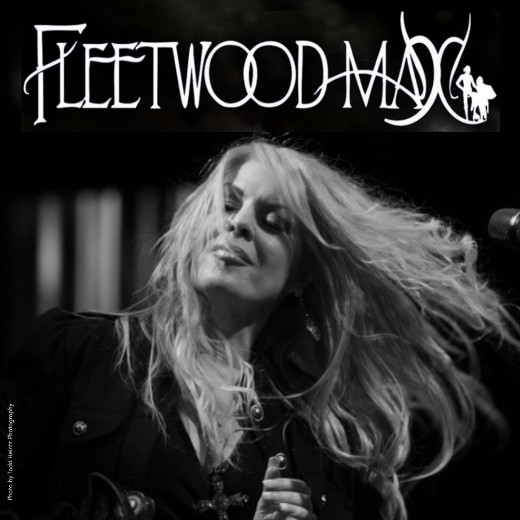
Fleetwood Max Raue Center For The Arts (10/03-10/03) |
|
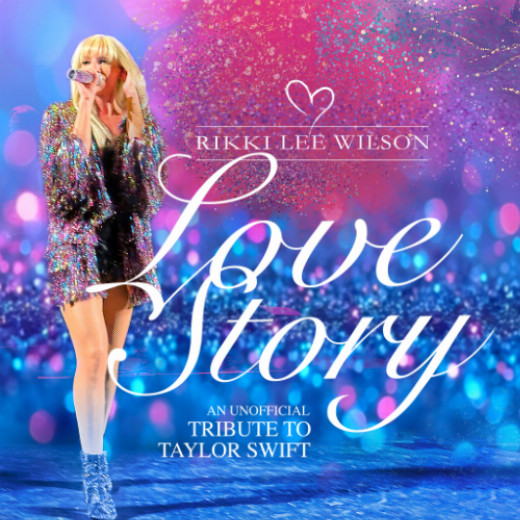
Love Story: A Tribute to Taylor Swift Raue Center For The Arts (11/07-11/07) |

|
Rotary Rocks The Raue: James Garner's Tribute to Johnny Cash Raue Center For The Arts (10/24-10/24) |

|
The Dave Matthews Tribute Band Raue Center For The Arts (9/25-9/25) |
|
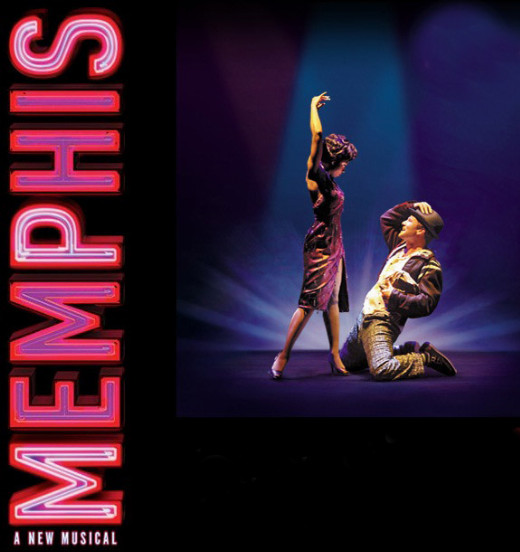
Memphis The Musical Studebaker Theater at the Fine Arts Building (10/24-10/25) |

|
for colored girls who considered suicide when the rainbow is enuf eta Creative Arts Foundation (8/01-8/30) |
|
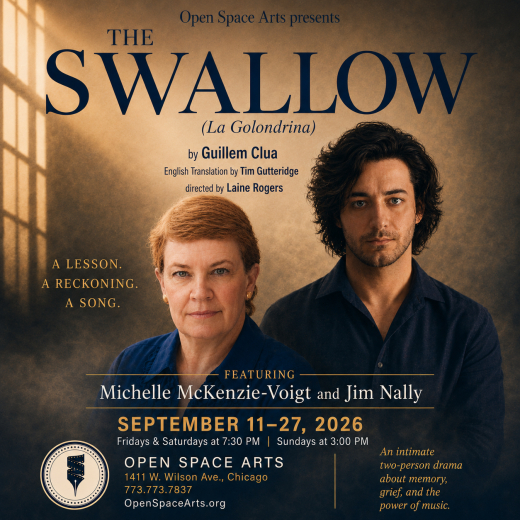
The Swallow Open Space Arts (9/11-9/27) |
|
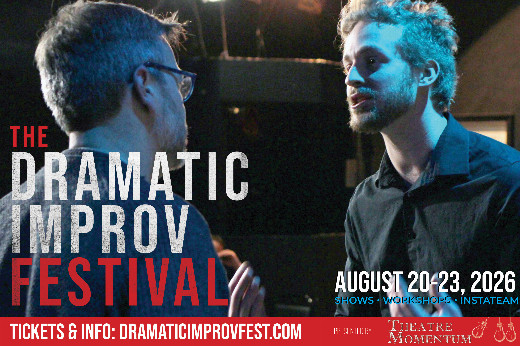
The Dramatic Improv Festival Edge Theater (8/20-8/23) |
|
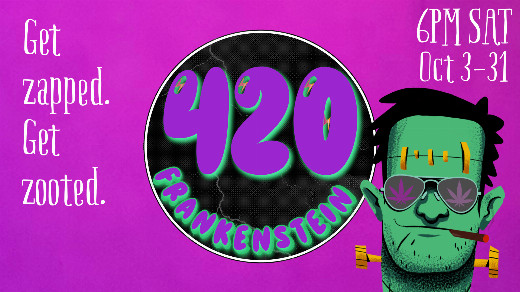
420 Frankenstein 420 Shakespeare (10/03-10/31) |

|
The Séance Stars and Garters Theater (9/19-10/31) |