


The Scottish Ballet's Mary, Queen of Scots Trusts Its Audience
The modern ballet blends dance, design and storytelling into something that empowers audiences to hold a great deal at once.
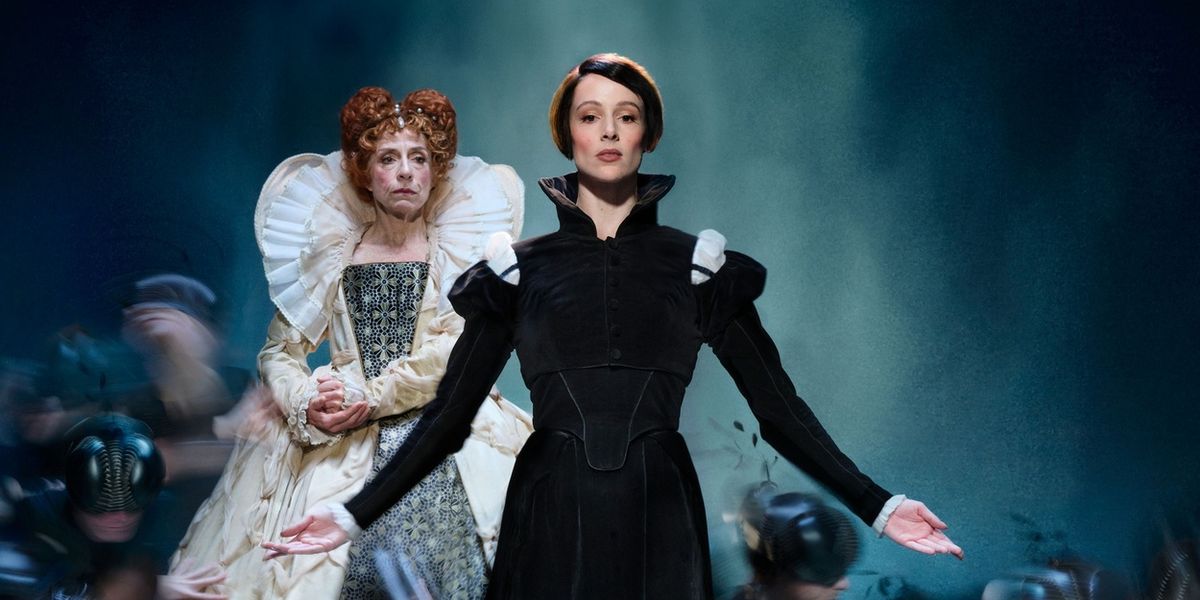
Known for its bold adaptations of well-known stories — 2012's A Streetcar Named Desire, 2008's Romeo and Juliet — only the Scottish Ballet could take on a work like Mary, Queen of Scots. The modern ballet, running June 04-07 at the David H. Koch Theater at Lincoln Center, neatly blends theatrical elements and is exactly the thing to capture audiences' ever-shrinking attention spans.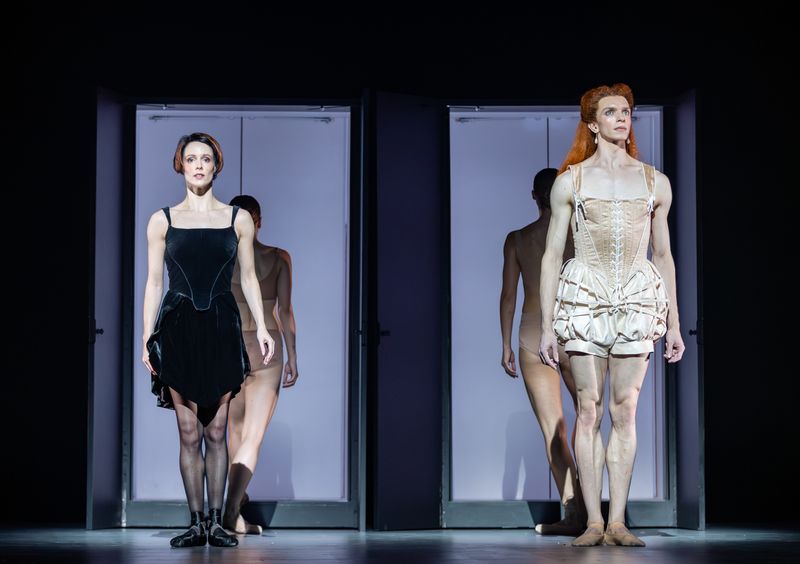
As death approaches, Elizabeth I of England is haunted by memories — real and imagined — of her cousin, Mary, Queen of Scots. The two rival queens never met, yet spent years locked in a game of politics, religious warfare and intrigue. The ballet traces their complex relationship from Mary's time as queen consort of France through her widowed return to Scotland, where the Reformation threatens her authority. Her marriage to half cousin Lord Darnley sours when he murders her close advisor, David Rizzio. After Darnley's own murder, Mary seeks protection from Elizabeth, only to find her cousin views her as a threat. After years in captivity later, she is found guilty of plotting to assassinate Elizabeth and beheaded.
Dance carries great emotion, but not narrative. Even the great storytelling ballets — The Nutcracker, Sleeping Beauty, Swan Lake — suffer this fatal flaw, and their storylines are nowhere near as densely plotted as this one. Sophie Laplane and James Bonas have created a production that mostly escapes this trap. There are moments where the audience is left wondering: Why are those courtiers wearing pot bellies? Were Darnley and Rizzio lovers? Which is the elder Elizabeth again? But to attach oneself too closely to the plot is to deny oneself what makes the production stand out: it blends dance, scenic design, music and artistic expression into a seamless whole, even when that whole is not always clear.
Laplane's choreography is densely textured, blending classical and contemporary technique until it becomes a third, new thing. Her best work appears in the corps de ballet and ensemble scenes, which push the ballet forward and maintain a steady energy — propulsive without being frantic, present without feeling ornamental. Bonas' direction is just as unsentimental. Subversion is earned, not performative, and the pacing stays smooth rather than hindered by moments of spectacle. Mary's beheading is particularly striking.
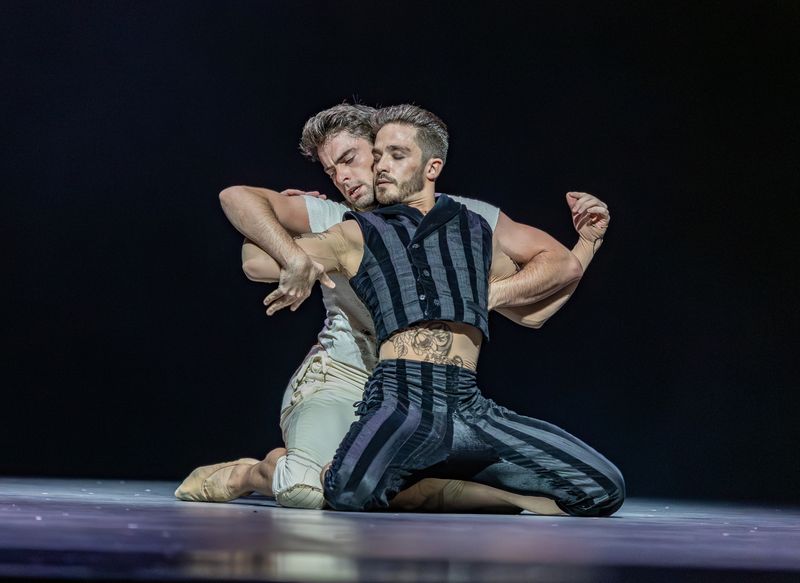
Versatility means too many things in 2026, but the Scottish Ballet is truly the most versatile company on stage. The dancers don't dance, they embody. Honesty and vulnerability pervade the work, even when it turns eccentric — Elizabeth I on stilts, or walking a wheeled dog — or more stylized: Mary giving birth to a James I balloon, a foam finger labeled "Darnley" wielded by a court jester in neon green. The duets — Mary and Darnley, and Darnley and Rizzio — are seductive without being explicit, and more human than theatrical. Guest Artist Charlotta Öfverholm, as the older Elizabeth, is especially adept at revealing an honest character.
 New York audiences will recognize Soutra Gilmour's touch. Gilmour previously designed Sunset Boulevard and Waiting for Godot on Broadway, and her signature minimalism carries here. A mostly neutral palette of black, bone and white risks leaving the stage cavernous at times, but disrupting that simplicity with blood reds, a pale purple and the odd flash of neon or glitter — and playing with texture, boning, silk, spandex — adds cohesion. So does a delightful androgyny in the ensemble. Some contemporary touches, a t-shirt for Darnley, for instance, feel underwhelming, though the intention is clear.
.jpg?format=auto&width=800) Bonnie Beecher's shadow work is where the simplicity becomes elevated. Watching Elizabeth I's shadow extend to the rafters, or Mary and her doppelgangers merge into one bug-like figure, is genuinely intriguing. The synchronicity of design and score is just as singular. The score is contemporary and rhythmic, infused with Tudor-era themes and, like the design, leans monochromatic. It does not build, yet never recedes into the background.
Bonnie Beecher's shadow work is where the simplicity becomes elevated. Watching Elizabeth I's shadow extend to the rafters, or Mary and her doppelgangers merge into one bug-like figure, is genuinely intriguing. The synchronicity of design and score is just as singular. The score is contemporary and rhythmic, infused with Tudor-era themes and, like the design, leans monochromatic. It does not build, yet never recedes into the background.
At just two hours and ten minutes, Mary, Queen of Scots is a tight tale told expertly. Whether audiences understand it, or connect to Mary's story, are important questions but not essential ones. The power lies in taking a true story and adapting it into something that trusts the audience to hold a great deal at once.

Sign up for all the news on the Fall season, discounts & more...
