


Interview: Miranda Jonté Has Great Expectations for (RE)DRESSING MISS HAVISHAM
One-person show runs through May 24 at Boston Playwrights' Theatre
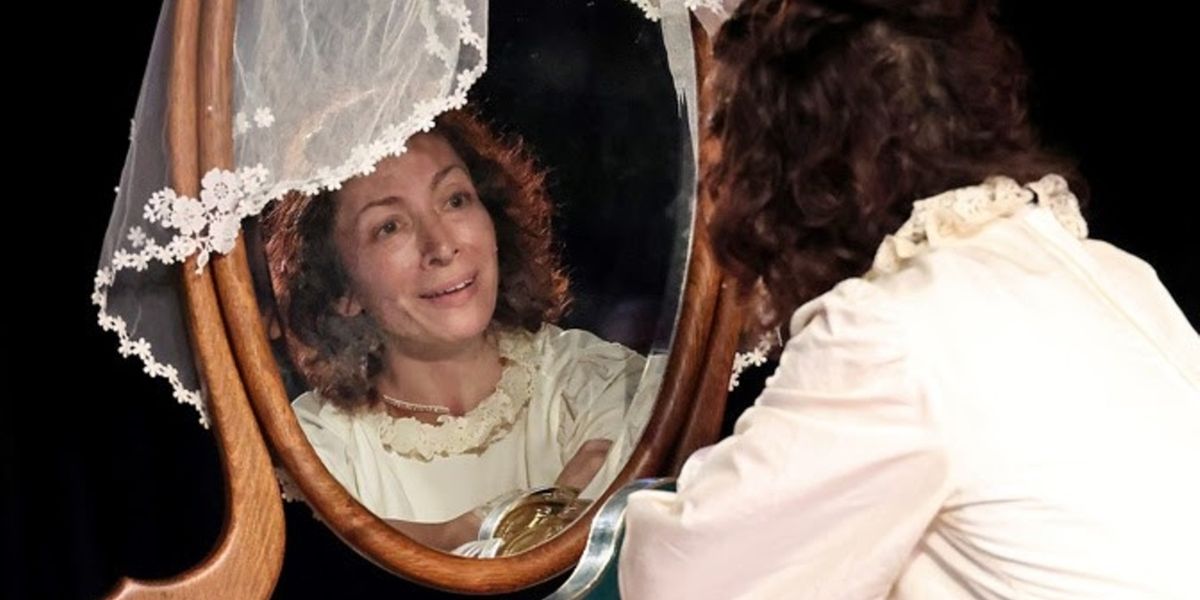
The age-old literary mystery of the circumstances surrounding the death of the perennially wedding-dress-clad Miss Havisham in Charles Dickens’ 1861 novel “Great Expectations” is reexamined through a contemporary lens in “(re)Dressing Miss Havisham,” by local playwright John Minigan, being performed May 19–24 at Boston Playwrights’ Theatre as part of the company’s New Play Incubator program.
An original commission by Back Porch Theater, the one-person play stars Miranda Jonté as an unmarried and unpartnered actor in her 40s with a background in criminology, also named Miranda, who sets out to solve the cold case of Havisham’s death
Under the direction of Peter Sampieri, what begins as a literary inquiry quickly deepens into a layered exploration of identity, autonomy, and the portrayal of the lives of women on and off the page. As Jonté moves between the characters of the contemporary Miranda and the mid-1800’s Miss Havisham, employing forensic analysis, research, and even a “murder board,” the line between performer and subject begins to blur. When the trail runs cold, Miss Havisham emerges to confront long-buried truths—forcing both women to reckon with questions of independence, fulfillment, and what it means to live fully on one’s own terms.
.jpg?format=auto&width=800) Brought up in the San Francisco Bay area, Jonté earned her MFA from The Actors Studio Drama School, actor and playwright Jonté – who toured for seven years in her own one-person show, “Good & Kissed” – was at her home in Sandwich recently when she made time for a Zoom call to discuss “(re)Dressing Miss Havisham,” her history with the character, and more.
Brought up in the San Francisco Bay area, Jonté earned her MFA from The Actors Studio Drama School, actor and playwright Jonté – who toured for seven years in her own one-person show, “Good & Kissed” – was at her home in Sandwich recently when she made time for a Zoom call to discuss “(re)Dressing Miss Havisham,” her history with the character, and more.
How did you first become involved with this project?
Back in 2013, I was looking for a two-hander and I posted on a Facebook playwrights’ group asking for titles. A playwright named John Minigan said he might have something to fit the bill. He sent me the first 10 pages of a play called “Breaking the Shakespeare Code.” I read the pages while I was traveling on the Long Island Railroad going from upstate New York to New York City, where I lived for 20 years, and they were the most dangerous and grabbing pages of a play that I’d ever read in my life.
Were you aware of Minigan as a playwright before your first collaboration with him?
No, we met when he responded to my Facebook post. From there, I did everything super above board. I said, “May I please read the rest?” He sent it to me. I said, “May I send this to my director?” He said yes. My director wrote back, “Yes, I love this.” So I began poking around for places to produce it, and because I believe in creating one’s own work, I said, I’m going to take this to Chicago, rehearse for a week, perform for a week, and then get my Equity card.
That became the professional premiere of “Breaking the Shakespeare Code,” in 2014. Then we took it to the Fringe Festival in New York, where you couldn’t get a ticket because it became so beloved by audiences. It’s a great play, and a wonderful two-hander which allowed me to share the stage with a lovely actor named Timothy Weinert.
Have you worked with Minigan between then and now?
Yes, after that first collaboration, John asked me to produce another of his plays, “The Maltese Walter,” for a different festival the next season. Then the year after that, his play “Easter at the Entrée Gold” was accepted at the Samuel French Off-Off Broadway Fest and he suggested I direct it. And we’ve continued to be champions of one another’s work ever since.
When did you first become aware of Dickens’ “Great Expectations”?
I was a little girl, probably about nine years old, when my mom got me a couple of boxed sets of great classics. They’re wonderfully illustrated. She got me a horror-themed one – so I could read “Dr. Jekyll and Mr. Hyde,” “Frankenstein,” “20,000 Leagues Under the Sea,” and “Dracula,” all from the original source material but tailored to children – and another one that included “Jack London” and “Great Expectations.”
As a young girl, could you understand the complexities of a character like Miss Havisham?
I understood the ballpark of it, but I wasn’t yet on the diamond in fully grasping what made her the way she was. I understood, however, that she was very unhappy. I remember the illustrations of the mice eating the crumbs of some cake that had festered, and the cobwebs on the wedding dress she always wore after being jilted at the altar by Compeyson.
Are you drawn to Gothic characters?
Not necessarily. I would have been when I was a baby actor and I wanted to play the dramatic parts. Now I’m just interested in people who are complex. Everyone has duality, so I love Miss Havisham’s complexity and her melancholy. It was because of that and the great humiliation of being left at the altar that she cloistered herself.
But playing her, because the play is constructed the way it is, there’s still much joy to explore in the piece. It’s about a modern-day character going back to uncover how Miss Havisham dies alone in an empty room. Was it an accident? Was it on purpose, and why did Charles Dickens lock this woman away to stew in her own sadness?
How do you view the outcome of Miss Havisham’s story?
By the end, she realizes her mistakes and she sees the damage that she has done. So, for me, this is a story of redemption and the freeing of oneself.
What do you think of Miranda, the contemporary character you play?
She’s a lot of fun. She’s entirely different from Miss Havisham. Before I became an actor and a writer, I wanted to be a criminologist, so John took everything from my life and based the character on me. She even has two dogs, as I do. The play also uses my interest in, but very little real knowledge of, forensics, which I love to play.
Are you playing her as if you were playing yourself?
It’s a character of me, but it’s not me. I play this Miranda a little less restrained. She’s a little bit bouncier than I am, and a little bit goofier. She’s also a bit looser in physical movement and thought.
Having a playwright base a character on you is very flattering, don’t you think?
Absolutely, I still can’t believe John did it. I went to him one day and said, “Can you write me a one-woman show?” He said, “Can’t you write one for yourself?” and I said, “I’m tired of my voice. I want to be challenged.”
Whose idea was Havisham and how did she become the pivotal character in this piece?
That’s a great question. We looked at so many different women. Teddy Roosevelt’s daughter, Alice Roosevelt, was near the top of every list we compiled. I mentioned Havisham once and we were like, no, but then we kept coming back to her, and back to her again. And I said, “Well, I guess it’s Miss Havisham.” We’ve both been very pleased with that decision.
Photo caption: At top, Miranda Jonté in a scene from “(re)Dressing Miss Havisham.” Photo courtesy of Bob Tucker/Focal Point Studio.. At left, a head shot of the actor by Nile Hawver.
Prefer BroadwayWorld in Google Search?
Add us as a preferred source so our stories show up more often in Top Stories and Google’s AI answers — for you.
Sign up for all the news on the Fall season, discounts & more...

|
Bat Boy: The Musical Umbrella Arts (9/25-11/08) |

|
Brian Henson's Puppet Up! Boch Center Shubert Theatre (9/27-9/27) |
|
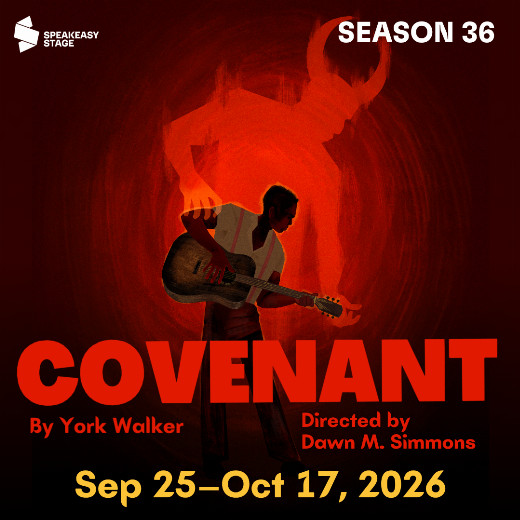
Covenant SpeakEasy Stage Company (9/25-10/17) |

|
Monty Python's SPAMALOT Boch Center Wang Theatre (10/06-10/11) |
|
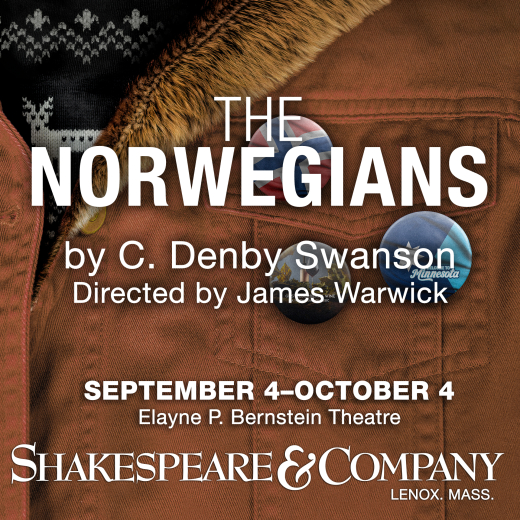
The Norwegians Elayne P. Bernstein Theatre (9/04-10/04) |

|
An evening with LaChanze Berklee Performance Center (11/01-11/01) |
|
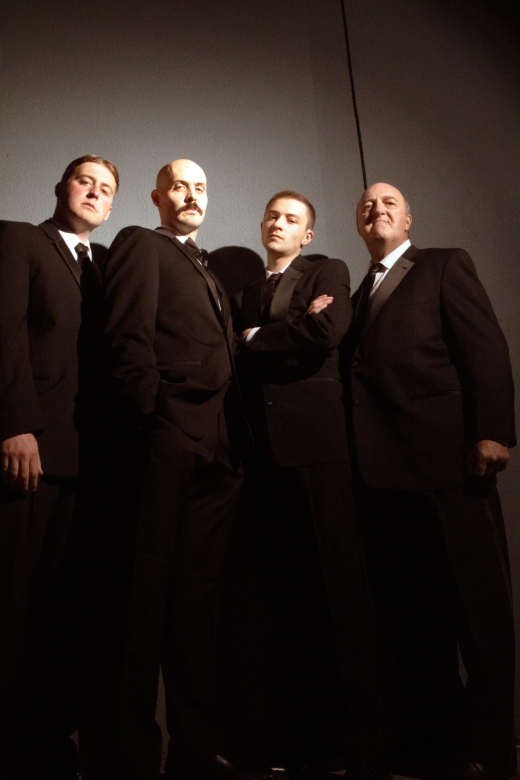
BOUNCERS by John Godber The Modern Theatre (10/01-10/24) |

|
This Is Your Song: The Elton John Songbook Norton Singers (10/02-10/03) |
|
Wicked Citizens Opera House (9/23-11/15) |

|
Hadestown Emerson Colonial Theatre (11/10-11/14) |
