


Talia Suskauer Dives Deep Into Her Latest Role in A WALK ON THE MOON
A Walk on the Moon will run through August 22, 2026 at The Laura Pels Theatre at the Harold and Miriam Steinberg Center for Theatre.


|
|
Do you have a burning Broadway question? Dying to know more about an obscure Broadway fact? Broadway historian and self-proclaimed theatre nerd Jennifer Ashley Tepper is here to help with Broadway Deep Dive. BroadwayWorld is accepting questions from theatre fans like you. If you're lucky, your question might be selected as the topic of her next column!
Submit your Broadway question here!
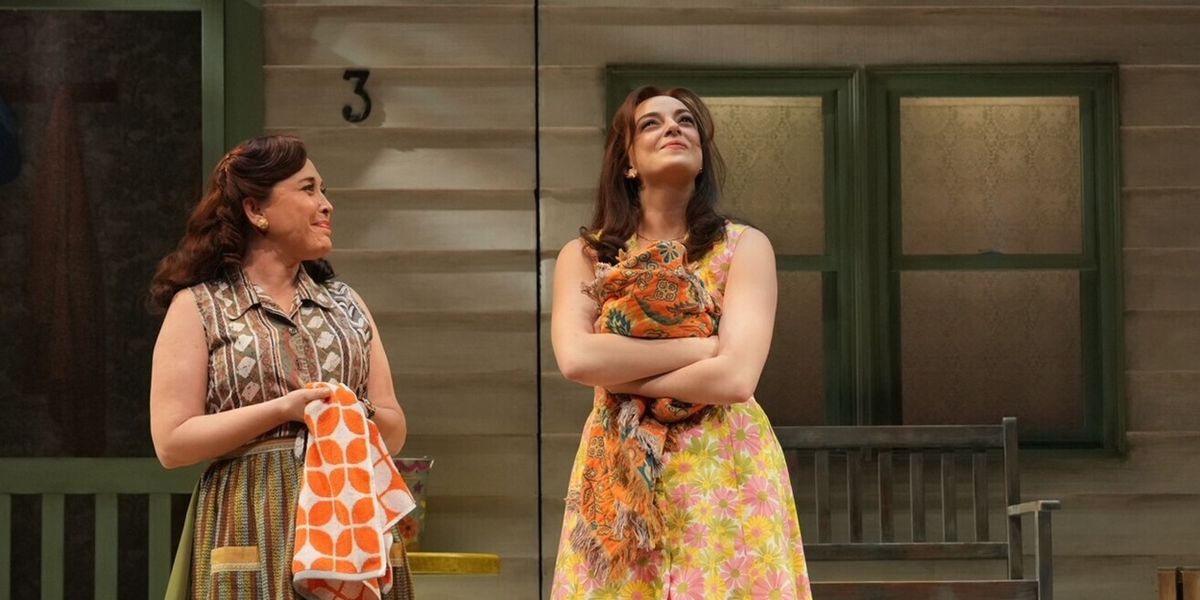
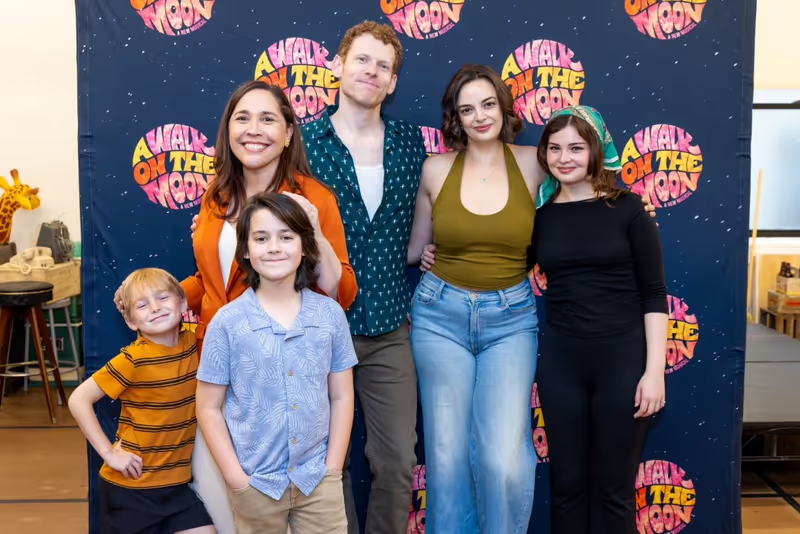
Now running at The Laura Pels Theatre at the Harold and Miriam Steinberg Center for Theatre is A Walk on the Moon. Inspired by the acclaimed 1999 film, A Walk on the Moon is directed by Tony Award nominee Sheryl Kaller and features a book and additional lyrics by original screenwriter Pamela Gray, music and lyrics by Tony Award and Grammy Award nominee AnnMarie Milazzo, and choreography by Josh Prince. In this interview, Talia Suskauer, who plays 'Pearl', reflects on the rehearsal process and the journey of the new musical so far.
For those who don't know, tell us about A Walk on the Moon. What is the show about? Who do you play in it?
A Walk on the Moon is based on a movie with the same title from 1999, written by Pamela Gray, and it starred Diane Lane, Liev Schreiber, and Viggo Mortensen. So, [an] all-star cast. I actually hadn't seen the movie before I was cast. Upon seeing it, I was like: what the hell? Why wasn’t this in my life? Because first of all, it’s a great film. And secondly, it has so much to do with the history of American Jews and what a lot of Northeastern Jews did during the summers: go up to the Catskills [to] these bungalow colonies that don’t exist in the same way today.
A lot of working class families from New York would go up to the bungalow colonies, ritzier families would go up to resorts. They were these summer villages [where] they’d all have these little cabins. Men would come up for the weekends, going back to work during the week, and women and children would be there the entire week. They existed up there during the summer.
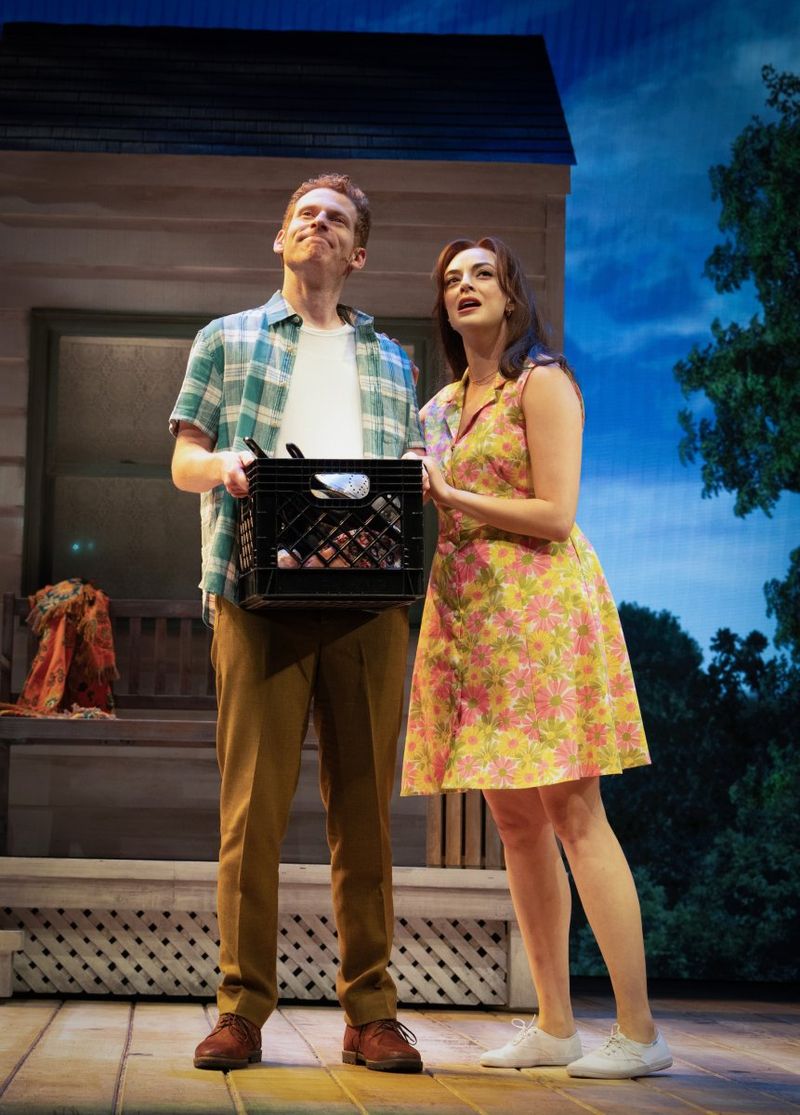
This [show] takes place in 1969 in a bungalow colony in the Catskills and its about this family, the Kantrowitzes. I play Pearl, who is the wife of Marty. They go up with their two kids and Pearl’s mother-in-law. They’ve been going up every summer. Pearl is a young mom [since] she had her kid at 16. That’s important to the story. They basically conceived on their first date.
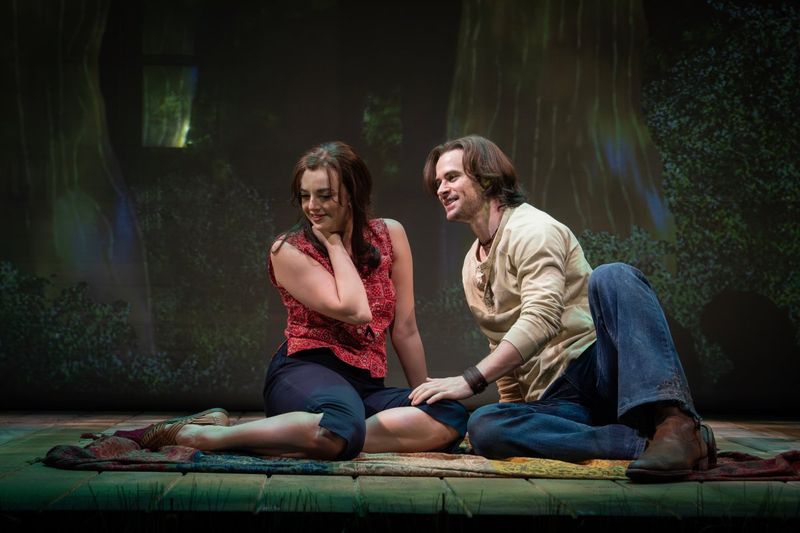
Pearl meets this vendor. This is a real thing that happened. Different vendors would come to the bungalow colonies and sell knishes, pickles, blouses, sunglasses… She meets ‘the Blouse Man’ and they have a whirlwind summer affair. It’s about her journey of self-discovery and what tradition means within their family. [It’s also] about loyalty and exploration in this time, the summer [of] the moon walk. Neil Armstrong walks on the moon, and [there’s] Woodstock, and this affair for her. So it’s really a coming-of-age story not only for her, but for her daughter in the show as well. That was a long-winded way of saying that I am playing Pearl and it’s a really cool story!
It’s interesting. Historically, a number of musical theatre writers developed their voices at these summer camps. It has a place in history because Once Upon a Mattress started at one of those summer colonies. It was such a cultural [moment].
Wow! I want to do more research on this, but I’m pretty sure that summer stock [developed related to] those places. A lot of them don’t exist anymore and a lot of them kind of started because there was a need for the arts in different places where people would go vacation over the summer.
The last person I interviewed for this column was Andrew Kober and his great uncle actually wrote a musical, Wish You Were Here, about these adult summer camps. We’re all connected in the weird world of theatre…
It’s also cool because a lot of people working on or in [A Walk on the Moon] are Jewish and we have all discovered that we all have family that went to the Catskills during this time or went to bungalows. It has really tied us together. I had no idea that my mom spent her first summer alive in the bungalows! It’s very cool.
Is this maybe the oldest character you’ve ever played, or one of the oldest?
Well that’s a great question [because] yes, professionally—but I’ve been playing mamas since I was like 16! [Pearl] is actually my age; she’s 30.
I thought maybe you were going to tell me you’ve played Madame Armfeldt in summer stock.
Unfortunately not. I have played Madame Thernardier [in Les Mis] and Margaret in Light in the Piazza.
How did you first get involved with [A Walk on the Moon]? Did you know some of the creatives? Was there an audition process?
I did not have an audition process. Max Beer, who works for Hendel Productions is a really old friend of mine from French Woods. We were children at summer camp together and he ended up growing up to be a producer. He has been involved with the show for years through Hendel Productions. I didn’t know this but in the back of his mind, he was like: Wow, when Talia comes of age, she would be really great for this part.
I did the Parade tour last year and Max texted me to let me know that he and his bosses were coming out to see the show in Chicago. I didn’t know that it was a recon trip [but it was]. They came out to see the show and meet me. It was really Max being like: I think she’d be perfect for Pearl when we move on with it. Luckily they felt the same way and so I was asked to do a reading of the show in September. Then we did another reading in January and they told us we were going to be moving on to a production. It was very cool.
Other than researching the historic summer camps, did you do any other research into the time period that the show takes place in? Did you watch the moon walk? Was there anything else that came into your research for the piece?
I did a lot of family research which was cool. [I looked at] style and the way that people spoke back then. [I wanted to know] what Pearl and women of her generation would have been doing. We play Mahjong in the show and I did not want to fake it because our audiences would be able to call that out. So I actually took a Mahjong lesson, which was really cool and fascinating.
It could have been really easy in those scenes to write it off as a silly game that women were playing to pass the time. Actually, the game is so strategic. All of the women, [including] my family members who played Mahjong were brilliant. Not only were they playing and strategizing the entire time, but they were having conversations and gossiping while doing it. It taught me a lot about how these women were using their brain power when they weren’t allowed to really work. That was an important bit of research to do.
I actually brought two of the other girls who are in the Mahjong scene with me to the lesson. The. The three of us in the beginning were looking at the Mahjong table going: wait, what is this? We were just tossing tiles around and now we’re like: actually it has to be set up this way and we have to have this many tiles. We had to change the lines around to make sure that they all made sense based on the order which you have to play.
I [did] also watch the moon walk. I always make my own little dramaturgy packet. I don’t want to ever say something [on stage] where I don’t actually know what it is. That’s very important.
That’s amazing. Did your grandma play Mahjong back then like mine did?
Absolutely. She still does! I think now she plays Canasta more. But she massively played Mahjong and it’s a part of her week still.
A Walk on the Moon also reunited you and Max Chernin after you co-starred in the Parade tour together. Tell us about your ongoing collaboration with him.
I love him. He’s so great. I saw Max in Parade in his ensemble track when I saw the show on Broadway. I had known him only peripherally from doing concerts with him in the city. I sent him a message afterward and congratulated him on being a part of something so moving and beautiful. And he sent me a message right after and [said]: I think you and I should do Lucille and Leo on the road. This was a year before any of that even came to be and I was like: from your lips! It would be amazing. And it ended up happening, which is so wild.
I think Parade will bring anyone together. Our company is very close, but to be Lucille and Leo requires a lot of trust and open communication, checking in with each other. After that experience, to be able to do something a little lighter with him is so refreshing. It feels amazing because we already have this layer of trust and communication built in. To be able to tackle a new show which is its own beast and to check in with each other the entire time has been a total gift. There’s not that getting-to-know-you [period] that usually comes with this process. We just jump into our normal communication style. Also he has the best voice I’ve ever heard. To be able to sing with someone like that is a dream.
What was it like to tour Parade? During such a divisive time in our country, do you feel like you approached the show any differently because of what was going on outside the theater doors as far as current events in America?
Yes, yes, and yes. I’m doing A Walk on the Moon with Andréa Burns who was the first national tour Lucille back in 2000. It’s been interesting to talk about our parallel experiences. When Jason Robert Brown has talked to us about the show, he has said that it almost didn’t hit as hard the first time because it didn’t reflect the times outside. The show was happening and people were like: this isn’t hitting me in the way that it’s supposed to. Unfortunately now it’s so poignant.
I think the good and bad thing about doing Parade right onwards is that people were watching something that they could easily tap into. They didn’t have to go: [how] do I relate to this? Also, we couldn’t escape it. The administration had just changed and we were dealing with that. Usually you come into work and you kind of turn that off, but you can’t turn it off [with Parade] because our show was very political.
It also added a level of danger to doing it as well. We were touring the country, from the south to the west to the north and people of various political leanings were at every show. There was a level of risk to doing it. You don’t know what’s going to trigger someone these days or make someone speak up or act out. So there was a sense of bravery every night that we had to muster up to [go out there thinking]: this story is really important and we’re going to tell it right now at a time where people really need to hear it on both sides.
It was very brave. I know that during this time of rising anti-Semitism we’re seeing, I have concerns about security measures being taken and a lot of others do too. It’s a scary time in our country to [tour with Parade].
We did [have concerns] and there were times when I was like: this isn’t enough, we need someone at the stage door every night to make sure we leave okay. We had a couple incidents that weren’t great and thank God there were only one or two. I was really proud of our company for taking care of each other. We closed in D.C., so it was unnerving. A couple months before we closed in D.C. was the shooting at the Jewish Museum there. We were walking in with that in our brains and our hearts and going: okay, that happened at a national museum where the level of security is really high. I’m hoping we’ll have that and more at the Kennedy Center.
Parade is also a masterwork. It’s one of those musicals where you go: okay, circumstances didn’t allow it to run as long as it should have originally, and like Merrily We Roll Along, or other shows that get this breakthrough comeback, it feels so exciting that Parade got to be seen the way it did in that revival [on Broadway] and on tour.
I think our tour was the longest- running production of Parade ever. It’s a hard show to do for that long. It was really cool to be a part of something that you know most people that are coming to it have never seen. It was really cool to be a part of something that we knew was so good. You are so confident that the audience is going to go on that journey with you, whether they end up liking it or feeling uncomfortable at the end. That’s the whole point: to make you feel something by the end. But it’s a hard show to [perform] for that long. It takes a lot out of you emotionally. By the end of the nine months we were like: okay. [We’re ready] to be done.
Whenever I’ve interviewed someone that’s done A Chorus Line, they [talk about] how performing that rejection and sense of desperation every night gets to you and you take it home. I think that it makes total sense that something like Parade would ingest into your body and [have you taking it home].
And Michael Arden’s beautiful staging of the show [had us] sitting there for pretty much the [entire] show.
We [did the show in] Texas a week after that horrible flood wiped out that girl’s sleep away camp and killed those [young kids]. We had an audience that were just miles from there and all had known people that were there. We were singing a song about a little girl’s funeral every night we were there. Of course we’re going to think about that and of course the audience is going to think about that. It weighs on you. It does sink into your bones in a way that is heavy. But it’s [also] important to help an audience feel a catharsis like that when they really needed it. [That] was a real honor.
You and I have in common our South Florida theatre kid heritage. Tell me about your background doing theatre as a student in South Florida and in college. How did that shape you into the professional you are today?
It’s everything. I didn’t do theatre professionally growing up but my parents got me into dance and voice very, very early. And we were always going to see the touring shows. Growing up in South Florida, there’s so much theatre, as you know. [There were] three different touring houses within an hour from me. We were constantly exposed and listening to cast albums in the car. I was lucky enough to go to both a middle school for the arts and a high school for the arts and do outside shows. I did shows at a children’s theatre for the entire time that I was in school. I was constantly learning.
On top of that, [I was] doing what you and I both know and love, Thespian Society, in both middle school and high school. I was directing my peers [in] numbers and performing myself.! [I was] competing in a way that we both know is the most fun and joy-infused experience and going to different competitions and being around theatre kids. I was constantly in a state of inspiration and joy.
Even in a theatre school, I kind of was made to feel like I was too theatre-y because I was obsessed with it. I wasn’t doing anything else. I am a theatre kid still and I will always be. That level of inspiration and joy took me into college. I went to Penn State. Performing there and being around theatre and being allowed and encouraged to do it from a young age completely changed my life. Being around so many kids like me when I would go to these competitions and festivals was life-changing.
It’s the arts of it but it’s also the community of it. You are around thousands of theatre kids! It’s so exciting.
And then they’re like: let’s put all of you guys in a big ballroom and turn on cast albums so you can singing and dance to them. Sometimes, when what we do starts to feel like work, I wish that we could all go into a big room and turn on cast albums and just dance and sing to them because that’s really what it’s all about at the end of the day.
Is there any show or cast album you were obsessed with as a theatre kid that is something you’d really love to do someday professionally? A writer you want to work with, or something you hope returns, from your youth obsessions?
I was obsessed with the original Ragtime album. I know every word. I would love to to do Ragtime. I would love to do an Ahrens and Flaherty show. The fact that Ragtime is making another beautiful resurgence is incredible and I love it. I also played Mother at 16 so I was very much into it.
I was obsessed with Falsettos and I was able to do it in college. I would love to do a Bill Finn show.
Trina is definitely coming for you.
I’m ready, and I didn’t even play [that part] when I was in college. I did Charlotte, one of the lesbians from next door, which was awesome. But I think there are little bits of Trina in Pearl, who I’m playing right now. I’m trying to infuse those female characters that I loved so much into this role as well.
What you said about the three touring houses really resonated because I feel like I got to see so much theatre growing up in Florida because of those! I also saw a regional production of Parade at Broward Stage Door in the early 2000s. I was always combing through the Sun Sentinel newspaper for theatre productions. People might not realize how much Florida extraordinarily nurtures us theatre kids because all of the snow birds mean that there’s so much theatre around.
Constantly! And I live 10 minutes from Maltz Jupiter Theatre. There are all of these great regional houses and actors in Florida can make a living doing theatre. There’s so much of it. It was the best to grow up there.
Going back to A Walk on the Moon, I have to ask you about working with your sister. Have you and your sister worked together professionally before? What has that experience been like?
No, we haven’t. It’s been unbelievable. First of all, I get to be with her every day. We also just moved in together—and then we got this job. It was kind of insane. It’s been cool for our relationship to be like: how do we navigate this as sisters and figure out how we can get through this in a way that’s supporting both of us? What are the little things we do that bother each other? We needed to set some boundaries early on. And it’s been great. It’s been so awesome the way we’ve been able to exist as co-workers in a way I couldn’t even imagine. The fact that people have been able to treat us as two individual people and not just be like: the sisters!
And getting to watch her work has been the gift of my life. The last time we did a show together, we were in high school. Getting to observe her as an adult person and also have the person that I’m closest to in my life [actually be there in the room]… Normally I would be showing her videos or [sending her] voice memos from rehearsal and [asking her thoughts]. It’s been cool to get real-time validation from her in the moment.
I think you’re going to look back on this time as so special. How many people get to have that with their sister?
I did a concert with Jonathan Christopher recently and I [asked] how it was working with his brother [Nicholas Christopher]. They did Sweeney together. He was like: it was amazing. It’s so special. How often does this get to happen? I’m holding onto the experience really tightly.
You played Elphaba in Wicked on Broadway and on tour and were so amazing in the role. Because you had the experience of playing the role before and after the pandemic, what was it like to play Elphaba over such a long period of time, during that particular period of time? Did anything change in your approach or in your day-to-day- because of doing [Wicked] in two very different eras?
The first thing I think of is when you and I had our first pandemic experience together. You had just come to see me in Baltimore and we were taking the train back to New York on a Sunday. This was in late February 2020. I had two masks and I was like, “Do you want a mask?” Was it broken, maybe? What happened?
You very kindly were like: oh, I think we should probably be wearing masks, do you want one? I put mine on and it broke, probably [because of] my big ears or whatever. And I was like: oh it’s fine, I don’t need one, we don’t really need these, but thank you so much. It was the ultimate [thing where] we looked back on it a month later and were like: wow, we really did need those masks.
It was kind of crazy. I think about that a lot. [There was] the joy and frivolity of doing my touring show pre-pandemic and having the best time, seeing people and friends that were coming to see the show. And now it feels like I was a child doing that show. I had started doing it at 22 or 23 so I was really young. And we obviously hadn’t experienced the global pandemic yet. I was home in Florida for that entire pandemic time and went through depression for the first time in my life, grieving the loss of this dream life that I felt like I was in before.
Coming back to [Wicked] about a year and a half later, there was this weight to it [because of] what we had all been through. There was this feeling of: we all went through a near-death experience and some people didn’t make it through that. This thing that had felt like the only thing in my life and the most important thing in my life really isn’t. I got to be with my family and survive this crazy time. Coming back to Wicked after the pandemic [reminded me that] this is an experience that I’m having but it’s not my [whole] life, it’s not everything. It put a lot of things in perspective for me.
Getting to remount that show with the original creative team is the reason I went to Broadway [with it] I think. Getting to work with Joe Mantello and that whole team for 10 days to put back up the show and learn how things came to be… that’s not normal when you’re going into Wicked. You might not even get to work with him so it was very cool. Then getting to do it on Broadway was a dream come true.
Really I felt the change when I came back to the show a year after I finished my contract in 2023. A year later, I came back to do the show for one performance, after doing other things. It felt really different. Again, I came back to the show this year and did four performances. I was like: oh, I’m an adult person doing this now and it feels different in my body. I’ve had life experiences and heartbreaks. Doing this show at 22 and doing it at 30 is vastly different. It’s really cool to be able to experience the same character in different ways.
You’re making me want a documentary about people that have done this, including you in Wicked. How great would a Charlotte d’Amboise Chicago over the decades documentary be?
Right? It’s so true. There are a lot of women who have done this with Wicked. There are Galindas that have come back after they’ve lost parents, years later. The way that we’ve been able to grow up in these roles is very cool. It’s very amazing to keep getting brought back to do it. I’m very lucky.
Have you experienced anything as an audience member that you’ve found inspiring recently? Theatre, film, a book, TV…?
Yes! I saw some incredible plays this past year. I saw Liberation and it changed my life. I loved it so much. I went by myself to see Oedipus and it also changed my life. I was just sitting there and was re-inspired. I don’t ever really lose the inspiration, but I was at [Oedipus], watching those performances, going: wow, this is why we do this. That company that was so cohesive made me forget the ending to a story I’ve known forever. I was like: surely, this can’t end this way? The projection design, the video, how the entire show was done with a timer in the back… I was just sitting there, mind blown. I left feeling really, really energized and inspired. I was really happy to get a chance to see that.
That production was amazing and I also loved Liberation. You brought up something that I think about, which is: I love seeing theatre with other people, but there’s sometimes something really special about going by yourself and having just your own thoughts to sit with after the performance. Everyone should do it occasionally, because it transforms your brain in a different way when you see something by yourself.
I think it’s vital. I really do. And I love doing it. I love treating myself and taking myself out. There is something to not kibitzing with the person next to you at intermission, or during the show, or before and after. There’s something about sitting there with your own thoughts and processing it. I leave my phone off the entire time. It’s like: I’m actually going to force myself to sit here for 15 minutes at intermission and think about what I was just watching. It’s really cool. I agree that everybody should do that.
It also reflects two diametrically opposed, really positive experiences, at least for me. I’ve had that experience you had at Oedipus and then I also had this experience at Liberation where, because nobody had their phones and they were in the pouches, everybody was talking to each other. It was the opposite and it was great. The theatre was loud because everyone was talking about the play with people sitting near them who they might never have talked to. I think both things have their own value. It’s interesting how it can impact your theatergoing experience.
A Walk on the Moon is in the theater that Liberation was in originally and I didn’t get to see it off-Broadway but I’ve been in that space now for a few weeks, imagining how cool it would have been to see [Liberation] in that small space. In my opinion, they were able to take the intimacy of that space and bring it to the Broadway house. But I can’t even imagine getting to sit in there with them and be that close to them while all that was going on.
 Have you seen anything in the Pels before?
Never. But what is so cool is that the last time I spent a lot of time on the street was during Be More Chill, so I’m literally spending a summer on 46th Street, just like I did back in 2019, which is so cool. I’m getting to walk past the same places, the same bodegas and stores, and I’m having so many flashbacks to that summer.
For people who don’t know, because the Lyceum stage door is on 46th Street but the theater entrance is on 45th Street, it’s really like you’re working on both blocks when you’re working there.
One thing I always think about is how the High School of Performing Arts used to be in the high school on that block. It’s [the Jacqueline Kennedy Onassis High School for International Careers] now but it used to be the Fame High School. I’ve interviewed a few people over the years, including Danny Burstein, who have talked about how different the block used to be when it had the Lyceum stage door, the High School of Performing Arts, and the Pels, which was an off-Broadway theater that had a different name during some of those years. If you watch the movie Fame, you can see them dancing on cars down that 46th Street block.
Oh my god! I had no idea. How cool.
I love that you’re taking the time to appreciate this when you’re leading a new musical.
I’m really appreciating my breaks. Because the Pels is in a basement, any chance I can get to be on the street, walking around… When we were at the Lyceum, I was always walking to Abbodanza and getting little drinks and going back. Now I’m like: what else is on this street?
We have to talk about Be More Chill, of course. For those who don’t know, what was your journey with the show?
My journey started in 2018, doing a new Joe Iconis musical, Love In Hate Nation, in college and getting to meet you and Joe then, at Penn State. From that experience, I got an audition to be an offstage cover for the off-Broadway transfer of Be More Chill, going into the Signature Theatre. It was right before I graduated. I went into the city and did this audition and I booked.
What’s so cool is that Maria Wirries [of The Lost Boys] and I were the first two from our class to move to the city because she was doing Dear Evan Hansen that summer on Broadway and I was rehearsing for Be More Chill. It was insane [and] amazing. It was my first summer in New York and I was working on a new musical. Then something happens that never happens where you gathered us all and said: “we’re going to Broadway”. I was like: I just got here! I just got here! It was a total gift. And I made both my off-Broadway and Broadway debuts, mid-show. It was wild and it was the experience of a lifetime, to be a part of a show like that, a little show that could. The six of us [Broadway] swings became really close and have all gone on to do some pretty cool things.
I have such an amazing memory of your Broadway debut. I rarely left the theater; I always wanted to be there to watch, and if not, at least to listen from backstage. But Stephanie Wessels and I went to get dinner at Dos Caminos. We were sitting there eating when someone texted me—it might have been Will—“TALIA IS GOING ON!!!!” We literally threw chips and guacamole. We tossed money at the table and ran to the Lyceum. It’s only two blocks away, but I remember frantically running through Times Square to see your Broadway debut. Then we got there and you were already on stage, performing! It was this incredible thing to see your Broadway debut and in a way that was completely unexpected, going on mid-show.
It was in sane. It puts things into perspective when they throw you into a little baby costume and you’re suddenly crawling around on stage. You’re like: you know what? I’m going to have fun with this. It’s going to be fine.
What was it like to learn multiple roles and play different parts in one show?
I’m so happy I did it. I learned so much. I have so much respect for anyone who covers or is a swing or understudy and I could never do it again. My brain just doesn’t work that way. I mean it works that way, but it’s not the best way that it works! It was really interesting and it taught me [a lot]. I was famously the assistant dance captain for the show, which was wild, and taught me so much about the ins and outs of everything. You really get to know a scene well when you have to learn what every person in that scene is doing and the reverse of different moves. I had scenes where I played all three characters who were in the scene, talking to each other. It was really cool, and I worked really hard, and I learned a lot about myself. But I also learned that I have friends who wake up and are like: what part am I playing today? I cover 12 tracks and could do any one of them, or a combination, let’s go. And that is [not me]. I would wake up with dread in my chest, being like: I just need to play one part.
This is making me want to ask you, with how well you know Wicked from your years as Elphaba, if you had to go on for Galinda for some crazy reason, could you do it? How many hours of rehearsal would you need?
You know what? I feel like I would do a mediocre job. I also couldn’t do it because I couldn’t fit in the bubble.
Right. Too tall.
I’m too tall! I feel I would do a mediocre job [overall] but I definitely could sing it.
People might forget, if they’re not learning the show, that it’s not like you’re just singing the score and saying the lines—it’s where’s the track, how do I descend in the bubble…
She has a lot of pretty [difficult] quick changes; I don’t even want to approach those!
I was thinking recently about, in the COVID pandemic reopening, how many people went on unexpectedly. There was a lot of: oh, you played this role six years ago, but someone’s out because of COVID, can you go on? And even with people who had never played parts before. There was so much emergency running around that doesn’t happen normally.
Oh, definitely. And the whole culture has changed in, I think, a great way. I’ll never forget when I found out I was going on in Be More Chill [in advance], being at the box office buying some friends tickets [to see me] and seeing people in line see my name card there [on the understudy board] and going: oh no, we’re seeing an understudy tonight. I was right in front of them, buying tickets. But I think that’s changing in a great way now. I think understudies are being more celebrated, like: oh my god, we get to see this person! It’s really cool, and what it always should have been.
There’s a certain level of ignorance sometimes, where people have to learn that an understudy isn’t necessarily a second choice or not as good. There’s so much that goes into it.
Didn’t Mary Testa cover Liza Minnelli in The Rink?
Yes!
Then, when you were seeing Liza Minnelli out, you were seeing a young Mary Testa on! Think about that. So many people started out as covers and it’s just a different performance, never a worse one.
I made a list at some point. There’s an astounding amount of [times] where, if you saw an understudy go on in a show, you saw a future star. Even if it’s not that though, you might discover someone you love [that you didn’t know]. There’s so much that’s special about seeing a performance that isn’t the performance that happens every day. I’m dying to go see Hannah Solow in Oh, Mary! I have to get there when she’s on.
I saw her, the only time I saw the show. I purposefully went because she was on and she’s unbelievable. She makes it her own and just by the nature of being her, she rocks.
She’s amazing. I have to go see her.
You have to.
Is there anything about being a professional actor that you think would really surprise your teenage self? If you could take a time machine, what do you think you’d want to tell your teenage self about theatre?
I think there’s a little bit of grief that comes with [learning] that it’s a job. You’re going to have days that aren’t so good. But it’s not because you don’t love it. It’s because it’s work and this is our job. My favorite part of the day [as a kid] would be when I’d leave school and go to rehearsal. I try to find that joy every day, but sometimes it’s hard, and it doesn’t mean that you don’t love it anymore. It just means that you have to remember that it’s [also] a job.
The other thing I’d say to her is that all of the things that make you feel weird and different are the things that people are going to celebrate you for when you get older.
Is there anything else you’d want to add about A Walk on the Moon? If someone’s considering coming to see it, what would you want to tell them?
I think that the music of the show is really, really good. AnnMarie Milazzo has written a score that is very evocative of the time, but it’s not mimicry. And it’s not a jukebox musical. I’ve been on the message boards and they’ve been like: we don’t need another 1960s jukebox musical. I’ts not, though! It’s [an original score] and a really sweet story and the company is really beautiful. I think if you want a really nice, feel-good show to come to where you’re going to be rocking out to the music, [this is it]. The band is on stage with us and they’re unbelievable. We have Sting’s guitarist in our band. It’s going to be a lot of fun. We run until the 22nd of August.
Photo Credit: Tricia Baron/Joan Marcus

Sign up for all the news on the Fall season, discounts & more...
.jpg?format=auto&width=300)





Comments
To post a comment, you must register and login.