Review: Singer Adrienne Haan Helps Us Time Travel at the Triad
Weimar-era music hits the high notes with Haan's one-woman show, Margo- A Woman in Berlin
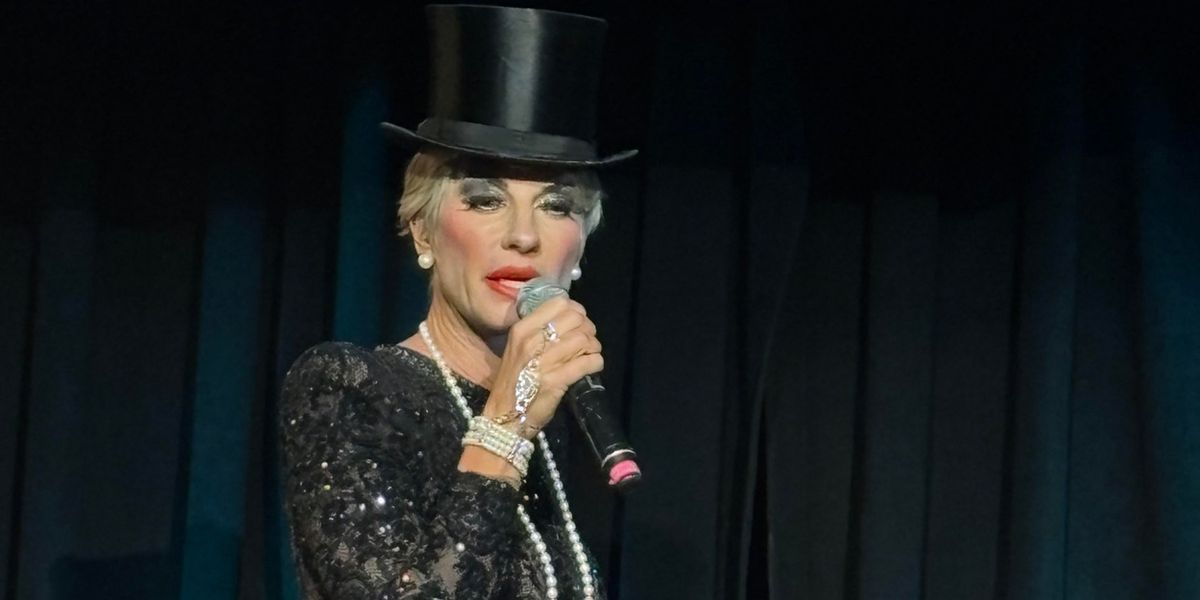
The German-born blonde chanteuse known as Adrienne Haan easily conquered the stage in New York at The Triad Theater last evening, May 12, for her one-woman show, Margo- A Woman in Berlin. Fresh off a European tour, Haan once again gave the filled audience a time travel trip through her vision of Weimar Berlin of the 1920’s and 1930’s.
Embodying the persona of “Everywoman” Margo, Haan epitomized the “Divine Decadence” of the time in a black lace one-piece jumpsuit complete with pearl accessories and black hills. Haan transitions smoothly from one identity of Margo to another throughout the evening and the timeline progressed. Starting in 1929, we see Margo as a poor pregnant woman who is trying to feed her young children through the Great Depression and a spouse broken by the trench warfare of World War I. This hapless version of Margo, who sings of her life in the “Little Yearning / Eine Kleine Sehnsucht / Der Baron von Munchhausen is the archetypical member of society that the Nazi’s sold their distinct “Fairytale” of German happiness through National Socialism.
Adrienne Haan’s voice is a powerful vehicle that expresses not only her character but the mood of society of the time as she sings half in English and half in the native German of the song. Donning a black lace mask, Adrienne Haan quickly transitioned to become the vamp Margo who inhabited the decadent and morally reprobate Cabaret clubs of which we envision for the era. Enjoying life and taking all that she can, Haan sings of “The Swindle” (“Alles Schwindel / It's All a Swindle) and “Kinder heut’ Abend (Children, Tonight) from the famed Marlene Dietrich film, The Blue Angel, emphasizes the excesses of that world.
Onward Margo discusses how the effects of World War I impacted the society at large. A generation of German men, like soldiers in the trenches throughout the world, died in battle or came back home shell shocked and not able to live life. Thus many women became prostitutes to foreign soldiers (a Johnnie) for survival while others embraced lesbianism. Decadence and hedonism prevailed. The Pre- World War I societal attitudes the world had embraced quickly changed in the remains of trench warfare. Songs such as “Ich Webnict zu wem ich gehore /I Don’t Know Who I Belong To (The Blue Angel), “Jonny Wenn Dui Geburtstag /Johnny when will your Birthday Be,” “ Lavender Song / Masculine - Feminine,” as well as the Cole Porter classic compilation, “What is this Thing Called Love / Dream a Little Dream of Me” rounded out the chaotic frenzy of change that embraced culture at this time. Anything goes and it surely did. The world of the German cabarets mimicked the licentiousness and complete freedom from loyalties that reigned supreme as Haan donned the famous top hat and silver-tipped cane a la Dietrich! Cabaret truly indulged in “Divine Decadence” as was proclaimed in the famed film, Cabaret. Gender neutrality appeared as a new “normal” with women allowed to embrace more masculine clothing (pants, canes, top hats, canes as well as monocles) and men found their feminine sides.
The year 1933 brought immense change to German life with the rise of National Socialism. Women no longer had control over their own bodies as abortion became illegal, the state controlled “morality” and its return to the confining traditional values of a pre-20th Century Germany. Women no longer could work, vote, study or have any rights at all - they once again became chattel of their husbands and the state. Vibrant renditions of “Die Ballade zum 218 / Abortion is Illegal” as well as outstanding performances of “Die Seerauberjenny / Pirate Jenny” (Threepenny Opera), “Wenn ich mir was wunschen durfte / If I Could Wish for Something” and “Heute Nacht oder nie / Tonight or Never” portrayed how women saw their world crumbling quickly.
Adrienne Haan captured not only the attention, but the emotions of theatergoers. She showed how the world of Cabaret in Weimar Germany truly portrayed politics. The horrors of World War I had created an opportunity to change and relax the restrictive mores of Germany. Women were given freedoms they never had - rights they treasured only for them to be retracted by the terror of the Nazi’s.
With a powerful singing voice and immersive theatrical expertise Adrienne Haan brings history to life as this reviewer vividly imagined sitting in a Weimar era cabaret with the rest of the audience! Bravo! Bravo!
Margo - A Woman in Berlin featured the incomparable talents of Adrienne Haan and her Musical Director, Richard Danley.
Learn more about the singer at adriennehaan.com
Find more great shows to see on the Triad website here
Reader Reviews

Videos

|
Sing4Her: A Benefit for The Foundation For Women's Cancer 54 Below (5/20-5/20) |

|
54 Sings Broadway's Greatest Hits! 54 Below (5/23-5/23) |

|
Midsummer Cultural Salon – East Meets West Nancy Manocherian's the cell theatre (6/04-6/04) |

|
54 Turns Upside Down, feat. Dillon Klena & more! 54 Below (5/25-5/25) |

|
From Doo-Wop to Indie Pop: Celebrating Decades of Harmonies 54 Below (7/02-7/02) |

|
The Cast of MJ The Musical Presents: The Jam 54 Below (6/08-6/08) |

|
Melissa Errico: Back to Barbra (with Billy) 54 Below (5/28-5/28) |

|
Opening Doors: Dreams, Designs, and Detours 54 Below (6/05-6/05) |

|
Spamilton: An American Parody 10th Anniversary Concert 54 Below (5/24-5/24) |

|
Pop Hits: Gay Edition 54 Below (6/25-6/25) |
| VIEW ALL SHOWS ADD A SHOW | |