Guest Blog: 'It Has Been An Honour And An Enormous Responsibility': Samantha Lane on Adapting TOTO THE NINJA CAT AND THE GREAT SNAKE ESCAPE For The Stage
The stage show of Dermot O’Leary’s much loved children’s book is coming to The Little Angel Theatre this month

Adapting Toto the Ninja Cat and The Great Snake Escape for the stage has been both an honour and an enormous responsibility. Not only is the story clearly very close to Dermot O'Leary’s heart (the cats are inspired by his own) but the books are deeply loved by thousands of young readers. When children arrive at the theatre already carrying a story in their imagination, you have to treat that trust very carefully. The challenge is finding a way to stay true to the essence of the book while also allowing the creative team to make something genuinely theatrical and new.
I first discovered the books through a conversation with our Executive Director, whose daughter was a huge Toto fan. At the same time, I was speaking with the Mercury Theatre about creating a children’s show together. They were particularly interested in developing something with roots in Essex, and when I realised Dermot had grown up in Colchester, it suddenly felt like the perfect fit.
.jpg?format=auto&width=900)
Photo Credit: Ray Burmiston
The thing I immediately loved about the books is that, yes, they are about a ninja cat, which is already an brilliant starting point for a show, but underneath the adventure there is so much heart. Toto’s blindness is never presented as something that limits her. It is simply part of who she is. She is brave, funny, resourceful and heroic. For young audiences, that feels incredibly powerful.
What also struck me was the emotional nuance within the story. Characters who initially appear frightening or villainous are often simply misunderstood. Brian the cobra is motivated by love. Jae Jae the tiger desperately wants affection. Even Catface’s deceptiveness comes from insecurity and rejection. It means the story is ultimately about empathy, acceptance and resisting the urge to judge others too quickly. That depth is what elevates it beyond a simple adventure story.
The adaptation process itself was fascinating because this is not a picture book. Usually, when adapting children’s literature for the stage, my co-adaptor Barb Jungr and I are expanding something relatively short. With Toto, we had the opposite problem: condensing a richly detailed early-reader novel into a 50-minute theatrical experience. We started by identifying the essential plot points and asking ourselves the difficult question about what absolutely had to remain and what could easily go. Children want to recognise the story they love, so protecting key moments and characters was vital. At the same time, theatre demands momentum, visual storytelling and clarity.
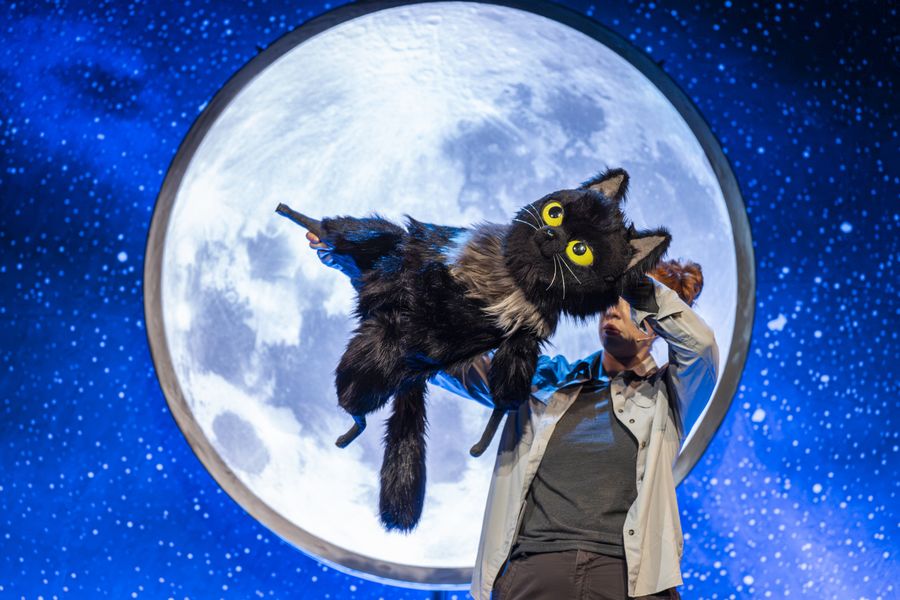
Photo Credit: Ellie Kurttz
One of our biggest changes was introducing a framing device set in a zoo, with Derek and Norma the zookeepers acting as narrators. These characters only appear briefly in the original novel, but bringing them to the forefront helped us move fluidly between multiple locations without losing the audience. We also greatly expanded Robert the parakeet’s role, turning him into a bridge between Toto’s world and the zoo. And perhaps most importantly: we turned it into a musical. Barb not only co-adapted the book but also wrote the lyrics and composed the music, which added another storytelling layer entirely. Songs allow children to enter the emotional world of the characters in a way dialogue alone sometimes cannot.
What many people do not realise about making theatre with puppets is how much of the final storytelling is discovered inside the rehearsal room. We entered rehearsals with a strong script, but because we had three puppeteers playing eight characters, the logistics constantly shaped the writing. Sometimes scenes needed extra dialogue simply to allow somebody enough time to switch puppets. Sometimes an entirely new comic moment emerged from a practical necessity.
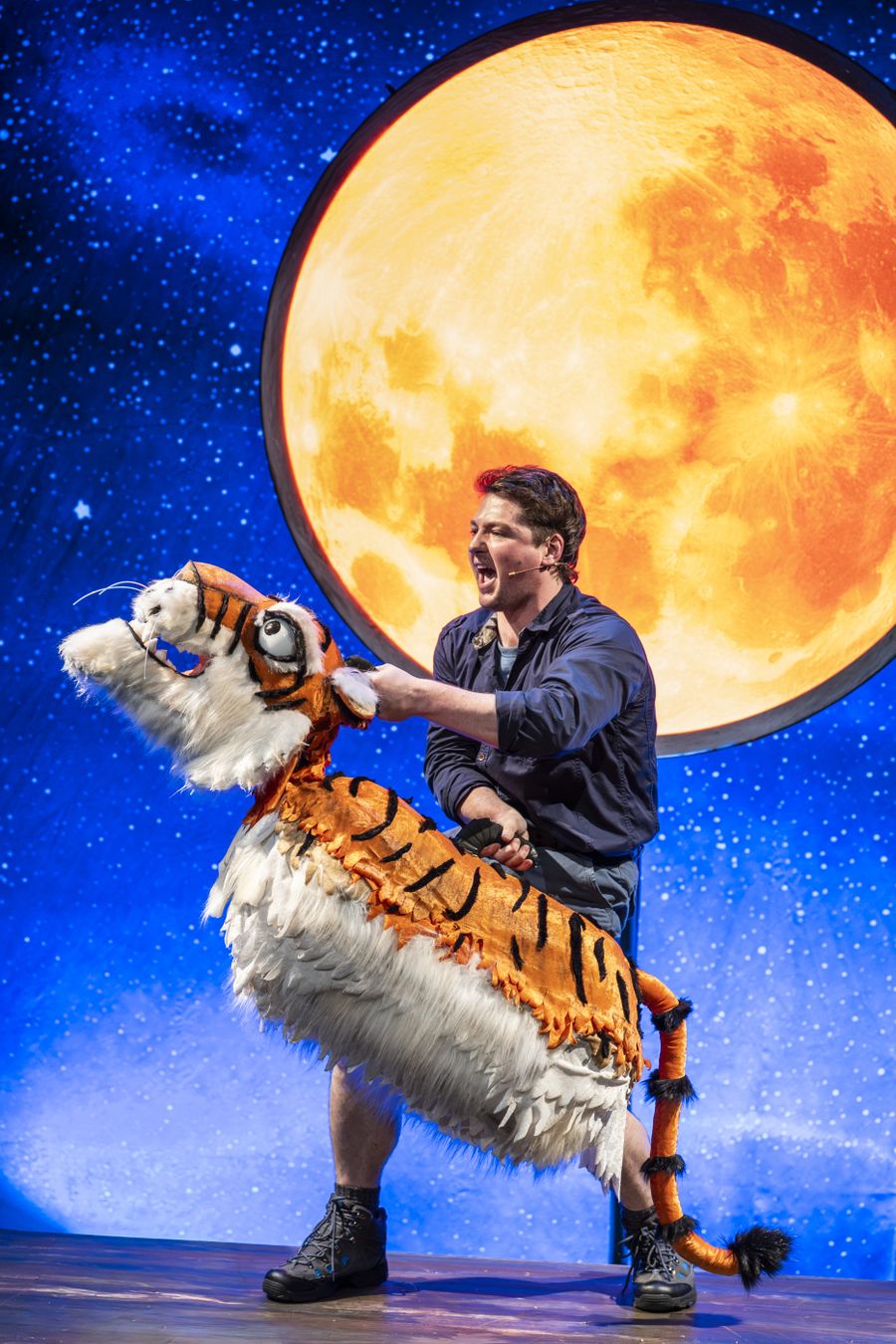
Photo Credit: Ellie Kurttz
That flexibility is essential. I always begin rehearsals with the improvisation game “Yes, and…” because making theatre like this requires openness. Performers need to arrive willing to offer ideas, solve problems collaboratively and accept that nothing is fully fixed until very late in the process. I often compare the rehearsal process to creating a painting. First, we sketch the outline, then we layer in shade and tone, and only later do we begin adding colour and texture. With children’s theatre, especially puppetry, that final collage often continues evolving once the audience arrives and well into previews. Young audiences are brilliantly honest, and they teach you very quickly where the energy truly lives.
The spirit of collaboration has been at the heart of this production. Alongside Barb, we’ve worked with an extraordinary cast and creative team, including designer Oliver Hymans and lighting designer Sherry Coehen. Together, we’ve tried to honour what readers already love about Toto while creating something that feels alive, surprising and theatrical in its own right. But we sincerely hope somewhere in the middle of all the puppets, music, human characters and the narrating parakeet, audiences will still find the same beating heart that made them fall in love with Toto in the first place
Toto the Ninja Cat and The Great Snake Escape opens at Little Angel Theatre from 16 May – 19 July, the production will then tour extensively.
Videos