

Review: Michael Feinstein Takes Us Away From It All at Carnegie Hall
The 11/5 edition of Standard Time With Michael Feinstein at Carnegie Hall's Zankel Hall was themed around getting away and travel
By: Andrew Poretz Nov. 10, 2025
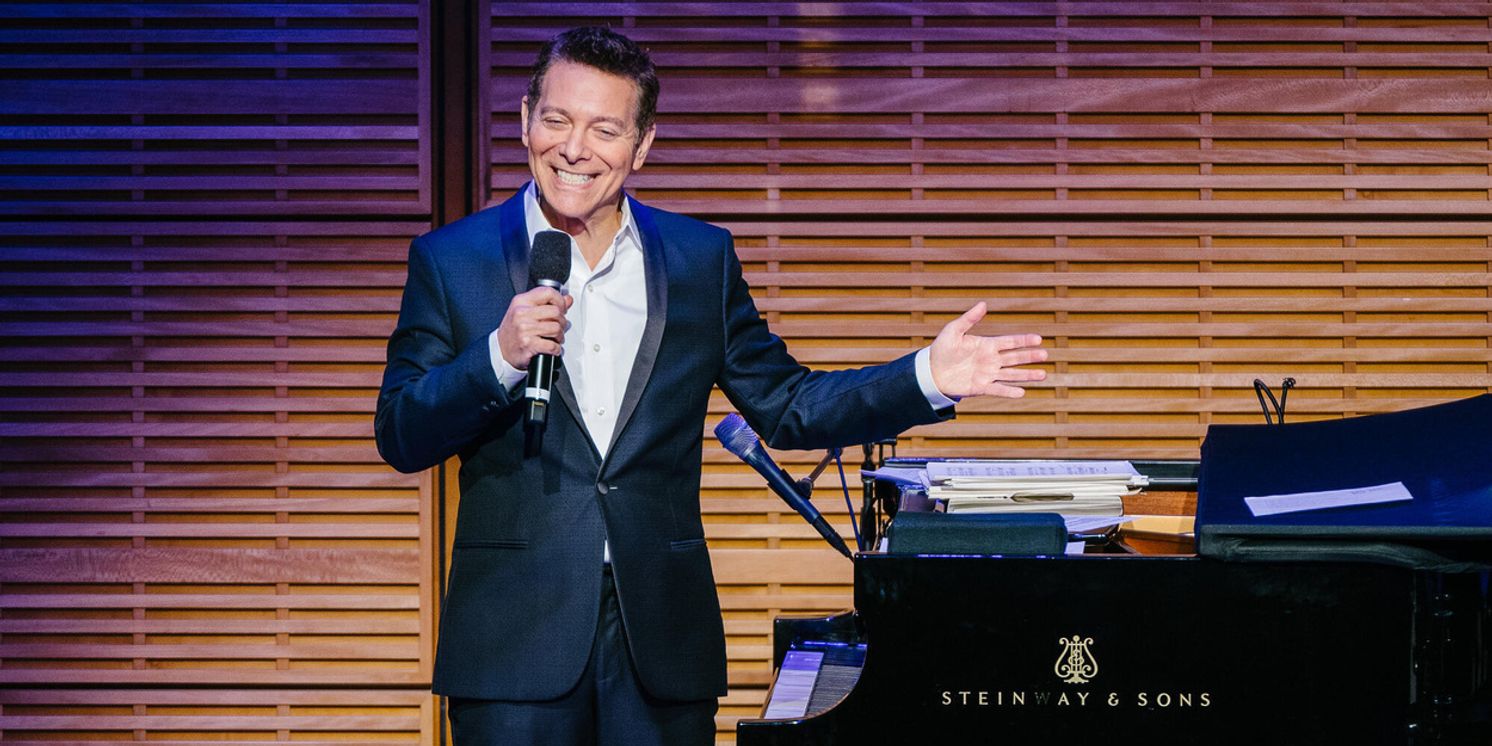
The popular singer and pianist Michael Feinstein returned to Zankel Hall (Carnegie Hall’s smaller, underground auditorium) for his latest Standard Time show, titled Let’s Get Away From it All. Here, the theme involved getting away and travel - not necessarily physically; songs about one’s state of mind counted. With an embarrassment of riches to choose from, Feinstein picked both the familiar and the obscure, often adding back long-forgotten verses and stanzas. Such details make Feinstein’s shows especially attractive to those seeking a deeper dive into the Great American Songbook.
As usual, Feinstein’s accompanists consisted of mighty pianist and arranger Tedd Firth, bassist David Finck, and drummer Mark McLean.
Feinstein opened with a home run performing Noel Coward’s “Sail Away,” which might be described as a “when song,” with the stanzas set with lines like, “When a sailor goes to sea,” “When the storm clouds are riding through a winter sky” and “When the wind and the weather blow your dreams sky high,” the best solution? Sail away. The breezy, upbeat arrangement had a double modulation and a big finish.
On “Come Fly With Me” (Jimmy Van Heusen/Sammy Cahn), Firth incorporated strains of Billy Mays’ original arrangement for Sinatra. Afterwards, in a funny bit of business, Feinstein sang a few lines of several deservedly obscure travel songs.
At the time Peggy Lee wrote the lyrics for “Where Could I Go Without You” with composer Victor Young, she was having an affair with Victor Young, Feinstein related, which underscores a sadness in these lyrics. Feinstein’s voice was nearly ethereal in its beauty here.
One of the great joys of Feinstein’s shows are hearing little-known or lost extra lyrics. The show’s title song, written by the underrated Matt Dennis with lyrics by Tom Adair, included several obscure lyrics rarely recorded or performed, certainly not by Sinatra, who introduced the song in 1941 with the Tommy Dorsey Orchestra and revisited it for his Grammy-nominated 1958 album, Come Fly With Me.
.jpg?format=auto&width=1400 "Review: Michael Feinstein Takes Us Away From It All at Carnegie Hall")
An especially charming story involved Feinstein’s performance of the British standard, “A Nightingale Sang in Berkeley Square" (Manning Sherwin/Eric Maschwitz), a song for which he routinely asked the audience if anyone know who originally introduced the song. At a London performance, a woman declared, “I did!” It was, in fact, Judy Campbell, who first performed it back in 1940. “I will sing this with just Theodore… because Alvin and Simon couldn’t make it," Feinstein said, referencing Alvin & The Chipmunks, to much laughter. Feinstein dedicated the song to Campbell, singing it rubato for much of the number. His singing here was particularly delicate and tender. The slower, halting arrangement lent a sense of romance and longing that was quite touching.
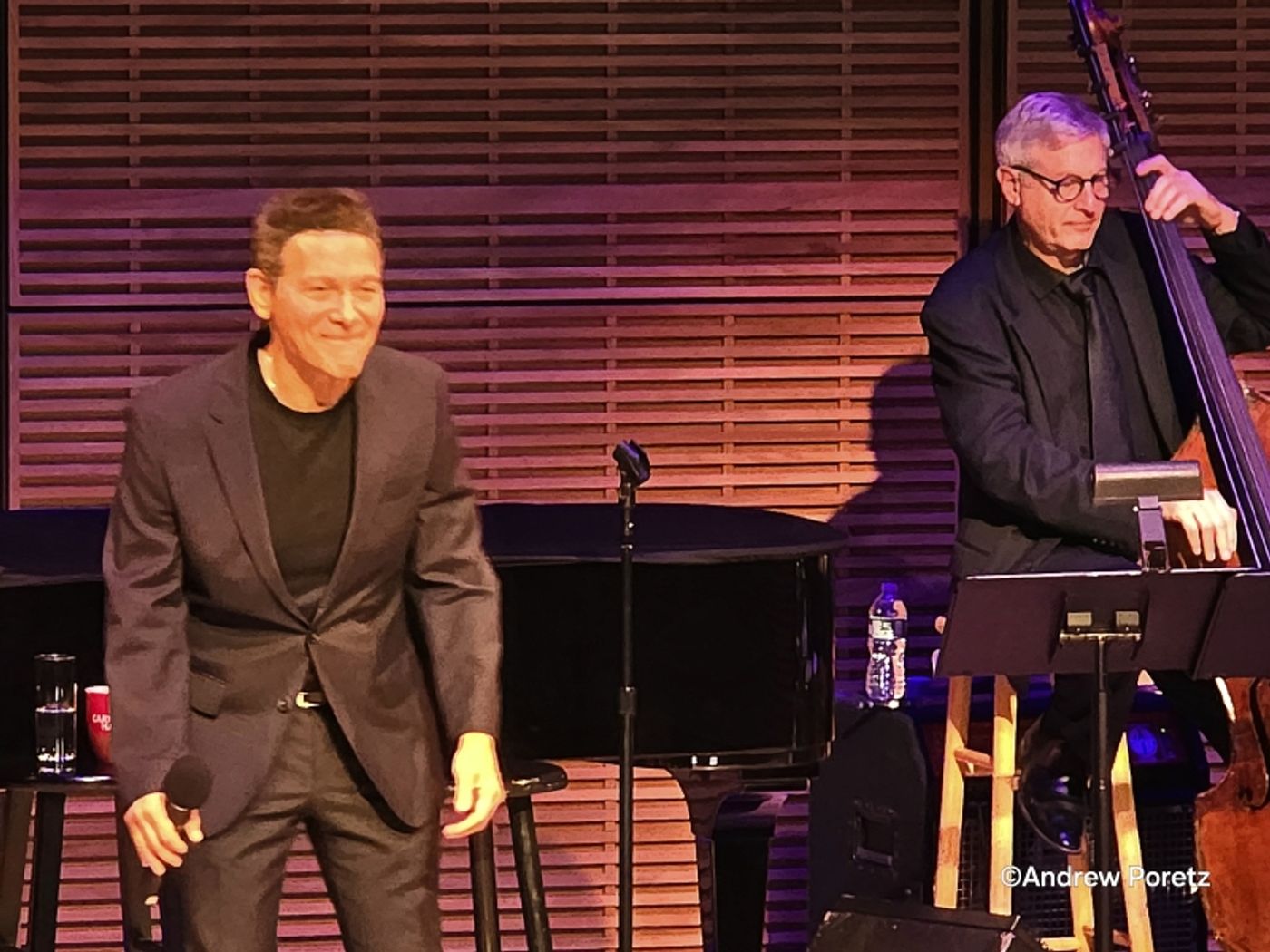
A swell arrangement of WC Handy’s “Saint Louis Blues” prompted Feinstein to declare, “Proving Jews can sing the blues!” The arrangement was equal measures funk and blues, Feinstein initially singing to only Finck’s hot riff. This was a surprising highlight.
The funny, quick-witted star peppered his patter with quips and improvised one-liners. When a couple arrived mid-show to the two seats in front of him, he noted, “I came from LA and I was on time!” Taking to the piano, the next song was the very funny rarity, “Oxnard” (Ray Jessel), itself filled with meta references to travel songs like “My Kind of Town” and “New York, New York.” The lyric “Once you step in Oxnard you can’t get it off your shoes” induced much laughter from the Zankel audience.
On the wonderfully scenic song “Rhode Island is Famous For You,” which he first performed at his (recorded) 1986 Algonquin debut, Feinstein’s impeccable diction helped the clever couplets come to life, especially with such delightfully absurd slant rhymes as “tents from Tentasee,” “mink in Wyomink” and “camp chair from New Hampchair.”
Feinstein had a emotional, somewhat melancholy take on “Thanks For the Memory” (Ralph Rainger/Leo Robin), which was Bob Hope’s theme song (which he often credited for giving him a career). It was also included in the Algonquin debut set. He included the very obscure verse, and used an amalgam of his favorites of the 13 stanzas ever written for the tune. Feinstein performed it solo, and at a slower pace, which both gave it more poignancy and gave it the air of someone giving a eulogy. It gradually sped up, letting Feinstein lean into the warmth and pass the lyric, before slowing it back again toward.
Taking a stool to finish the set, Feinstein’s closing number of “Two For the Road” (Henry Mancini/Leslie Bricusse), with only Tedd Firth’s beautiful piano voicings was matched by Feinstein’s sensitive phrasing and delivery of this magnificent song. A short rendition of Cole Porter’s “Take Me Back to Manhattan” held a surprise ending, as it morphed into “New York, New York.”
Michael Feinstein again delivered a beautiful edition of Standard Time. The series will resume in February 2026, with a big band for the first two shows.
For more great shows at Carnegie Hall, including upcoming editions of Standard Time, visit https://www.carnegiehall.org/Events.
Photos: Andrew Poretz
Header photo credit: Fadi Kheir
Reader Reviews
Videos