


Review: LIE LOW at Solas Nua
Solas Nua’s production of Lie Low runs at the Atlas Performing Arts Center through November 23.
By: Rachael F. Goldberg Nov. 12, 2025

There’s a reason “hysterical” is used to refer to both someone who is incredibly funny and someone who is incredibly disturbed – the line between the two is so thin, it’s sometimes nonexistent. Many comedians credit their own hardships as the source of their humor, and it’s not uncommon to come across sayings like, “at least all the trauma made me hilarious.” That’s because, for many, humor is a key way to address trauma – it gives our brains a way to shape and interact with it, to process things by removing the initial sting. Turning hard moments into something absurd takes the power out of them, but also gives us the opportunity to examine them a bit closer and understand them more deeply, without the sharpness of the initial pain. It’s why dark humor can often be the most honest, the most poignant, and the most freeing – like theater itself, humor gives us the opportunity to hold up a mirror to a particularly difficult subject, and see it more clearly.
This is fully on display at Solas Nua’s latest production, Ciara Elizabeth Smyth’s Lie Low. The play’s North American premiere, hosted at Atlas Performing Arts Center, comes at an especially provocative time – as Solas Nua Artistic Director Rex Daugherty points out, the production arrives in DC as our community is grappling with the impact of the government shutdown, the Epstein files, the ongoing aftermath of #MeToo, and the lingering impact of watching two female presidential candidates lose to a man convicted of sexual assault and perpetuating cruelty on the American people. In the midst of this, a comedy addressing assault feels simultaneously apropos, and a bit, well, hysterical.
Smyth’s play is centered around Faye, a young woman struggling with an extreme case of insomnia – she’s been to numerous doctors and therapists, but despite haphazard diagnoses, tips, and medications, nothing is working, and she’s starting to suffer pretty severe consequences to her mental and physical state. She’s lost her job, alienated friends, and hasn’t heard from her brother, Naoise, in nearly a year. She – reluctantly – admits it may be tied to an attack she suffered a year ago, but since she’s been to therapy and moved on – and moved flats – she doesn’t really see a connection. Still, she’s desperate for a solution, so, when Naoise finally contacts her, she asks for his help in resolving the issue once and for all. Unfortunately, Naoise has his own reasons for reaching out now, and the web of ambiguous storytelling, uncomfortable truths, and lingering uncertainties all come to a head.
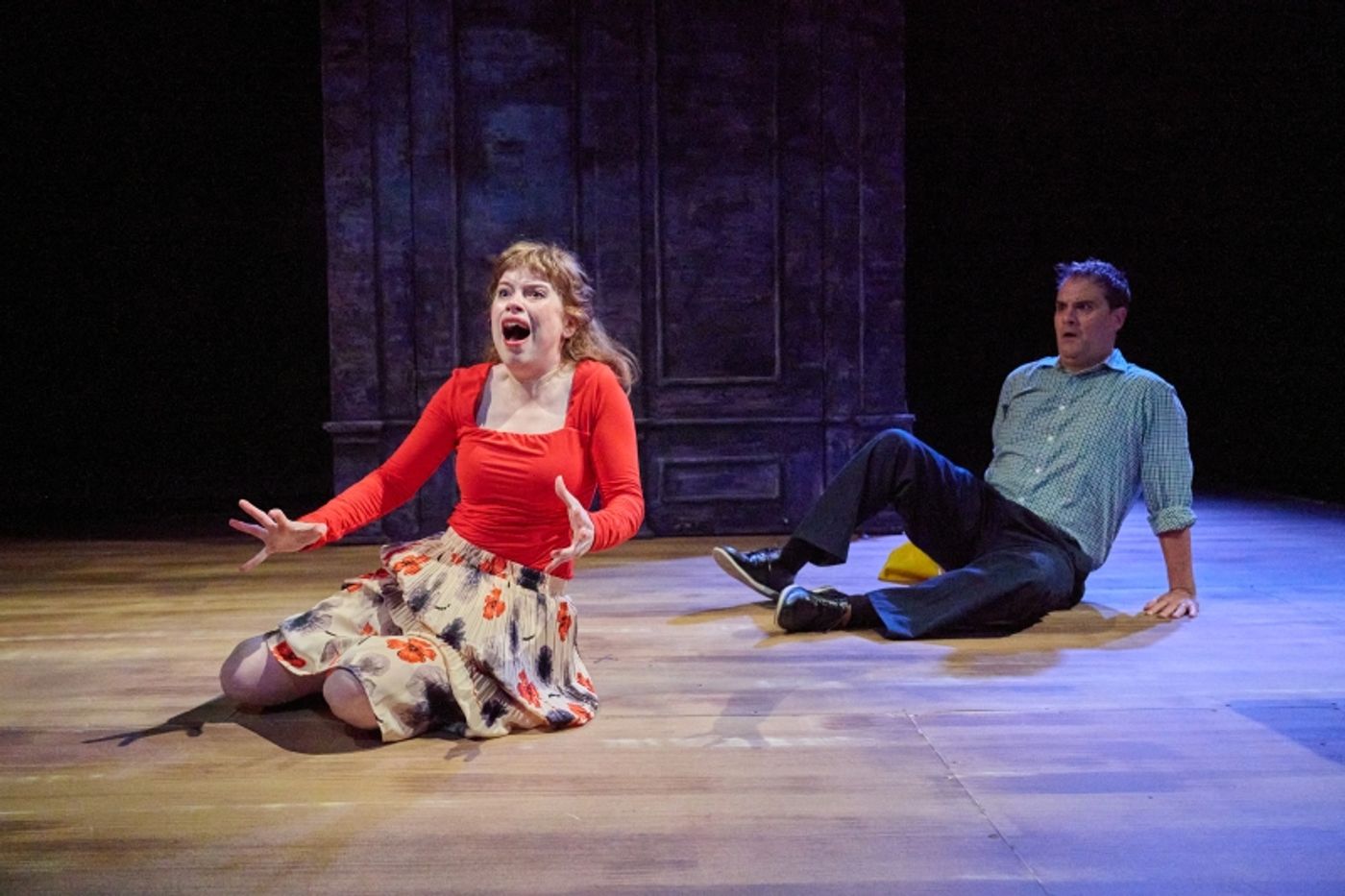
Smyth’s script is sharp, funny, and achingly human. Her writing captures the painful absurdity of Faye’s position – of wanting to be fine, of struggling to find useful help, of trying to put your life back together when it doesn’t even really feel in pieces and when you can’t figure out why they don’t quite fit together correctly. Faye’s done the work to get past her attack, and yet, it’s still there, and her refusal to acknowledge that she can’t be rid of it by ticking off some boxes has brought unwanted consequences. Smyth captures this perfectly – Faye’s insistence that she’s fine doesn’t feel fake, it sounds like she truly believes it, and her current situation is just as baffling to her as it is to the professionals she seeks out for help. But she also knows that she needs to “get over whatever [it] is,” and she’s determined to do that. Naoise, Faye’s older brother, reveals more of himself as the show unfolds, but it’s clear that he wants to help her, out of guilt for his prolonged absence at a time when she needed him, if nothing else. As his character becomes clearer, though, it casts each comment in a new light, until the audience needs to reconsider each impression they’ve made of the siblings. Indeed, even though it’s clear that Faye is, at least to some extent, an unreliable narrator – after all, she was drunk and hit on the head the night of the attack, and the Faye the audience meets is incredibly sleep-deprived – the more the audience learns about the two characters and their lives, the more they doubt their veracity, and the more the characters doubt themselves. And yet, Smyth also raises an interesting point: When does it matter? When certain facts are established, do the details matter? When does nuance come into play, and when does it become a way of deflecting rather than helping? The details of Faye’s behavior on the night of her attack may or may not matter. The details of Naoise’s indiscretions may or may not matter. The details of their childhood may or may not matter. How much of what we, the audience, knows is real, and how much does it matter?
And yet, Smyth makes it clear that they really do matter. As much as it’s easy to say “it’s just a kiss,” the context around that kiss really does make a difference, even if the phrasing is the same. And, while no one ever deserves to be made to feel unsafe, it’s harder to find safety when it’s tied to the shame and confusion around potentially unsafe behaviors. The small nuances really do make a big difference in how we process and contextualize.
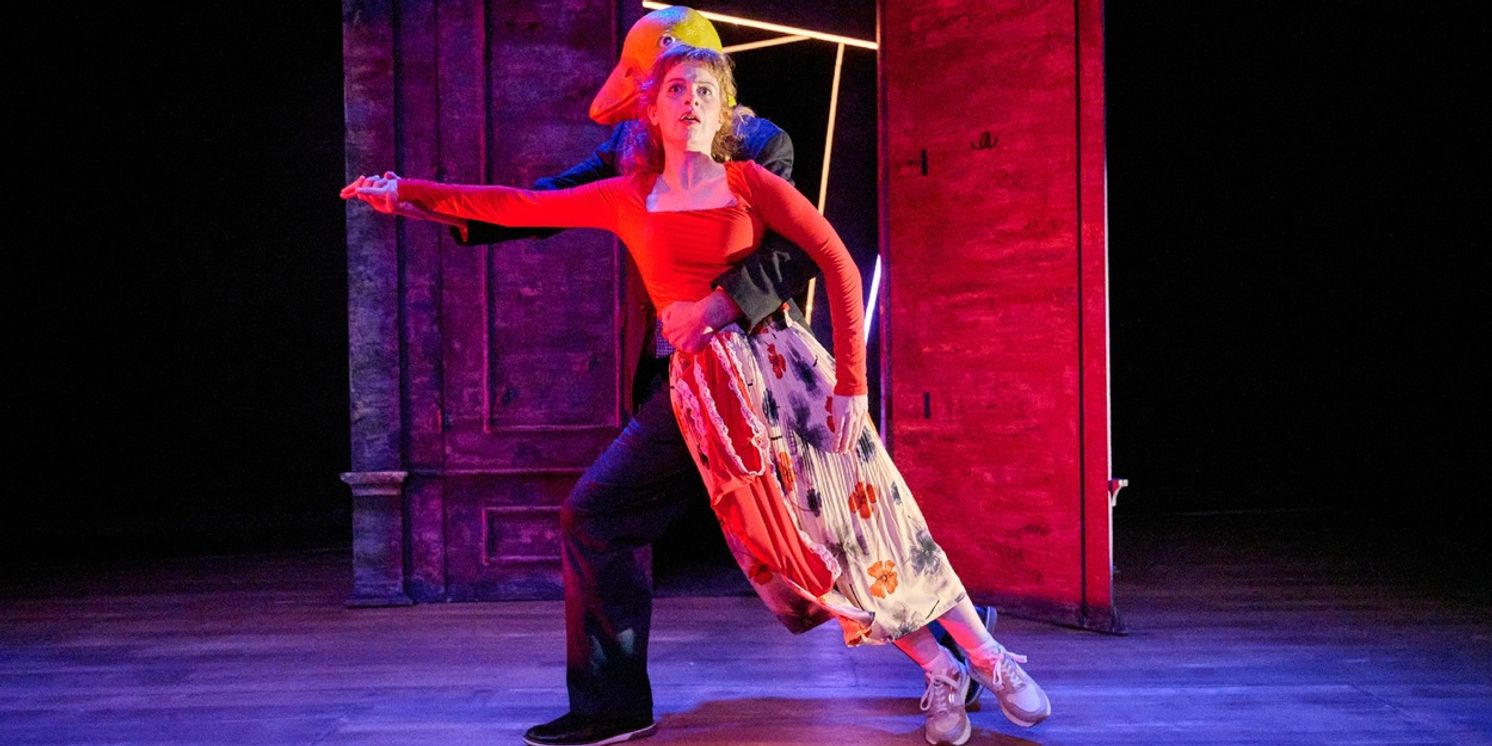
But what really helps Smyth’s script dig in deep isn’t just this nuanced approach to characters, but the way she leans into the absurdity as well. Brains don’t work in clear, linear ways, and people don’t behave that way either. Interspersed throughout the script is Smyth’s clever way of showing this: upbeat, manic dance routines between Faye and a masked man in a suit (as her attacker was) to nostalgic songs like “In the Mood.” The jarring numbers are frantic and funny, shocking laughter out of the audience each time they intrude on the scene, and yet perfectly encapsulating the intrusion traumatic events can have on the mind.
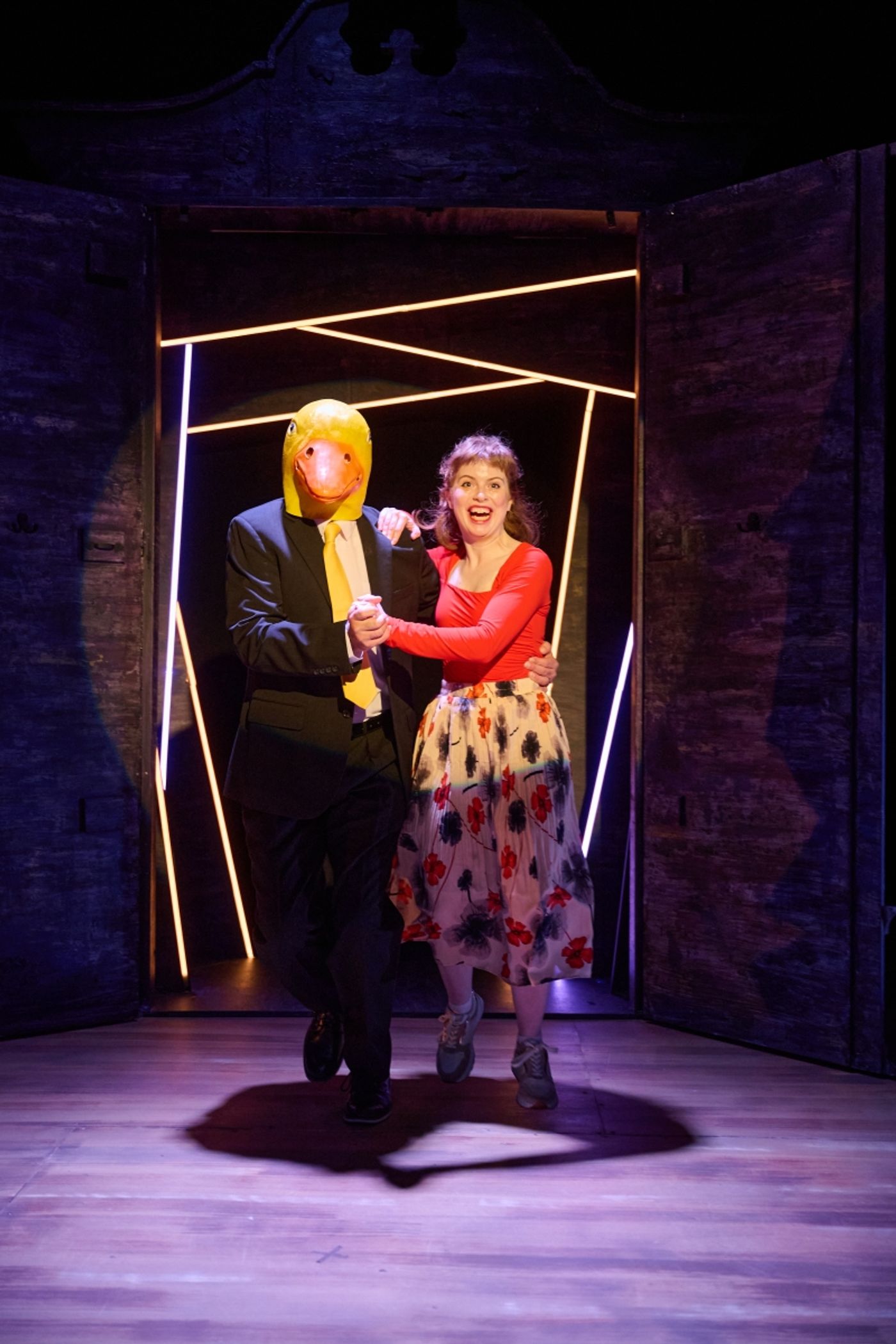
It helps that the cast can carry such complex characters and balance humor and care so well. As Faye, Megan Graves walks the very, very thin tightrope between hysteria and total lucidity, seeming as though she’ll tip one way or another at any moment but never falling – the combination of her no-nonsense delivery when explaining her plan to her brother with the slips into mania, such as when she describes her former job, is both realistically alarming and weirdly relatable. In Graves’ performance, the audience gets to see Faye as someone who’s grappling not only with trauma, but with her inability to process it. Cody Nickell’s Naoise is significantly more reserved, but the little slips he allows help slowly paint the picture of the character and the siblings’ relationship, and start to chip away at what the audience thinks they know. His multilayer approach to the character ends up subtly undermining everything the audience so readily accepted, sending them – and Faye – into a tailspin. The two performers work wonderfully together, even navigating some particularly rough moments with a sincerity that was both touching and haunting (though one moment may have held just a hair too long), and their dance intervals were enjoyable breaks in the tension they so skillfully build.
Daugherty masterfully directs the two through these moments of harrowing discovery and maniacal levity, striking a careful balance that keeps the production from ever going too far at the expense of the other. That balance is grounded not just in the solid performances, but in the skillful production team bringing the stage to life. Gisela Estrada’s spartan scene is functional and revealing, and Isabel deCarvalho’s carefully chosen props work well to reveal Faye’s mental state. Logan Benson’s costumes helped enhance the characters nicely, emphasizing both their personalities and current states (Faye’s constant tugging at her skirt was a clever way to acknowledge a line about her significant weight loss, emphasizing her declining health), and the outfits made for easy movement and striking lines for Robert Bowen Smith’s fun choreography. Alberto Segarra’s lighting design helped distinguish between reality and Faye’s breaks, and Kenny Neal’s sound design was solid and clever in cuing those transitions. Jen Rabbitt Ring’s dialect work was also particularly noteworthy, helping two American actors slip into realistic Irish accents to do Smyth’s script justice.
To present a play on trauma is always a difficult task, because it’s too easy to fall into a melodrama that can undercut or cheapen the impact. But Lie Low takes a different approach, leaning into the dark absurdity of life and the things that go wrong. Smyth’s script and the Solas Nua team show a thoughtful understanding of humanity in their work, and connect with audiences with that authenticity – and a few cheeky jokes, just to help us through.
Solas Nua’s production of Lie Low runs at the Atlas Performing Arts Center through November 23. Performance run time is approximately 65 minutes, with no intermission. Trigger warnings for discussions about assault, sexual assault, loss of loved ones, and suggested nudity. Information on tickets (including discounts for federal employees and Pay What You Can dates), accessibility, and show talkbacks can be found on the Solas Nua website. Lie Low is produced in partnership with Resilient Theatre Project and Supporting Roles.
Photos courtesy of DJ Corey Photography. Banner photo features Megan Graves and Cody Nickell.
Reader Reviews
Videos